

.svg)
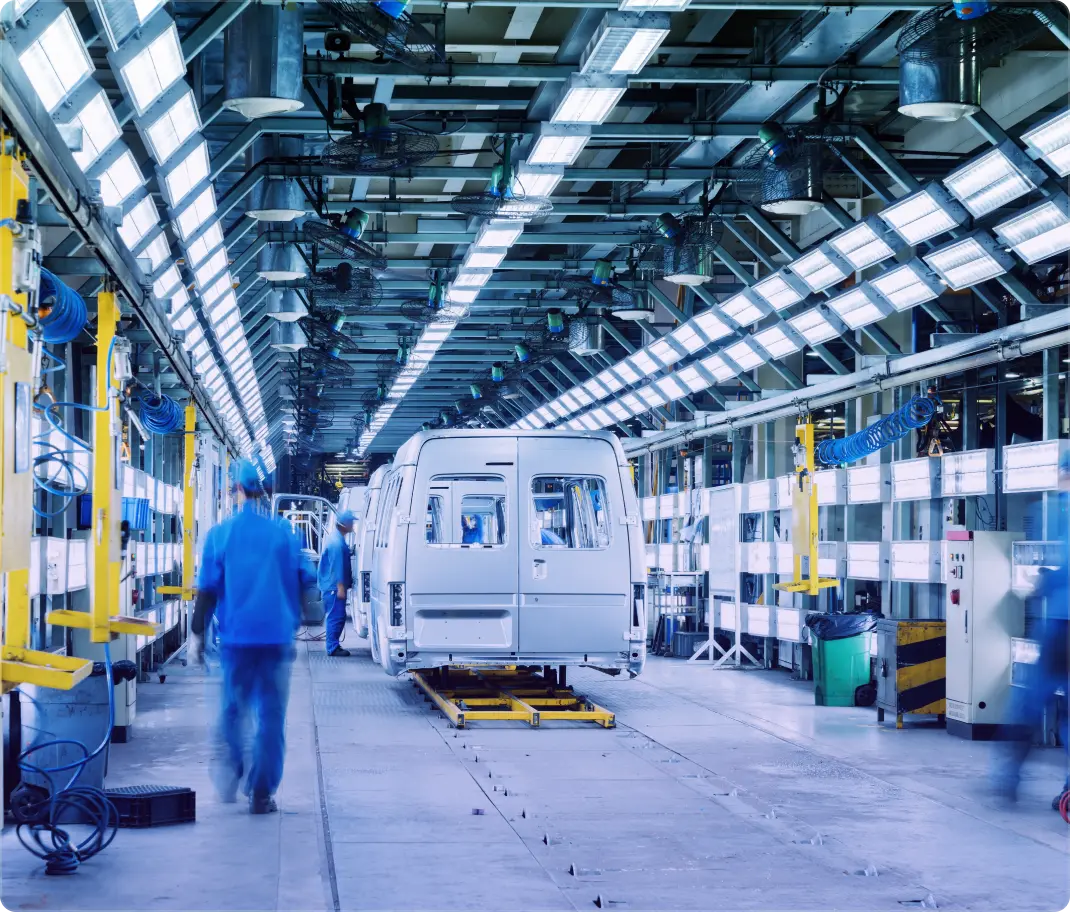
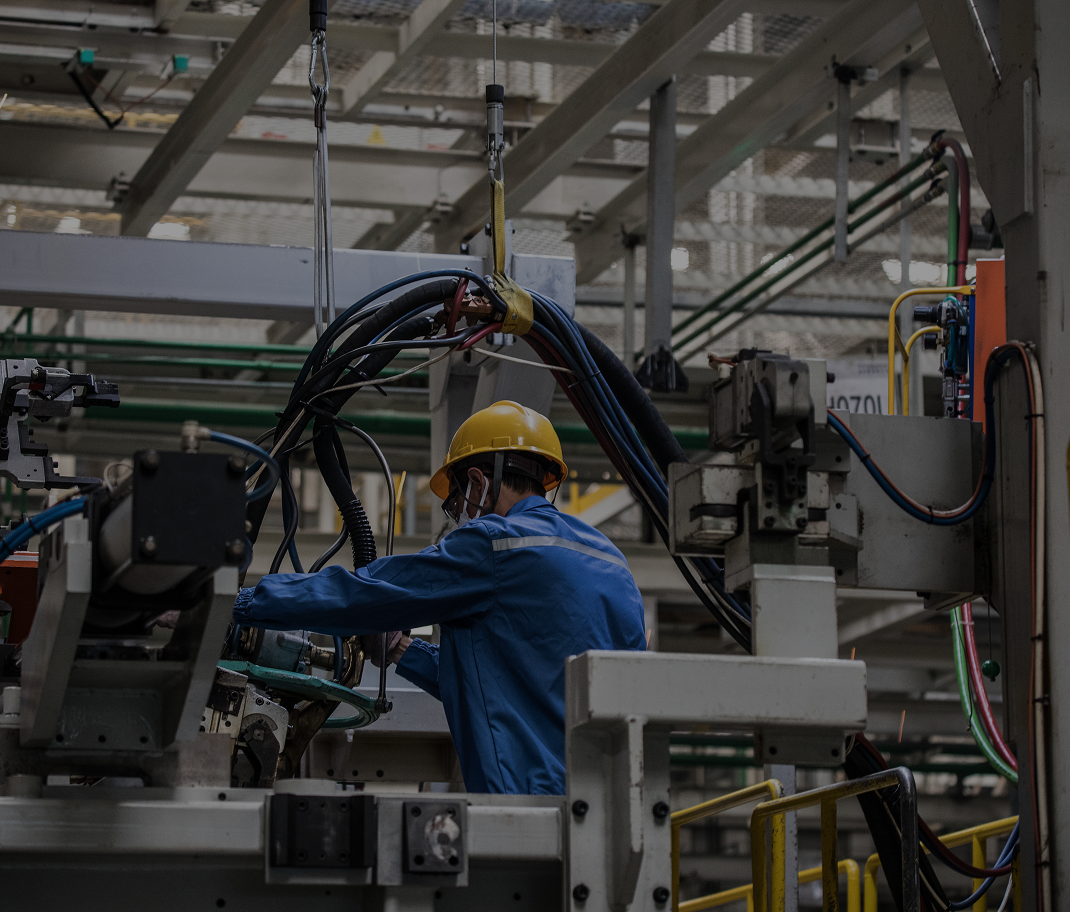
Autokiniton's manufacturing sites carry significant physical risk. Spot welding, mig welding, heavy steel handling, and constant forklift activity are part of daily operations across its 36 facilities. The company's safety program had already established strong fundamentals. The opportunity was to go further, using AI computer vision to make risk more visible and safety more proactive at scale.
Andrew Amstutz, VP of IT was brought in to evaluate Voxel from a technology standpoint. His first reaction was one that many IT leaders share: "As a technologist, I often look at a solution and say, we could build that." But Autokiniton is not a software company. With 200-plus enterprise applications, 36 facilities of local IT support, a global service desk split between the US and India, and an active cybersecurity program, Andrew's team has limited bandwidth for software development projects. "We don't make software products. We make steel parts. It's not the focus of the organization."
That make-versus-buy calculation pushed him toward a partner, but what set Voxel apart was something harder to quantify. "I don't feel like I'm working with just a software company. I feel like I'm dealing with a safety company." That distinction mattered. A generic vision integrator could have built something, but Andrew believed the outcome would have been fundamentally different. Voxel was not selling a technology project. It was offering a safety solution backed by people who understood the problem as deeply as the platform did.
One of the more complex dimensions of any camera-based deployment in manufacturing is workforce and employee acceptance, particularly in union environments. Autokiniton operates under five different collective bargaining agreements across its facilities. Andrew noted that the framing of the initiative made a significant difference. "If it's a technology project, then there's a lot of discussion on privacy. As a solution implementation, it's more around the union wanting to make sure that they have a safe work environment, and so do we." Autokiniton's labor relations team, led by Ryan Rodriguez, took a proactive approach, securing union buy-in before deployment rather than after, and establishing a continuing dialogue around safety rather than surveillance. That approach has proven successful. Facilities that initially pushed back have since seen meaningful reductions in incidents and shifted their perspective as a result.
Autokiniton's first Voxel deployment followed the company's standard technology onboarding process. The IT team conducted a cybersecurity review, ran vulnerability testing, and evaluated how the solution would fit within their existing infrastructure, specifically how data would be collected, how it would leave the environment, and how it would integrate with their firewall architecture. "We found the Voxel Platform to be a very solid solution," Andrew noted. Once that due diligence was complete, the implementation itself moved quickly.
The deployment process follows a straightforward sequence: an edge device ships to the facility, gets racked in the MDF through a standard change control process, firewall rules are applied, and connectivity is established from the facility's existing cameras. From device arrival to live feed on the Voxel platform, the first deployment was complete in approximately one week.
Once the first site was deployed, additional rollouts have become even faster. Ferdinand, Autokiniton's network operations lead, has created a process with Voxel that is now essentially on autopilot. "An edge device shows up, he gets on a call, it gets booked on the calendar, and it's live." Each new site now requires less effort than the previous one, thanks to established relationships, documented processes, and existing firewall policies.
That repeatability has been one of the most meaningful aspects of the Voxel partnership from an IT perspective. Scaling a technology solution across a large enterprise typically involves months of planning, significant change management, and sustained IT involvement at each site. With Voxel, the first deployment created a playbook that every subsequent site benefits from. Andrew frames it plainly: "There's not a whole lot an IT leader has to worry about. Voxel is both secure and scaleable."
Within the first 30 days of Autokiniton's first deployment, results were apparent. The safety team had a baseline of data, was executing corrective actions, and could clearly track the reduction in risk before and after each intervention.
After six months, Autokiniton achieved the following results at their first site:
A significant part of what made the first deployment successful was how fast Autokiniton’s safety team got up to speed. Working alongside Voxel’s customer success team, they zeroed in on their highest-priority risks, starting with PIT stopping, ergonomics, and PPE. Using trend data and heat maps from Voxel, the team prioritized where to act first and developed targeted safety campaigns backed by real camera data. That ability to move quickly from insight to action was faster than Andrew had expected, and those early results made expanding straightforward. Within the first few months, Autokiniton was evaluating the next four sites.
The safety team really grasped onto the technology. They loved having the partnership of the customer success team from Voxel.
Andrew Amstutz
VP of IT at Autokiniton
Andrew's confidence in Voxel's ability to scale across the full organization comes down to infrastructure as much as outcomes. "Every site where we have cameras is an opportunity to layer additional safety visibility." Autokiniton has been strategically expanding its camera footprint with that capability in mind, knowing that each additional camera is also a potential safety data source. The platform fits within their existing architecture, the process is repeatable, and the results at each new site continue to validate the decision.
The results at Autokiniton's pilot facility did not happen by accident. They reflect a safety culture that was already strong and a leadership team committed to finding better ways to protect their people. Within 30 days of deploying Voxel at the first site, the safety team had measurable data, clear corrective actions, and visible improvement on the plant floor. That foundation made the case for expansion without requiring a lengthy justification process.
With Voxel now in production across five sites, Autokiniton is focused on what comes next. Every facility in the network represents an additional opportunity to layer safety intelligence on top of existing infrastructure, and the playbook to do it efficiently is already in place. For Andrew and the IT team, the lesson from this deployment carries beyond Voxel. In manufacturing, the right technology partner does not add to IT's already-overwhelmed plate. It removes complexity "Don't make a project out of it," Andrew says. "Bring in a solution, bring in a partner, and make it a quick win."
Explore AI Summary