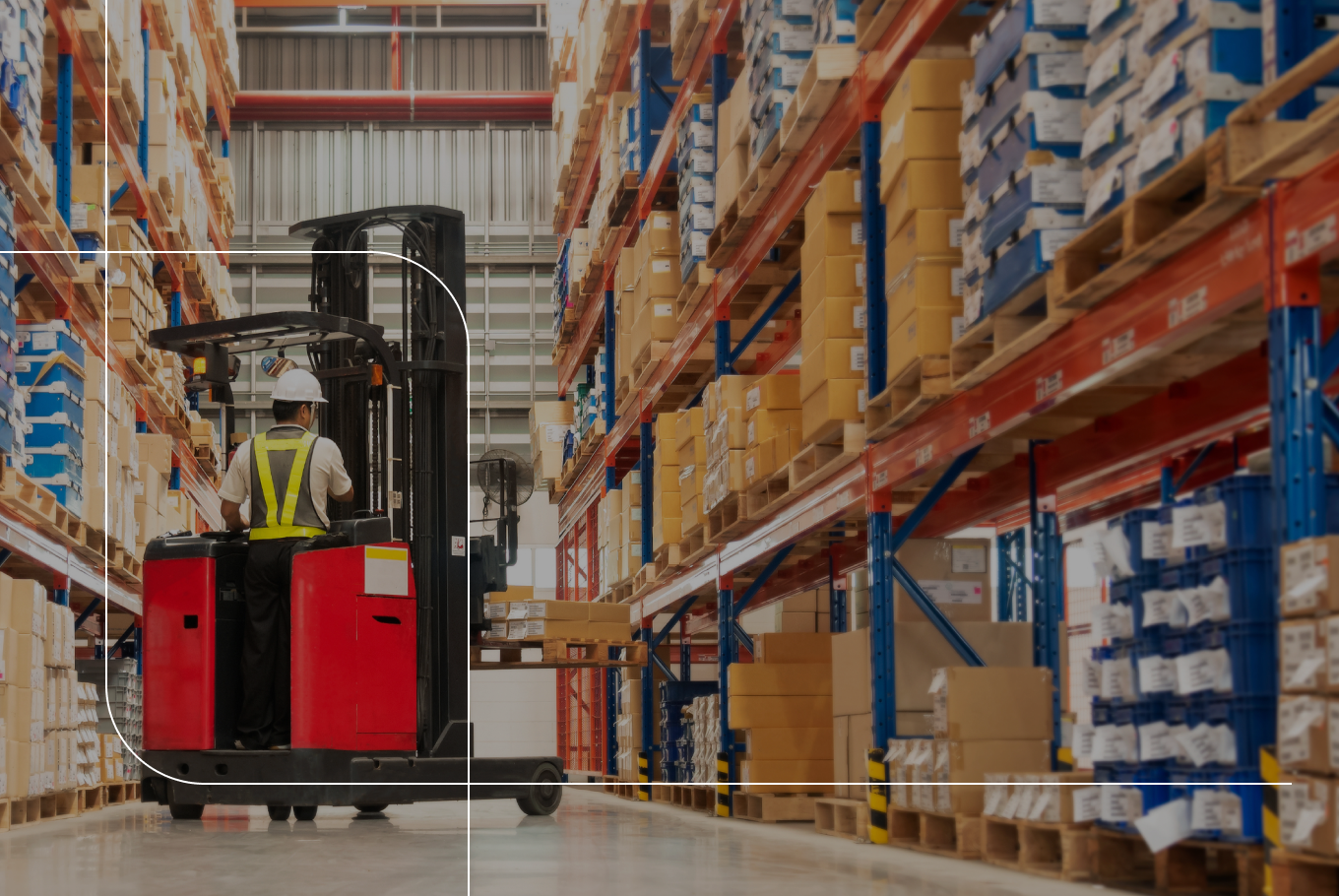
Powered industrial trucks create different hazards depending on the vehicle type, facility layout, load, visibility, and surrounding pedestrian traffic. OSHA’s powered industrial truck guidance highlights struck-by events, loading-dock falls, unstable loads, and restricted visibility as recurring risks, while its warehouse guidance recommends separating pedestrian and vehicle traffic wherever possible.
Software and connected safety systems can strengthen those controls by monitoring vehicle movement, pedestrian proximity, operator behavior, impacts, inspections, and high-risk zones. NIOSH’s daily PIT inspection guidance also reinforces that monitoring technology should complement trained operators, routine inspections, equipment maintenance, traffic controls, and site-specific safety procedures rather than replace them.
PIT safety monitoring is not one product category with one standard architecture. Warehouses may need a combination of systems depending on the fleet, traffic patterns, camera coverage, risk profile, and existing technology.
Facility cameras can monitor intersections, pedestrian routes, loading areas, restricted zones, and recurring vehicle behaviors. This approach provides warehouse-level visibility without installing equipment on every truck, but performance depends on camera placement and line of sight.
Cameras attached directly to a forklift can capture the operator, load, travel path, impacts, dock activity, and surrounding pedestrians. This approach follows the vehicle throughout the warehouse and provides incident context that fixed cameras may miss.
Telematics systems collect information such as vehicle access, impacts, speed, utilization, inspections, battery condition, and maintenance needs. They provide fleet-wide records but may not explain the surrounding circumstances without video or proximity data.
Ultra-wideband, radio-frequency, tag-based, or vision-based systems can create warning zones around vehicles, pedestrians, intersections, or restricted areas. Some systems can also reduce vehicle speed or trigger other controls when a defined risk condition occurs.
The Voxel logistics platform analyzes existing warehouse camera feeds for vehicle, pedestrian, ergonomic, PPE, and area-control risks. Its PIT-related detections focus on observable behaviors and traffic conditions across the facility rather than requiring hardware on every vehicle.
Voxel works with more than 95% of existing IP cameras and can adapt to a new environment within 48 hours. Its site-level view is useful for warehouses that need to identify recurring traffic patterns, high-risk intersections, poor stopping behavior, and interactions involving vehicles and workers across multiple zones.
The forklift accident guidance describes monitoring for speeding, tailgating, no-stop violations, parking issues, pedestrian-zone breaches, and unsafe pallet movement. These detections can be connected to coaching, assigned corrective actions, traffic-layout changes, and executive reporting.
The Verst Logistics results report an 82% drop in vehicle safety incidents and a 92% drop in no-stop-at-intersection incidents. Verst used the findings to retrain drivers, add stop signs, preserve pedestrian paths, and refine operating procedures.
Voxel ranks first because it connects warehouse-wide PIT behavior monitoring with broader safety intelligence, intervention workflows, privacy controls, and documented logistics outcomes.
OneTrack provides forklift-mounted vision systems built specifically for warehouse safety and operations. Its cameras capture activity around the vehicle and use AI to identify events and operator behaviors that precede incidents.
OneTrack is suited to warehouses that want continuous visibility from the forklift rather than relying primarily on fixed facility cameras. Its vehicle-mounted view can capture the operator, load, surrounding equipment, dock activity, and travel path as the PIT moves through different areas.
The platform is particularly relevant when coaching and investigation are priorities. Every event can include video context, allowing supervisors to distinguish operator behavior from layout problems, blocked visibility, process pressure, or other contributing conditions.
Samsara provides connected-operations technology spanning cameras, equipment, fleet telematics, site visibility, workflows, and reporting. Its recently introduced 360 Camera extends video coverage to operator-controlled equipment such as forklifts and pallet jacks.
Samsara may fit organizations already using its connected-operations platform for vehicles, sites, equipment, or workforce workflows. The operated-equipment camera can add context around forklift impacts and blind spots without depending exclusively on facility-camera coverage.
Because the 360 Camera is a new 2026 product, warehouses should confirm current availability, supported equipment types, implementation requirements, and which AI detections are active for PIT applications. Its value may be strongest for organizations seeking one environment for road fleets, non-road equipment, and facility visibility.
Trio Mobil provides industrial safety and location technology for forklift-pedestrian collision avoidance, vehicle monitoring, and warehouse traffic analysis. Its portfolio combines AI vision, ultra-wideband positioning, warning zones, and connected fleet data.
Trio Mobil is relevant to warehouses that need active collision avoidance around intersections, blind corners, narrow aisles, and mixed vehicle-pedestrian zones. Different technology options allow facilities to choose between wearable-based precision, vehicle hardware, and AI vision.
The platform can support more direct intervention than a dashboard-only monitoring system. Depending on the configuration, it can warn operators and pedestrians or reduce vehicle speed when predefined safety zones are breached.
ELOKON develops forklift safety, proximity-detection, speed-control, real-time location, and fleet-management systems. Its ELOfusion platform combines collision avoidance and telematics in one connected environment.
ELOKON suits mixed-fleet warehouses that want to combine operator authorization, equipment inspections, proximity warnings, telematics, maintenance, and productivity information. Its systems are designed specifically for material-handling equipment rather than general road fleets.
The combination of ELOfleet and ELOshield allows warehouses to manage both immediate collision risks and longer-term fleet patterns. Facilities can review impacts, near misses, operator access, inspection completion, utilization, and maintenance from the same broader system.
Powerfleet provides warehouse IoT and forklift fleet-management technology through connected vehicle hardware and its Unity platform. Its offering combines telematics, pedestrian detection, access control, speed management, inspections, and video.
Powerfleet fits warehouses that want detailed vehicle-level control across mixed fleets. Operator access and digital checklists can prevent unauthorized or unchecked vehicles from entering service, while impact records and proximity events support coaching and investigation.
Its pedestrian-detection system can define caution and danger zones around the vehicle. When combined with speed-management hardware, a zone breach can also reduce acceleration or vehicle speed instead of relying only on an audible warning.
SIERA.AI develops forklift-mounted machine-vision systems for pedestrian, object, impact, access, and inspection monitoring. Its S3 system is designed to identify people without requiring wearable tags.
SIERA.AI is relevant to warehouses where pedestrians may be partly concealed by pallets, boxes, racking, or other equipment. Its machine-vision approach differentiates people from objects and can alert the operator when either enters a configured area around the truck.
The system also adds fleet-management functions such as authorized access, inspection completion, impact severity, near-miss records, and operator data. Warehouses should validate detection performance for their racking layout, lighting, vehicle types, and travel speeds.
Intenseye analyzes existing camera feeds for serious safety risks involving forklifts, pallet jacks, AGVs, pedestrians, and warehouse traffic zones. It is part of a broader industrial computer-vision safety platform.
Intenseye suits warehouses that want facility-camera monitoring for PIT risks alongside other serious injury and fatality exposures. Its vehicle controls cover speed, direction, restricted areas, and unsafe proximity without requiring a dedicated camera on every forklift.
The platform can also connect detections to speakers, lights, smart devices, or equipment systems. Any automated response that affects vehicle or machinery operation should be tested and approved with engineering, controls, and safety personnel.
Protex AI connects with existing CCTV systems and applies configurable computer-vision rules to industrial safety scenarios. Its vehicle-related monitoring can be combined with PPE, ergonomics, area controls, and other warehouse risks.
Protex may fit warehouses that want camera-based PIT monitoring with most video processing performed at the facility. Safety teams can configure different rules for intersections, aisles, pedestrian routes, loading areas, and other high-risk zones.
Its wider detection library allows teams to monitor PIT behavior alongside manual handling, PPE, and environmental conditions. Buyers should confirm the exact detections, event-validation process, edge-hardware requirements, and integration scope for each site.
Arvist AI provides warehouse-focused computer vision for safety, compliance, quality, and operational monitoring. It works with existing security cameras and focuses on warehouse-specific activities rather than general-purpose physical security.
Arvist is relevant to warehouses seeking one vision layer across PIT safety and operational processes. Its fixed-camera approach can identify recurring collision zones and interactions involving forklifts, workers, inventory, and emergency areas.
The platform also covers shipment, quality, and process use cases. Warehouses should determine whether they want that broader operational scope or a more specialized vehicle-mounted collision-avoidance system.
Vehicle-mounted systems follow a forklift throughout the warehouse and can capture the operator and travel path. Fixed-camera systems provide broader context around intersections and zones but only where camera coverage is available.
Some products record and report events, while others provide operator warnings, pedestrian alerts, speed reduction, or vehicle controls. Warehouses should decide how much automation is appropriate for each risk and vehicle type.
Tag-based systems can provide precise proximity measurements but require workers to carry active devices. Vision-based systems avoid tags but depend on visibility, lighting, camera position, and model performance.
Review operator access, inspection enforcement, impact monitoring, maintenance, battery health, utilization, and mixed-fleet support. These capabilities may be as important as real-time collision alerts for a large PIT fleet.
Telematics can identify that an impact occurred without showing why. Video can reveal pedestrian behavior, load obstruction, aisle congestion, operator attention, and other circumstances surrounding the event.
Test priority scenarios under normal operating conditions. The pilot should include different shifts, vehicle types, aisle widths, lighting levels, loads, uniforms, pedestrian routes, and seasonal traffic patterns.
Determine whether the system uses facial recognition, operator identification, wearable tags, continuous recording, or individual performance data. Define who can access the information and whether it will support coaching, investigation, discipline, recognition, or process improvement.
Voxel is particularly useful when PIT safety needs to be understood as part of the wider warehouse environment. The same camera network can identify vehicle behavior, pedestrian-zone compliance, ergonomics, PPE, blocked paths, spills, and operational conditions that contribute to PIT risk.
Its fixed-camera approach also makes it possible to compare recurring behavior by intersection, aisle, time, shift, or location. That context can show whether a problem is primarily linked to one operator, insufficient signage, a poor traffic layout, obstructed sightlines, seasonal staffing, or a site-wide procedure.
The Voxel vehicle insights can then be connected to corrective actions, coaching, traffic changes, and cross-site reporting. Warehouses can talk with Voxel about camera coverage, PIT scenarios, privacy controls, and implementation planning.
PIT safety monitoring software tracks risks involving forklifts, reach trucks, pallet jacks, order pickers, and other powered industrial vehicles. Depending on the system, it may use cameras, telematics, proximity sensors, location tags, or a combination of technologies. Common functions include pedestrian detection, speed monitoring, impact records, inspections, access control, and near-miss analysis. Voxel focuses on visible vehicle behavior and warehouse conditions through existing camera infrastructure.
Some systems can trigger operator warnings, pedestrian alerts, speed reduction, or vehicle stopping when defined conditions occur. Others only record or report the risk for later review. Automated intervention depends on the vehicle, hardware configuration, control integration, and approved safety design. Warehouses should validate fail-safe behavior and involve equipment manufacturers or qualified engineering personnel before enabling vehicle controls.
Not always. Fixed-camera platforms can monitor intersections, aisles, pedestrian routes, and other high-risk areas without installing a device on every truck. Vehicle-mounted cameras provide continuous coverage as the PIT moves and can capture the operator, load, and immediate surroundings. Many larger warehouses may benefit from combining both approaches.
The system should provide enough context to explain what happened and what safer behavior or environmental change is needed. Video clips, impact data, repeated patterns, and location trends can make coaching more specific than a general refresher course. The goal should be to address contributing conditions rather than simply count violations. Voxel supports video-based coaching and action tracking alongside broader site analytics.
Useful measures include vehicle-pedestrian proximity events, failures to stop, speeding, impacts, inspection failures, unauthorized use, blocked routes, and corrective-action completion. Teams should also monitor whether risk declines after training, signage, barriers, traffic changes, or equipment controls are introduced. Metrics need consistent definitions across sites and shifts to support meaningful comparison. Voxel organizes visible safety events by site, time, camera, location, and risk category.

Explore AI Summary