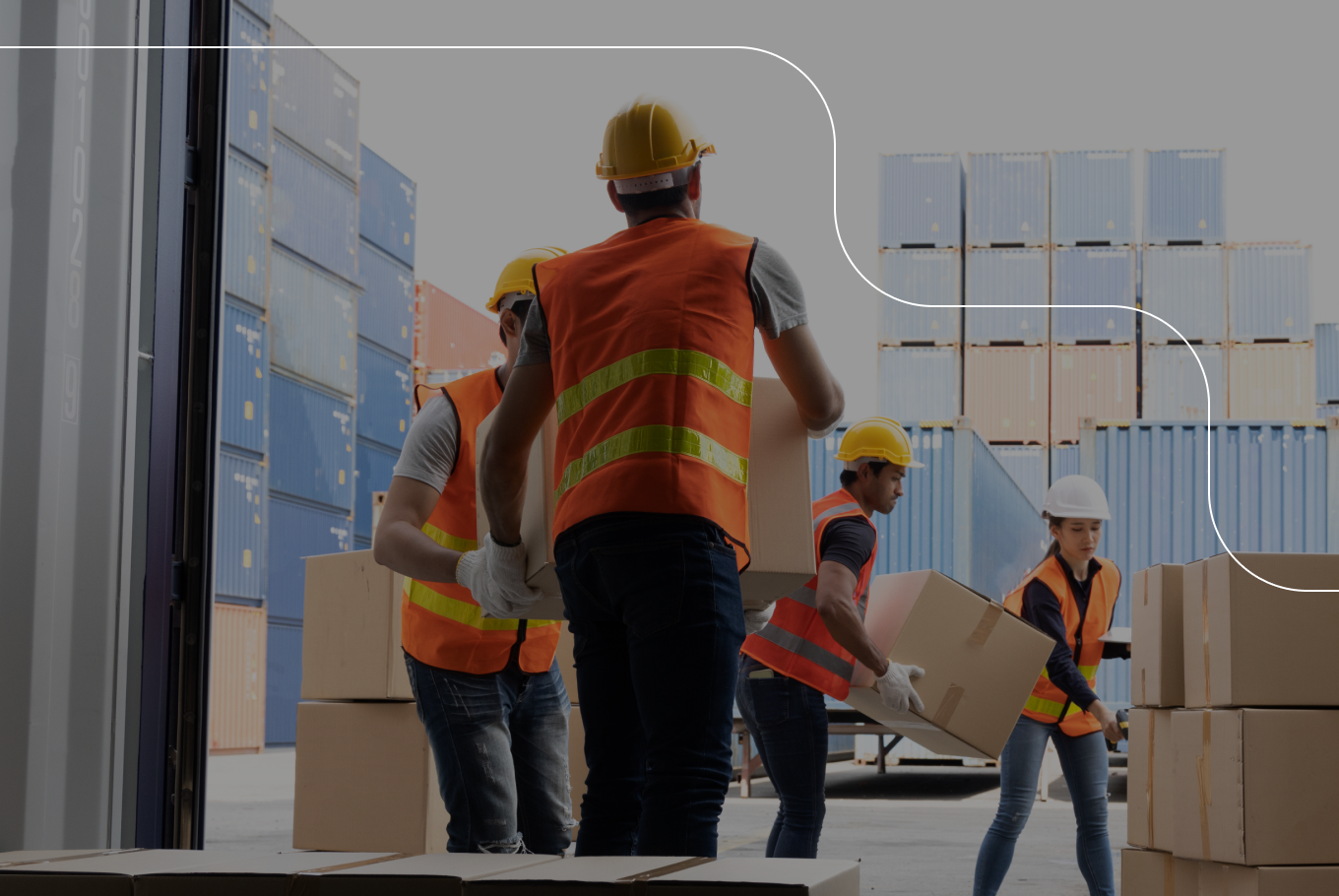
Warehouse work can involve repetitive picking, lifting, carrying, pushing, pulling, bending, and reaching across long or variable shifts. Current warehouse injury data shows that warehousing and storage records 4.8 injury and illness cases per 100 full-time workers. Ergonomic risk assessment software can help safety teams identify where physical exposure is concentrated and evaluate whether changes to tasks, equipment, or workflows reduce that exposure.
Technology does not replace a complete ergonomics program. NIOSH ergonomics guidance emphasizes identifying risk factors, involving workers, implementing controls, and evaluating whether those controls work. Software supports that process through continuous monitoring, video-based task assessments, standardized scoring, reporting, and corrective-action management.
Warehouse ergonomic exposure develops through both individual movements and repeated work patterns. A single bend may carry limited risk, while hundreds of bends during a shift can indicate a task, rack height, package design, or workflow that deserves review.
Common warehouse risk factors include:
Software can help quantify these patterns, but the analysis still needs operational context. Camera footage alone may not reveal package weight, applied force, fatigue, production pressure, or whether a worker has been assigned to the task for several hours.
Continuous computer vision platforms analyze existing camera feeds and identify configured postures or movements across monitored areas. These systems can help teams see where improper bending, overreaching, and other visible exposures occur repeatedly.
This model is useful for warehouses that want broader visibility across shifts rather than a single recorded assessment. Its effectiveness depends on camera placement, visibility, lighting, task coverage, and the quality of the configured detection model.
Task-based systems allow a safety professional or supervisor to record a worker performing a representative task. The software then analyzes body position and may apply methods such as RULA, REBA, the Revised NIOSH Lifting Equation, Snook Tables, OWAS, or the Strain Index.
This approach can produce detailed information for workstation redesign or task comparison. However, the recorded sample needs to represent the range of movements, loads, frequencies, and operating conditions workers encounter.
Voxel provides an AI-powered industrial intelligence platform that analyzes existing camera feeds for safety and operational risk. For ergonomics programs, its focus is continuous visibility into repeated movements and postures across warehouses and other industrial facilities.
Voxel’s ergonomic risk detection identifies visible patterns such as improper bends, unsafe lifts, overreaching, high-strain postures, and repetitive-motion exposure. Events can be reviewed individually or examined as trends across shifts, cameras, and sites.
Its dedicated improper bending detection can help teams determine where unsafe bending patterns are concentrated. That information may support changes to rack height, package placement, work sequencing, lifting equipment, staffing, training, or recovery periods.
Voxel reports compatibility with more than 95% of existing CCTV cameras, deployment to a site within 48 hours, and detection accuracy above 95% using models fine-tuned to the site environment. These are first-party performance claims, and actual results can depend on camera angle, visibility, lighting, task coverage, and configuration.
A recurring risk pattern does not improve solely because it appears on a dashboard. Voxel’s corrective-action workflows let teams assign actions, establish deadlines, document completion, and examine whether the targeted exposure changes afterward.
This creates a repeatable cycle:
The platform does not replace a qualified ergonomic assessment when force, load weight, vibration, repetition rate, or other factors require detailed measurement. It can provide evidence that helps teams decide where those assessments and interventions should be prioritized.
Published Verst Logistics results include a 50% reduction in ergonomic incidents within five months. Verst used Voxel’s visibility to redistribute workflows, reduce ergonomic strain, provide additional break time, and refine safety procedures.
These results demonstrate the potential impact of combining Voxel with targeted operational changes and strong site-level adoption. Outcomes will vary by warehouse, but Verst provides a practical example of using continuous risk information to guide ergonomic interventions.
VelocityEHS provides industrial ergonomics software within its broader Accelerate EHS platform. The product combines ergonomics program management with AI-supported motion capture and established assessment methods.
Its 3D motion-capture tools analyze video from standard devices and help teams evaluate body position and physical exposure. The software supports methods including RULA, REBA, and the Revised NIOSH Lifting Equation, along with workflows for assessments, controls, follow-up, and reporting.
VelocityEHS may suit enterprises that want industrial ergonomics connected with incident management, audits, chemical management, and other EHS processes. Warehouse teams should determine which assessment methods, consulting services, implementation support, and integrations are included in the proposed package.
Cority provides industrial ergonomics capabilities within the CorityOne EHS platform. Its current offering includes AI-powered motion capture developed through its relationship with Inseer.
Users can capture a task on a mobile device and analyze posture, repetition, movement, and load-related information. The platform is designed to help teams prioritize risk, document findings, connect assessments with other EHS information, and monitor actions across locations.
Cority may fit large warehouse networks that want ergonomics data connected with occupational health, incident management, and enterprise EHS reporting. Buyers should confirm the available assessment methods, required mobile-video process, licensing structure, and review workflow.
TuMeke provides video-based ergonomic assessments designed to automate scoring and reduce manual measurement. Its platform supports individual task analysis and broader multi-site ergonomics program management.
Users can upload task video and apply assessment methods such as REBA, RULA, the Revised NIOSH Lifting Equation, the Revised Strain Index, and Snook Tables. Its current Risk Suite also emphasizes movement analysis beyond isolated static postures.
TuMeke may fit warehouse teams that conduct frequent task assessments for picking, packing, lifting, loading, or workstation design. Safety leaders should ensure recorded videos represent the full task cycle, including variations in load, pace, reach distance, and worker technique.
ErgoPlus Industrial is a cloud-based ergonomics program-management platform provided by Briotix Health. It combines software workflows, assessment tools, training resources, and access to ergonomics services.
The platform supports task assessments, risk prioritization, recommended controls, solution tracking, reassessment, and program reporting. Its current offering also includes AI-supported motion-capture tools intended to simplify video-based assessments.
ErgoPlus may suit organizations building a structured ergonomics process across several warehouses. It is particularly relevant where the buyer wants software supported by consulting, training, and program-development services rather than a standalone detection tool.
Retrocausal Ergo Copilot provides automated ergonomic and safety assessments from recorded work. The platform is designed to reduce the manual measurements traditionally required for posture, lifting, and material-handling analysis.
It supports methods including REBA, RULA, OWAS, the Revised NIOSH Lifting Equation, Snook Tables, and hand-strain assessments. Users can record a task using a smartphone, review time-stamped risk events, and compare potential process or workstation changes.
Ergo Copilot may fit facilities conducting structured assessments of picking, packing, palletizing, loading, and repetitive material-handling tasks. Teams should confirm which variables the software calculates automatically and which inputs, such as load weight or task frequency, require human entry.
Intenseye offers computer vision ergonomics as part of its broader workplace safety platform. It uses camera-based body-pose estimation to evaluate posture and movement across monitored industrial areas.
The platform applies RULA and REBA-based analysis to identify awkward postures, lifting concerns, and repetitive-strain exposure. Its broader system also supports alerts, dashboards, task management, and safety monitoring across multiple facilities.
Intenseye may fit organizations seeking continuous ergonomics visibility alongside other video-based safety detections. Buyers should test camera coverage, alert thresholds, assessment interpretation, and the process for turning identified risks into completed workplace changes.
Cardinus provides industrial ergonomics software through Healthy Working Pro and related RiskAI capabilities. Its offering combines standardized assessments, AI motion capture, reporting, training, and managed ergonomics services.
Healthy Working Pro includes more than 13 industrial assessment tools and supports centralized findings, recommendations, and action management. Cardinus also offers mobile video capture and AI-supported motion analysis through its RiskAI environment.
Cardinus may fit organizations that want software combined with global ergonomics support and managed services. Warehouse teams should determine whether they need the assessment platform, AI motion-capture functions, consulting services, or a combination of those components.
Inseer specializes in sensorless, video-based ergonomic assessment. Its technology also supports Cority’s AI motion-capture offering, while remaining available as a separate ergonomics solution.
Users can record a task using a mobile device and receive a three-dimensional analysis with joint information, risk visualization, and supporting graphs. The platform is intended to help teams identify contributing movements, compare conditions, and prioritize workplace redesign.
Inseer may suit teams that need detailed biomechanical information for specific warehouse tasks without purchasing wearable sensors. Buyers should confirm the scoring methods, required task inputs, reporting options, and how reassessments are compared after changes are introduced.
ErgoWOW is an AI-supported ergonomics management platform developed by Ergo Global. It focuses on employee assessments, education, equipment recommendations, referrals, and centralized program administration.
The platform supports guided self-assessments, training, equipment workflows, reporting, and access to ergonomics professionals. It is designed to help organizations manage ergonomics programs across large and geographically distributed workforces.
ErgoWOW may be relevant for general employee ergonomics, training, and program coordination across a warehouse organization. Its current public positioning places greater emphasis on individual assessments and workplace wellbeing than continuous analysis of industrial material-handling tasks, so buyers should confirm the scope of warehouse-specific functionality.
The appropriate platform depends on whether the organization needs broad exposure visibility, detailed task assessment, program management, or a combination of those functions.
Continuous platforms are useful when teams need to identify repeated behavior across shifts and locations. Task-based platforms are useful when a specific job, workstation, lift, or process requires detailed analysis.
A warehouse may use continuous monitoring to identify a high-risk picking zone, then conduct a task-based assessment to quantify the exposure and evaluate a redesigned workstation.
RULA focuses primarily on upper-limb and posture risk, while REBA assesses the entire body. The Revised NIOSH Lifting Equation is designed for specific manual lifting conditions, and Snook Tables can support evaluation of lifting, lowering, pushing, pulling, and carrying tasks.
No single score explains every risk. Teams should understand the limits of each method and avoid applying a framework to a task it was not designed to assess.
Posture is only one part of ergonomic exposure. Buyers should determine how the software accounts for:
Computer vision may identify an overreaching risk pattern, but a complete intervention may also require information about product weight, shelf configuration, frequency, and available handling equipment.
Organizations should establish how employee video will be captured, processed, retained, accessed, and used. Workers should understand whether footage supports coaching, task redesign, investigations, discipline, or other purposes.
Privacy controls should be reviewed alongside labor agreements and applicable laws. A technically capable platform can still face adoption problems if the purpose and governance of the program are unclear.
A useful pilot should focus on a small number of representative warehouse tasks. Suitable examples might include case picking, pallet building, floor-level lifting, loading, order consolidation, or repetitive packing.
The pilot should establish a baseline for:
After changes are introduced, the same task should be reassessed under comparable operating conditions. The purpose is to determine whether exposure changed, not merely whether the software produced a report.
Voxel is most relevant when warehouse teams need to understand how ergonomic exposure develops across normal operations rather than during isolated observations. Its existing-camera approach can reveal recurring bending, lifting, and reaching patterns across shifts and locations.
The NSG customer story illustrates how this information can support a focused intervention. After Voxel identified improper bending as a recurring concern at a Canadian facility, NSG used coaching and enhanced ergonomics training, reporting a 57% reduction in improper bends from the third to fourth quarter.
That example highlights Voxel’s primary role in an ergonomics program: identifying where exposure is concentrated, helping teams prioritize action, and measuring whether the targeted pattern changes. Detailed force analysis, workstation engineering, and clinical decisions should still be handled by qualified personnel using appropriate methods.
Ergonomic software may analyze posture, movement, repetition, lifting conditions, applied force, task duration, and other physical demands. The exact measurements depend on the platform and assessment method. Some products provide continuous camera-based visibility, while others analyze one recorded task. Results should be interpreted alongside worker input and operational context.
Suitable camera views can help identify visible patterns such as improper bending, overreaching, awkward lifting, and repeated high-strain postures. Voxel’s guidance on how to reduce ergonomic injuries connects this visibility with coaching, workflow changes, and corrective actions. Cameras may not reveal load weight, applied force, fatigue, or every task condition. A qualified assessment may still be needed before selecting controls.
The appropriate method depends on the task. RULA may fit upper-limb and posture concerns, REBA evaluates broader whole-body exposure, and the Revised NIOSH Lifting Equation applies to defined lifting conditions. Some material-handling tasks may require Snook Tables or another specialized method. An ergonomics professional can help determine which method is appropriate.
No software can guarantee injury prevention. It can help teams identify exposure, prioritize assessments, document interventions, and measure whether risk patterns change. Results depend on engineering controls, work design, training, supervision, employee participation, and consistent follow-up. The software should support an ergonomics process rather than replace one.
A warehouse should identify representative camera views, priority movements, baseline event rates, and the actions it expects supervisors to take. Teams can schedule a demo to assess camera suitability, available ergonomic detections, privacy controls, and reporting workflows. The pilot should measure whether interventions reduce repeated exposure while remaining practical for operations. Customer outcomes can guide metric selection, but each warehouse needs its own baseline.

Explore AI Summary