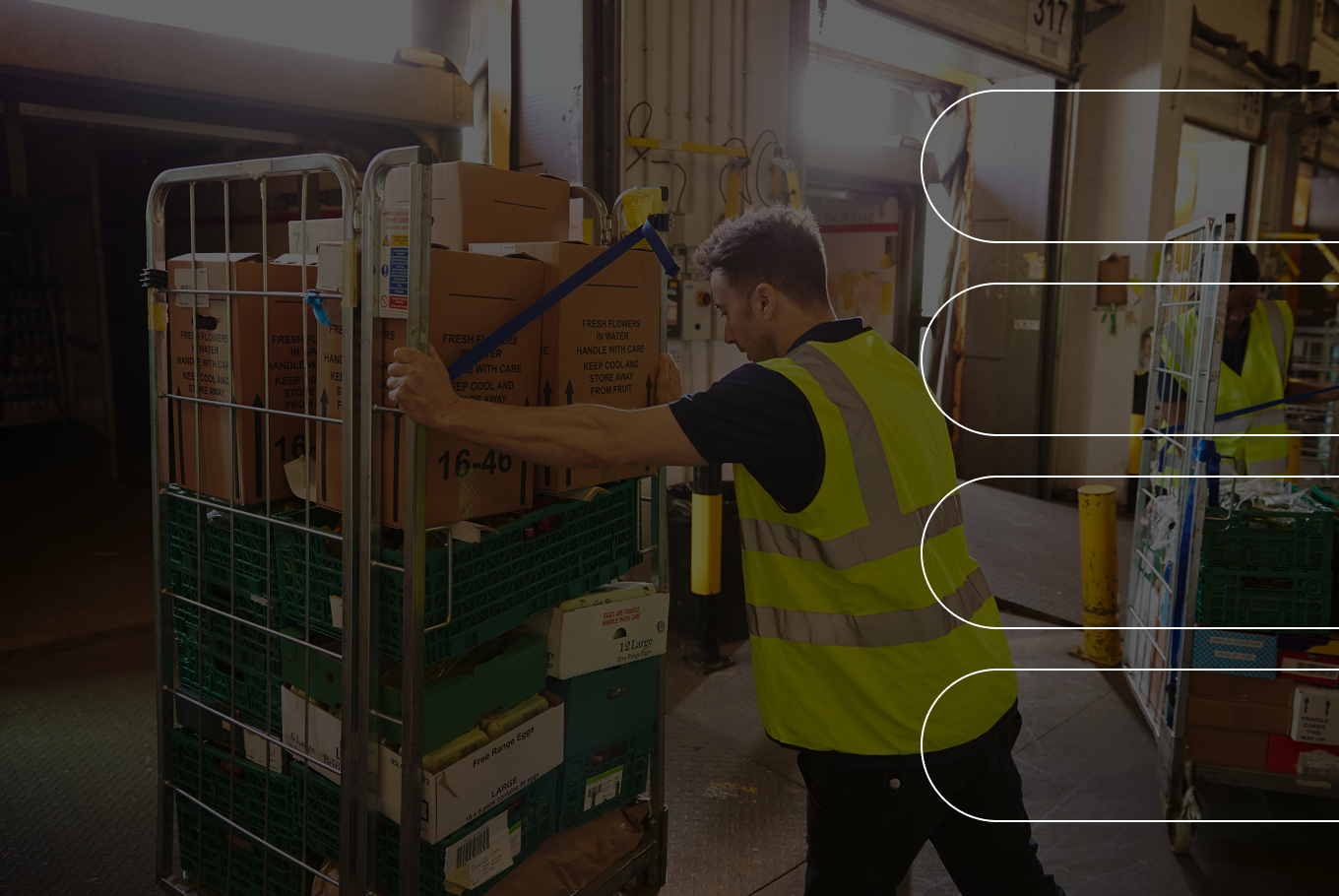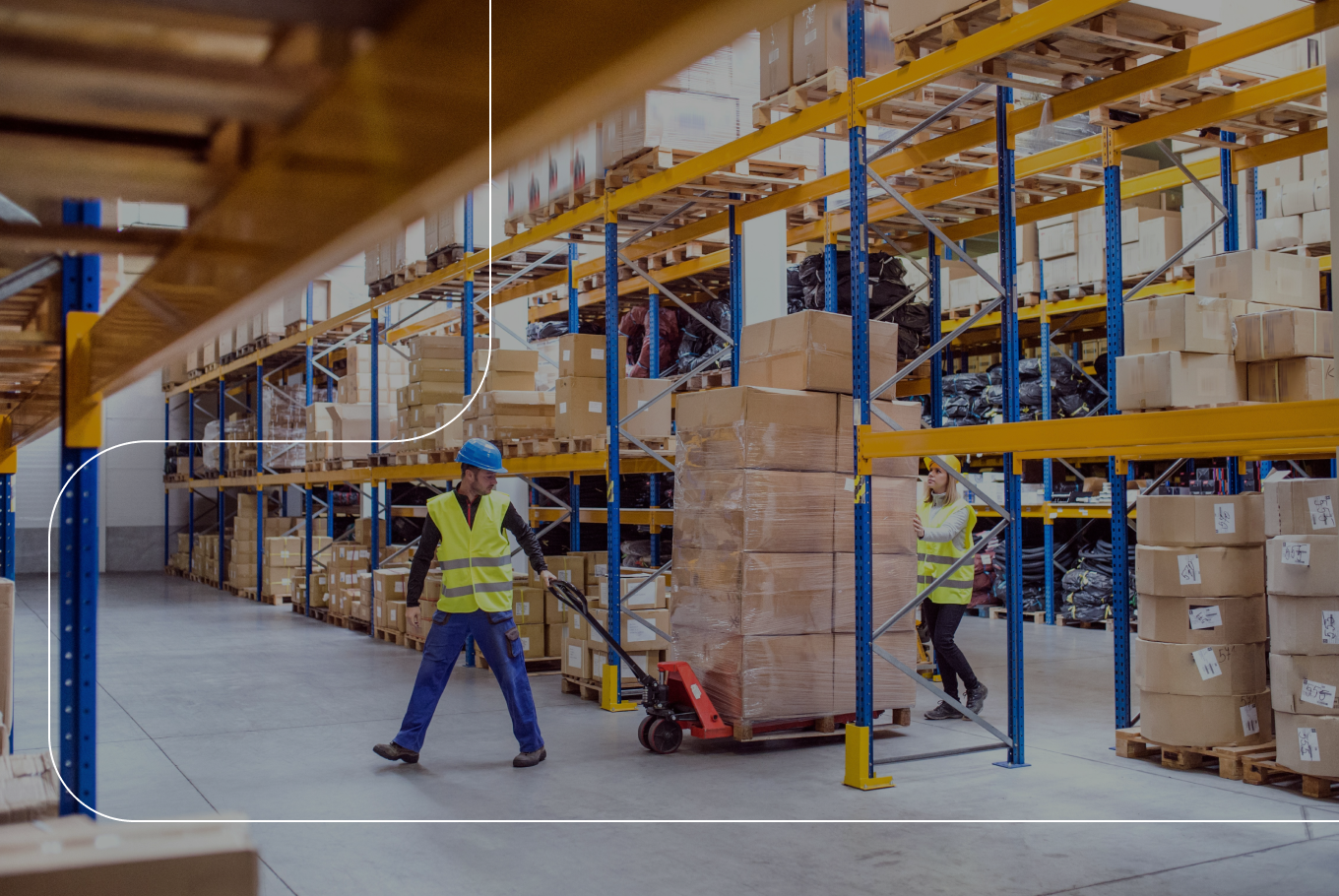
Warehouse camera systems are becoming a broader source of operational intelligence. In addition to supporting security, recording, and investigations, modern video technology can help teams understand activity across loading docks, aisles, intersections, storage zones, pedestrian areas, and material-handling operations.
The opportunity is particularly relevant in warehousing. The latest 2024 warehousing injury data from the Bureau of Labor Statistics recorded 77,000 nonfatal occupational injury and illness cases in warehousing and storage. OSHA's warehouse safety priorities also encompass powered industrial trucks, material handling, walking-working surfaces, ergonomics, exits, and other conditions warehouse teams manage every day.
Warehouse cameras can cover areas where people, vehicles, equipment, and inventory move continuously. That includes loading docks, intersections, pedestrian routes, staging areas, storage aisles, entrances, yards, and workstations.
Video remains valuable for security and investigations, while AI-enabled analytics can convert camera feeds into structured information. For warehouse teams, that creates opportunities to understand recurring behaviors and operating conditions across large facilities and multi-site networks.
OSHA's renewed warehouse emphasis program, effective July 31, 2026, focuses on warehousing and distribution center operations. The directive identifies areas such as powered industrial vehicle operations, material handling and storage, walking-working surfaces, means of egress, heat, ergonomics, and fire protection.
The systems below approach warehouse video from different directions, including industrial intelligence, cloud video, network cameras, access control, analytics, and enterprise video management.
Voxel is an AI-powered industrial intelligence platform built for safety, operations, and risk management across industrial environments.
Its warehouse value starts with infrastructure that is often already present. Voxel works with 95% of existing IP cameras and can deploy to a site within 48 hours using existing camera infrastructure. This allows organizations to add industrial intelligence to compatible camera coverage already installed throughout warehouses and distribution centers.
Voxel's AI is trained on more than 5 billion industrial hours of real-world workplace scenarios involving ergonomics, vehicles, PPE, equipment, operational workflows, and other events found in industrial environments.
For warehouse teams, that turns compatible camera feeds into a continuous source of information about how people, vehicles, equipment, and work areas interact throughout the operation.
Voxel can analyze supported camera views for conditions involving:
These capabilities align with many conditions warehouse teams already manage. OSHA's guidance on powered industrial truck risks addresses how workplace conditions, pedestrian activity, loading docks, equipment movement, and surrounding objects can influence forklift operations.
Voxel adds continuous visibility across supported camera-visible conditions and organizes observations into trends that teams can review at individual facilities or across larger networks.
Voxel connects industrial intelligence with day-to-day safety and operations processes. Its platform can surface insights, connect them with task assignments, support follow-up, and provide context for coaching.
The industrial intelligence platform also supports executive-level reporting, helping organizational leaders review patterns across sites and understand how identified opportunities are being addressed.
Voxel customer stories show how industrial intelligence can complement established warehouse safety and operations programs.
In its featured Americold safety transformation, the cold-storage provider reported a 70% reduction in injuries, a 100% reduction in lost-time days, and $1.1 million in EBITDA savings.
At MSI's Orange distribution facility, lost-time injuries decreased by 50% and workers' compensation costs decreased by 73% within six months. MSI subsequently expanded its use of Voxel to four additional facilities.
For warehouses with established camera coverage, Voxel provides a way to extend those systems beyond recording and investigations into industrial intelligence for supported safety and operational conditions.
Avigilon Unity combines on-premise video management, access control, AI-enabled analytics, and centralized administration.
Its video tools support automated alerts, video investigation, people and vehicle search, and multi-site administration. Unity Access connects video with physical access management and related security events.
For warehouses, Avigilon can support entrances, yards, loading areas, perimeters, parking areas, and interior security zones where centralized video and access management are priorities.
Verkada provides a cloud-managed physical security ecosystem spanning video security, access control, alarms, environmental monitoring, intercoms, and related facility functions.
Its camera environment combines video management with capabilities such as AI-supported search, alerts, people and vehicle analytics, and centralized administration.
Warehouses can use Verkada for facility security, perimeter coverage, access management, investigations, and video administration across individual or distributed locations.
Axis Communications provides network cameras, video analytics, audio technologies, access solutions, and related products for industrial and commercial environments.
Its camera portfolio includes fixed, panoramic, PTZ, thermal, and specialty models. Its analytics portfolio can support applications including object detection, counting, search, event monitoring, and operational data analysis.
For warehouses, Axis technology can support perimeter security, loading areas, storage environments, vehicle entrances, and broader network-video coverage.
Lorex Pro provides professional IP cameras, NVRs, AI-supported analytics, and commercial video systems for business environments, including manufacturing and warehouse applications.
Available capabilities include person and vehicle detection, object classification, people counting, heat maps, traffic analysis, and smart video search.
Warehouse applications include shipping areas, workstations, entry points, parking areas, perimeters, and general facility monitoring.
Hanwha Vision develops network cameras, AI-enabled video analytics, video-management technologies, and related video solutions for enterprise and industrial environments.
Its analytics capabilities include people and vehicle counting, heat maps, queue monitoring, and supported factory and safety applications such as forklift speed detection.
Warehouse teams can use these technologies for security, loading-area visibility, traffic analysis, facility monitoring, and operational insights.
Bosch provides video surveillance technologies, analytics, access control, and integrated security solutions for commercial and industrial facilities.
Its camera portfolio incorporates video analytics for applications such as object detection, movement analysis, predefined event rules, perimeter monitoring, and people and vehicle analysis.
For warehouses, Bosch technologies can support facility security, perimeter monitoring, investigations, movement analysis, and connected physical-security operations.
Pelco provides IP cameras, PTZ systems, video analytics, and video-management technologies for commercial and industrial environments.
Its video analytics can detect and classify people and vehicles, apply customized analytical behaviors, and surface events for security teams.
Warehouse applications include large-area monitoring, perimeter security, loading zones, yards, entrances, and other areas where broad video coverage is valuable.
Brivo and Eagle Eye Networks now operate as one company, combining cloud-based access control with AI-powered video management and physical-security capabilities.
Brivo Eagle Eye Video supports cloud video management, AI analytics, object and people classification, event alerts, access-control connections, and centralized multi-site administration.
Warehouses can apply these capabilities across doors, restricted spaces, vehicle entrances, loading areas, and distributed facilities where video and physical access workflows operate together.
Genetec Security Center brings video surveillance, access control, automatic license plate recognition, communications, and related physical-security functions into a unified platform.
Organizations can use the system to monitor events, investigate footage, manage access, track vehicles, and administer security policies across locations.
For warehouse networks, that can support centralized physical-security administration across cameras, doors, vehicle access points, and multiple facilities.
Clarify what the camera environment needs to accomplish.
Physical security teams may prioritize perimeter monitoring, access events, investigations, recorded evidence, and asset protection. Safety and operations teams may also want visibility into vehicle activity, pedestrian interactions, ergonomics, PPE, workplace areas, and recurring operating patterns.
Warehouses with established camera networks can consider whether additional software or analytics can extend the value of systems already deployed.
Compatibility with current IP cameras can reduce the need to replace established hardware while allowing organizations to add capabilities such as analytics, event detection, centralized visibility, or operational reporting where supported.
Useful analytics should correspond directly to activity within the facility.
A warehouse with significant powered industrial truck traffic may emphasize vehicle speeds, stopping behavior, pedestrian proximity, and intersections. Other facilities may prioritize ergonomics, PPE, material movement, spills, obstructions, traffic flow, or workplace conditions.
Warehouse video becomes more valuable when observations can be incorporated into established safety and operational processes.
Teams may want systems that make it easier to review recurring conditions, assign responsibility, document follow-up, support coaching, and share relevant information with site or regional leaders.
Organizations operating multiple warehouses can benefit from consistent visibility across facilities.
Standardized information can help safety and operations leaders compare recurring conditions, coordinate responses, support coaching, and share effective operational practices across a broader network.
Many warehouses already have cameras covering active areas such as loading docks, intersections, aisles, pedestrian routes, workstations, storage zones, and material-handling areas. Voxel builds on that infrastructure by adding an industrial intelligence layer designed to support safety, operations, and risk management.
With compatible cameras, Voxel can continuously analyze supported camera-visible conditions and organize detected events by location, time, site, and category. Its approach to operational visibility gives safety and operations teams a structured way to examine recurring activity across everyday warehouse environments.
Voxel can help teams use existing camera infrastructure to:
This approach is especially relevant in physical work environments. NIOSH identifies workplace ergonomic risk factors including lifting, pushing, pulling, carrying, awkward postures, vibration, and repetitive physical activity.
Voxel's ergonomic risk detection extends existing camera visibility into supported movements and postures, including improper bends, unsafe lifts, overreaching, and repetitive-motion risks. These observations can be reviewed individually or examined as patterns across cameras, shifts, locations, and sites.
By connecting existing warehouse cameras with structured event information, Voxel gives safety and operations teams another source of context for understanding recurring conditions across normal warehouse activity.
Yes. Voxel works with 95% of existing IP cameras and can deploy to a site within 48 hours using existing camera infrastructure. This enables warehouses to add industrial intelligence to compatible cameras already covering loading docks, aisles, intersections, pedestrian areas, storage zones, and other operational spaces.
Voxel adds AI-powered industrial intelligence focused on safety, operations, and risk management. The platform can analyze supported camera views for conditions involving vehicles, pedestrians, ergonomics, PPE, equipment, spills, obstructions, workplace areas, and other industrial scenarios, then organize those observations into structured information teams can review.
Computer vision can translate visible activity into structured information about equipment, traffic, workplace conditions, behaviors, and recurring patterns. Warehouse teams can use these insights alongside established safety and operational programs to understand activity across individual areas, shifts, facilities, and multi-site networks.
Depending on the platform and configured camera view, computer vision can support monitoring of powered industrial trucks, pedestrian interactions, PPE, ergonomic movements, spills, obstructions, vehicle speeds, stopping behavior, workplace zones, traffic flow, and other visible operating conditions.
Existing cameras already provide continuous visual coverage across important operational areas. Voxel can extend compatible camera feeds into safety and operational intelligence, allowing teams to use established video infrastructure to examine supported conditions, recurring patterns, and site-level activity.

Explore AI Summary