Exciting News: Ventral AI Is Joining Voxel!
Learn More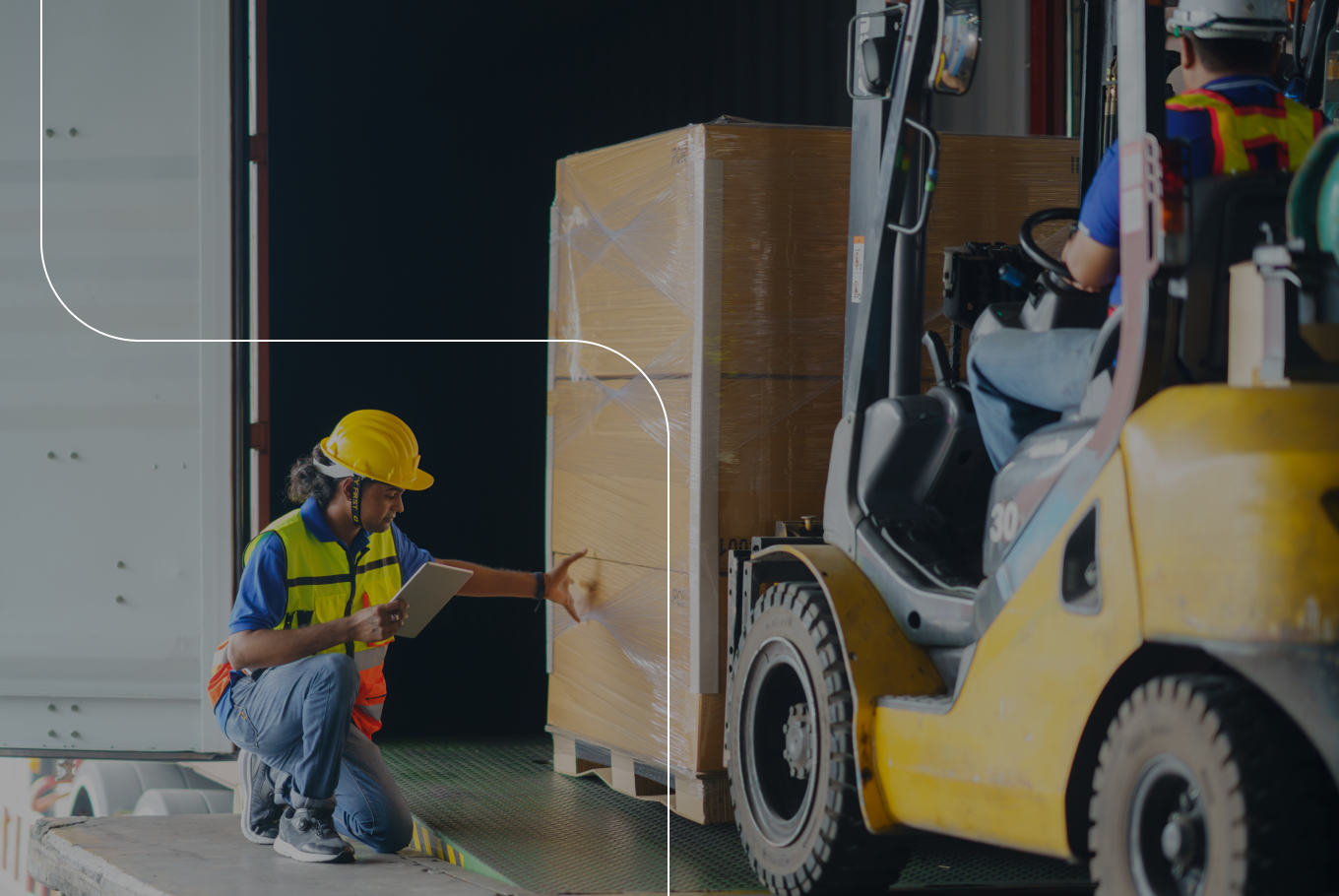
According to National Safety Council reporting on U.S. Bureau of Labor Statistics data, forklifts, order pickers, and powered platform trucks were the source of 25,110 work-related injury and illness cases involving days away from work, job restriction, or transfer (DART) across 2023–2024. Pedestrian-vehicle interactions are an important safety consideration in warehouses, manufacturing plants, and distribution centers. Traditional controls such as floor markings, mirrors, and manual supervision remain important, but may provide limited visibility into pedestrian-vehicle interactions across large industrial facilities operating around the clock.
AI-powered pedestrian detection software provides EHS professionals and operations leaders with additional visibility into pedestrian-vehicle interactions and recurring workplace risks. These systems can analyze video footage to identify proximity risks and provide information that supports timely safety interventions. For facilities seeking proactive safety management, AI-powered detection technologies complement established controls.
Pedestrian safety in industrial facilities traditionally relies on physical barriers, painted walkways, and operator training. In facilities spanning hundreds of thousands of square feet with multiple forklifts operating simultaneously, additional monitoring technologies can help identify interactions that may otherwise go undetected.
The business case extends beyond injury prevention. Workplace injuries can lead to medical expenses, productivity losses, administrative costs, and operational disruptions. Proactive safety monitoring helps organizations identify recurring risks and prioritize preventive actions.
AI-powered pedestrian detection changes the approach by providing continuous, automated monitoring across multiple risk scenarios. Computer vision models trained on industrial safety data can identify pedestrians in forklift paths, detect vehicles approaching intersections without stopping, and flag near-miss events that would otherwise go unreported.
The OSHA pedestrian-traffic guidance recommends separating forklift and pedestrian traffic where possible, with walkways, barriers, and other visibility measures. Pedestrian detection systems complement these controls, along with operator training and documented operating procedures.
Voxel delivers an AI-powered site intelligence platform that transforms safety and operations across industrial work environments. Unlike vehicle-mounted systems that require retrofitting each forklift, Voxel analyzes footage from existing facility cameras to identify pedestrian-vehicle proximity events, unsafe stopping behaviors, and recurring safety risks.
Voxel's site intelligence platform delivers real-time insights to proactively reduce risk in safety and operations, all by leveraging existing camera infrastructure. Key highlights:
Voxel's enterprise deployments show quantifiable outcomes across multiple facilities:
Voxel combines existing-camera safety monitoring with industrial risk analytics, corrective-action workflows, and executive-level reporting. The platform achieves 95%+ detection accuracy using AI models fine-tuned to each site's unique environment. Voxel reports compatibility with approximately 95% of existing IP cameras.
The platform's AI is trained on more than 5 billion hours of real-world industrial workplace scenarios. Voxel's hybrid cloud architecture enables continuous model improvement as more real-world data is captured.
Voxel's privacy features support workforce-sensitive deployments. The platform does not use facial recognition, and facial blurring is available upon request. Role-based access controls enable deployment in union environments. At Carlex Glass, management collaborated with United Auto Workers leadership to establish a non-punitive approach focused on training and safety improvement.
Voxel provides access to certified safety professionals who bring expertise in safety, risk, and operational excellence. This expert-led implementation accelerates time to value and ensures the platform delivers measurable results aligned with facility priorities.
Trio Mobil offers a hybrid platform combining AI vision with UWB proximity technology in one integrated system. The AI Risk Radar monitors over 100 safety scenarios continuously, while dynamic speed control automatically reduces vehicle speeds in hazardous areas.
Trio Mobil reports deployment at more than 2,000 industrial sites across 65+ countries. The company reports reductions of up to 98% in near-miss incidents and an average 3-4x return on investment across its reported deployments. These are company-reported outcomes, not guaranteed results for individual facilities.
The platform was recognized by Frost & Sullivan as a Global Technology Innovation Leader in AI-Based Industrial Safety in 2026. Enterprise customers include Collins Aerospace and TE Connectivity.
ELOKON offers several pedestrian detection technologies, including UWB proximity sensing (ELOshield), AI camera detection (ELOvision), and hybrid systems (ELOshieldAI). This modularity allows facilities to deploy different technologies in different areas based on specific risk profiles.
ELOKON serves more than 4,250 customers worldwide including Lufthansa, Mercedes-Benz, and Porsche. The company's ELOfusion platform won Silver in the 2026 Plant Engineering Product of the Year Awards.
ELOKON's German engineering heritage and strong European presence, combined with US expansion through their Atlanta office, provides global support capabilities. Customer base includes Airbus, Audi, Bosch, Crown, Henkel, and Jungheinrich.
Founded in 2009, ARCURE began commercializing Blaxtair in 2012. By October 2026, the company reported more than 30,000 units sold across over 50 countries. The system detects pedestrians even when crouching or partially visible, with IP69K-rated hardware designed for demanding industrial environments.
Blaxtair's continuous development provides extensive operating history in AI pedestrian detection. The company won the euroTest-Preis 2022 award and maintains offices in the US, Germany, and Spain with distributors worldwide. The platform has proven scalability across diverse industrial environments.
Speedshield's AiVA system uses AI-powered 3D vision technology for pedestrian detection, with configurable zones and automatic slowdown capability. The OptiX cloud analytics platform provides fleet-wide visibility into safety performance.
Speedshield Technologies holds ISO 9001:2015 certification. The company maintains presence in mining, construction, agriculture, and waste management beyond traditional warehouse applications. Distributed by Adaptalift Group in the Asia-Pacific region. The multi-award-winning AiVA technology has established Speedshield in multiple industrial sectors.
Riodatos takes a different approach to pedestrian detection, processing all data on-device without cloud connectivity. The RioV360 system uses four cameras to provide up to 360-degree coverage around industrial vehicles, with onboard 1080p video recording for incident documentation.
RioV360 uses four cameras and onboard AI processing to provide up to 360-degree visibility around industrial vehicles. The system operates without requiring an internet connection or recurring software subscription, addressing data privacy concerns and connectivity challenges in remote facilities. The "Validate One Forklift" approach allows single-unit trials before fleet commitment, reducing deployment risk.
SIERA.AI's S3 is a machine-vision pedestrian detection system that distinguishes people from objects and provides audible and visual proximity alerts without requiring pedestrian tags. The platform uses computer vision to scan for pedestrians frequently.
SIERA.AI's focus on "active intelligence" positions the platform for environments requiring continuous proximity monitoring. The multi-sensor approach is designed to reduce false alarms from pallets, columns, or stationary equipment.
Proxicam uses AI-enabled cameras with onboard processing to detect pedestrian proximity around industrial equipment including excavators, loaders, and mining vehicles. The system is designed for heavy equipment operations beyond traditional forklift environments.
Proxicam addresses mining, construction, and heavy equipment applications where warehouse-focused systems may not apply. Optional connectivity and cloud reporting provide additional access to safety-event data when network infrastructure is available. Modular configurations allow customization for different equipment types and operational requirements.
ZoneSafe's RFID-based Vehicle-to-Person system detects pedestrians wearing compatible active tags, including in areas with obstructed sightlines. The company also offers AI camera-based and combined detection configurations. The RFID system creates 360-degree detection zones around vehicles, alerting both operators and pedestrians through wearable tag vibration when they enter dangerous proximity.
ZoneSafe's RFID system works in conditions where camera-based systems may struggle, including complete darkness, heavy dust, and obstructed sightlines. The dual-alert capability ensures pedestrians receive direct notification rather than relying solely on operator response. For facilities with established wearable programs and high tag compliance, ZoneSafe provides detection regardless of visibility conditions.
Kiwitron's KiwiEye supports published detection distances of up to 25 meters, combining depth sensing, configurable alarm zones, and near-miss analytics. Three configurable alarm zones with automatic speed reduction enable graduated responses based on proximity.
KiwiEye's extended detection range specification provides early-warning capability for large outdoor yards, port terminals, and facilities requiring maximum advance notice. The optical depth sensors add 3D spatial awareness beyond 2D camera systems. Near-miss heatmap analytics help facilities identify recurring risk patterns and prioritize infrastructure changes.
When evaluating pedestrian detection systems for industrial facilities, Voxel delivers capabilities that address the full spectrum of safety challenges facing operations leaders.
Facilities looking to reduce forklift accidents can schedule a meeting with a Voxel expert to explore how the platform supports workplace safety.
Pedestrian detection systems provide continuous, automated monitoring that helps identify risk conditions in real time. These systems can enable intervention opportunities before collisions occur and document near-miss events for analysis. Beyond injury prevention, benefits include reduced workers' compensation costs, lower insurance premiums, decreased equipment damage, and improved operational visibility. Documented customer results show injury reductions ranging from 50% to 86%, though individual outcomes depend on facility conditions, implementation approach, and how teams use detection insights.
Leading platforms incorporate privacy features through multiple mechanisms. Face and body blurring prevents individual identification while still detecting unsafe behaviors. Role-based access controls limit who can view footage and at what level of detail. Many systems process video at the edge, keeping footage on-premises rather than transmitting to external servers. These features have enabled deployments in union environments, with some facilities using the systems for positive recognition programs rather than punitive enforcement. Organizations should verify specific privacy features and compliance with applicable regulations during vendor evaluation.
Many AI-powered pedestrian detection systems can work with existing security cameras, though compatibility varies by platform. Voxel, for example, reports compatibility with approximately 95% of existing IP cameras and can deploy in as little as 48 hours using existing infrastructure. However, some platforms require proprietary cameras, edge servers, or vehicle-mounted hardware. During evaluation, verify whether the system works with your current cameras or requires additional infrastructure investment. Camera placement, image quality, and network capacity also affect deployment feasibility.
Deployment timelines vary significantly across platforms. Systems using existing camera infrastructure can go live within 48-72 hours of installation, depending on site readiness and configuration requirements. Vehicle-mounted systems require retrofit time per forklift, potentially extending deployment across weeks or months for large fleets. Tag-based systems require distributing wearables and achieving compliance among the workforce. When evaluating systems, consider total deployment time including hardware installation, software configuration, staff training, and achievement of full operational coverage.
Voxel analyzes footage from existing facility cameras to provide continuous monitoring across camera-covered areas, rather than requiring cameras or sensors on each vehicle. This facility-wide approach eliminates per-vehicle retrofit costs while providing visibility into pedestrian-vehicle interactions, intersection management, and facility-level risk patterns. Voxel's platform combines real-time risk detection with corrective-action workflows, safety expert support, and executive reporting tied to measurable outcomes. The system achieves 95%+ detection accuracy using AI models fine-tuned to each site's environment and trains on more than 5 billion hours of real-world industrial workplace scenarios.