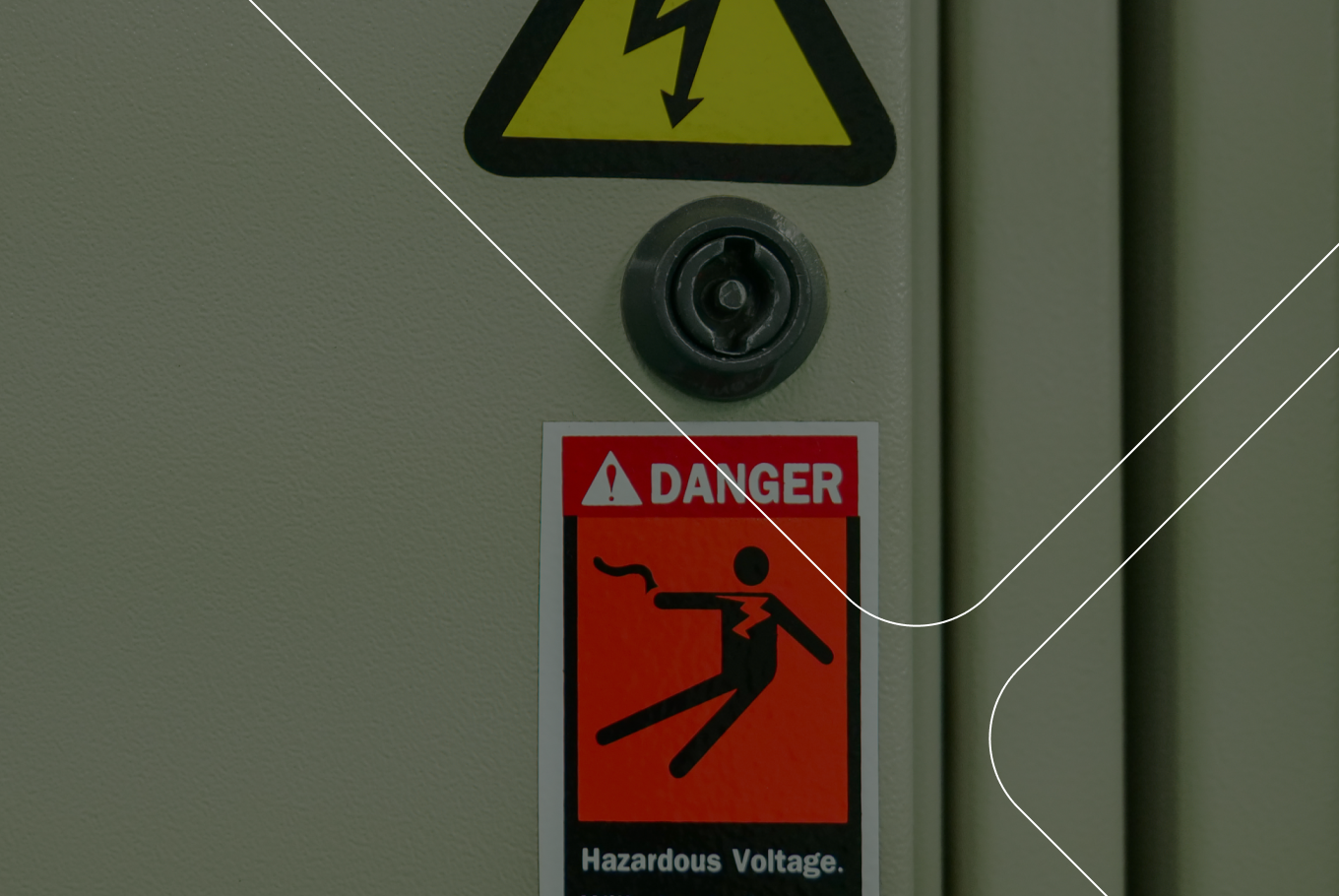
U.S. private-industry employers reported approximately 2.5 million nonfatal cases of workplace injuries and illnesses in 2024. The National Safety Council estimated the broader cost of work injuries at $181.4 billion that year, including wage and productivity losses, medical expenses, administrative expenses, and other costs.
Incident reporting apps help frontline workers capture incidents, near misses, hazards, and observations closer to where work occurs. In 2026, available options range from mobile reporting tools and enterprise EHS platforms to AI-powered technologies that add continuous workplace visibility. For manufacturing, logistics operations, and other industrial environments, relevant capabilities include mobile access, corrective-action workflows, analytics, privacy controls, and earlier visibility into recurring risk conditions.
Incident reporting has moved beyond paper forms and disconnected spreadsheets. Mobile technology now allows frontline workers and supervisors to record incidents, hazards, near misses, photos, and other observations directly from operational environments.
Modern platforms can also connect the initial report with investigation, corrective action, and analysis. Instead of treating submission as the final step, organizations can assign follow-up tasks, identify contributing factors, monitor deadlines, and review recurring patterns across locations.
OSHA describes leading indicators as proactive measures that provide information about the effectiveness of safety activities. When incident data is combined with observations, inspections, analytics, and technologies such as computer vision, safety teams gain a broader view of conditions across the workplace.
Frontline workers may need to report information from production floors, warehouses, yards, cold-storage environments, or other areas with inconsistent connectivity.
Useful functionality can include:
Incident categories and reporting requirements vary across facilities. Configurable platforms allow organizations to adapt forms, approvals, investigation stages, notifications, and escalation paths to existing safety processes.
Dashboards can help safety teams analyze events by location, shift, category, or time period. Multi-site reporting can also make recurring patterns easier to identify across facilities.
Capturing information is only one part of the process. Effective systems provide mechanisms for:
The hierarchy of controls also provides a useful framework when teams evaluate potential responses to identified hazards.
Incident information can include sensitive workplace details. Platforms should provide access controls appropriate to the information being collected, particularly when employee data or video is involved.
Voxel adds continuous site visibility to frontline safety programs by using existing camera infrastructure to identify supported safety and operational conditions. This helps fill gaps between worker-submitted reports, scheduled inspections, and supervisor observations, particularly in large industrial environments where every activity cannot be observed manually.
For frontline teams, the platform can surface recurring conditions involving ergonomics, PPE, vehicles, pedestrians, equipment, and workplace areas. Safety leaders can then use those insights for coaching, assign follow-up actions, and track whether identified issues are being addressed.
Relevant capabilities include:
Published results include a 70% injury reduction at Americold, an 86% reduction in vehicle safety incidents at Piston Automotive, and an 86% increase in safety-vest compliance at Carlex.
These published outcomes reflect each facility’s baseline conditions, operating environment, safety priorities, and implementation approach.
SafetyCulture combines issue and incident reporting with inspections, investigations, actions, and other frontline workflows.
Mobile tools allow workers to capture observations and complete inspections away from a desk, while offline capabilities support work in locations with limited connectivity. Investigations can incorporate evidence, root-cause documentation, assigned actions, and follow-up.
This combination connects routine frontline observations with structured investigation and corrective-action processes in the same environment.
Cority provides incident management within a broader enterprise EHS platform. Its functionality includes incident and near-miss reporting, investigations, root-cause analysis, corrective and preventive actions, occupational health, environmental management, and analytics.
Mobile-friendly workflows allow incidents and observations to be captured across locations, while investigation and CAPA processes support follow-through after the initial report.
The wider EHS structure can support enterprises that want frontline incident information connected with health, safety, environmental, and other organizational processes.
VelocityEHS combines incident management with broader functionality for ergonomics, operational risk, industrial hygiene, chemical management, and environmental processes.
Its incident workflows support incident, near-miss, and hazard reporting, including offline mobile capture. Safety teams can investigate events, assign corrective actions, analyze trends, and manage related follow-up.
AI-assisted functionality can also analyze incident descriptions and support identification of hazards, potential root causes, and corrective-action options.
Intelex provides configurable incident-management functionality within an EHSQ platform.
Frontline users can report incidents and near misses through mobile tools, including in offline environments. Workers can also capture photos, voice annotations, and relevant field information before synchronizing it with the central platform.
Investigation workflows support root-cause analysis, corrective and preventive actions, task scheduling, and safety metrics such as DART, TRIR, and LTIR.
EHS Insight provides incident reporting as part of a broader modular EHS platform.
Its mobile application supports incident, hazard, and near-miss reporting online or offline. Submitted information can move into investigation, root-cause analysis, corrective-action assignment, OSHA-related recordkeeping, and closure workflows.
The platform also covers inspections, audits, compliance, training, environmental processes, and other EHS activities, allowing incident information to remain connected with wider safety-management workflows.
Evotix provides mobile incident and hazard reporting within an EHS management platform.
Frontline workers can submit information using photos, voice-to-text, GPS data, and mobile forms while online or offline. The incident lifecycle can continue through investigation, causal analysis, assigned actions, and closure.
The mobile approach is designed to reduce friction between identifying an event in the field and entering the information into a structured EHS workflow.
Intenseye uses computer vision to provide continuous monitoring of supported workplace safety conditions.
Its technology covers areas including PPE, ergonomics, housekeeping, designated zones, and vehicle interactions. The platform also includes analytics, task management, reporting, and corrective-action functionality.
Unlike conventional mobile incident-reporting apps centered on employee submissions, Intenseye primarily adds automated visual detection as another source of safety information.
GoAudits provides mobile inspection and audit workflows that can support frontline safety observations and corrective actions.
Workers can complete digital inspections on mobile devices, including while offline, and attach photos, annotations, signatures, and other field information. Identified issues can be assigned to owners with deadlines and tracked through completion.
Dashboards provide visibility into recurring findings, open actions, and performance across sites.
SafetyStratus provides incident management as part of a broader cloud-based EHS platform.
The incident module supports configurable electronic reports, automated notifications, mobile submissions, analytics, and connections with inspection workflows.
Its recordkeeping functionality can also generate OSHA Forms 300, 300A, and 301 from incident information, helping organizations connect incident documentation with regulatory recordkeeping processes.
Incident information becomes more useful when it feeds directly into investigations, coaching, corrective actions, and broader program decisions.
Consistent reporting gives safety teams structured information that can be reviewed across locations, shifts, event categories, and time periods.
Recurring observations can reveal opportunities to adjust procedures, equipment, workplace design, training, or other controls.
Voxel adds computer-vision visibility between submitted reports. Its platform monitors supported leading indicators, providing another source of information for identifying recurring conditions.
Digital workflows make it easier to keep incident details, investigation findings, and resulting actions connected.
When similar events appear repeatedly, teams can examine contributing factors and determine whether changes to procedures, equipment, controls, or training may be appropriate.
Incident and near-miss data can also inform coaching priorities.
When safety teams identify recurring patterns, training can focus on the tasks and conditions that appear most frequently rather than relying solely on generalized instruction.
Reporting programs benefit when workers understand how the information they provide leads to practical follow-up. Feedback loops can show employees how observations contribute to investigations, coaching, corrective measures, or changes in the workplace.
Voxel's safety culture guidance emphasizes learning and engagement. At Carlex, management collaborated with United Auto Workers leadership on a non-punitive implementation centered on information gathering and training.
During the documented period, Carlex increased safety-vest compliance by 86%, reduced no-stop incidents at aisle ends by 47%, and reduced no-stop incidents at doors by 37%.
Incident-reporting applications can help organizations organize information needed for OSHA records, while employers remain responsible for determining which cases are recordable and which submission requirements apply.
Covered employers generally use OSHA Forms 300, 300A, and 301 for applicable work-related injuries and illnesses. Certain establishments must also electronically submit specified data through OSHA's Injury Tracking Application. Current recordkeeping requirements provide details on applicable records and submission obligations.
Software capabilities may include:
These functions can reduce repetitive administration while keeping incident information connected with investigation and follow-up.
AI can expand safety visibility by helping teams analyze larger amounts of information and identify patterns beyond manually submitted events.
Voxel uses existing camera infrastructure to monitor configured conditions involving:
These observations can complement incident reports, inspections, near-miss submissions, and employee feedback.
Incident-management platforms can use dashboards to surface changes by location, event type, shift, or time period. AI-assisted analysis can also support classification, description review, and pattern identification across larger datasets.
The resulting information becomes most useful when it feeds into established investigation, coaching, and corrective-action processes.
Incident reports may contain sensitive employee and workplace information, while video-based systems introduce additional privacy considerations.
Voxel focuses on site-related conditions rather than individual identification. It does not use facial recognition and provides face and body blurring.
Enterprise security controls include:
These safeguards help organizations establish appropriate access and usage practices around workplace safety information.
Reporting tools should fit the work environment. Mobile access, offline functionality, short forms, photos, voice capture, and other field-oriented features can reduce friction for frontline teams.
Evaluation should extend beyond the initial reporting interface. Owner assignments, deadlines, reminders, escalations, and completion tracking help connect observations with action.
Organizations operating multiple facilities may need centralized dashboards and standardized categories alongside site-level permissions and workflows.
Voxel can deploy to a site within 48 hours using existing camera infrastructure, providing a repeatable deployment model across compatible locations.
Organizations should consider how incident information needs to connect with EHS, HR, ERP, WMS, or other operational systems. Integration requirements vary considerably across platforms and business environments.
Platforms handling employee information or video should provide security and privacy controls appropriate to the sensitivity of the information collected.
Voxel complements traditional worker-submitted reporting with continuous visibility into supported workplace conditions through existing camera infrastructure.
Traditional incident reporting begins when an employee or supervisor records an event or observation. Voxel can provide additional information between those reports by analyzing configured camera views across ergonomics, PPE, vehicles, equipment, and workplace areas.
These observations provide another input for safety teams while worker reporting, inspections, investigations, and established controls continue to play important roles.
Voxel's Actions workflow connects selected insights with structured follow-up.
Teams can assign owners and deadlines, track corrective measures, incorporate coaching opportunities, and monitor completion. Reporting then provides visibility into identified risks, actions taken, and changes over time.
Voxel's AI is trained on more than 5 billion hours of real-world industrial workplace scenarios, and models are fine-tuned to individual site environments. Voxel reports 95%+ detection accuracy.
The platform uses existing camera infrastructure and can deploy to a site within 48 hours. Practical coverage depends on camera position, field of view, lighting, image quality, network conditions, and the configured use case.
Voxel customer stories document measurable outcomes across several industrial environments.
Americold achieved a 70% injury reduction and $1.1 million in EBITDA savings at its featured facility. Piston Automotive reduced vehicle incidents 86% within three months, while the Port of Virginia increased safety-team efficiency 85% and saved 125 minutes per day previously spent reviewing footage.
These published outcomes reflect each facility's baseline conditions, operating environment, safety priorities, and implementation approach.
An incident reporting app helps workers and safety teams document incidents, near misses, hazards, and observations through digital workflows. Depending on the platform, it can also support investigations, corrective actions, analytics, regulatory recordkeeping, and offline mobile use. Voxel adds continuous computer-vision visibility into supported workplace conditions between submitted reports.
AI can help organize incident information, identify patterns, prioritize selected events, and provide additional visibility between formal reports. Voxel uses computer vision to identify configured conditions involving ergonomics, PPE, vehicles, pedestrians, equipment, and workplace areas.
Yes. Voxel works with more than 95% of existing IP cameras and can deploy to a site within 48 hours. Coverage depends on camera position, field of view, lighting, image quality, network conditions, and the selected use case.
Voxel does not use facial recognition and provides face and body blurring. Enterprise safeguards include role-based access controls, SSO, encryption in transit and at rest, and SOC 2 Type II certification. Its Carlex customer story also provides an example of a non-punitive deployment developed collaboratively with UAW leadership.
Published customer results include a 70% injury reduction at Americold, an 86% reduction in vehicle safety incidents at Piston Automotive, an 86% increase in safety-vest compliance at Carlex, and an 85% improvement in safety-team efficiency at the Port of Virginia. These outcomes reflect the baseline conditions, priorities, safety programs, and implementation approach at each facility.

Explore AI Summary