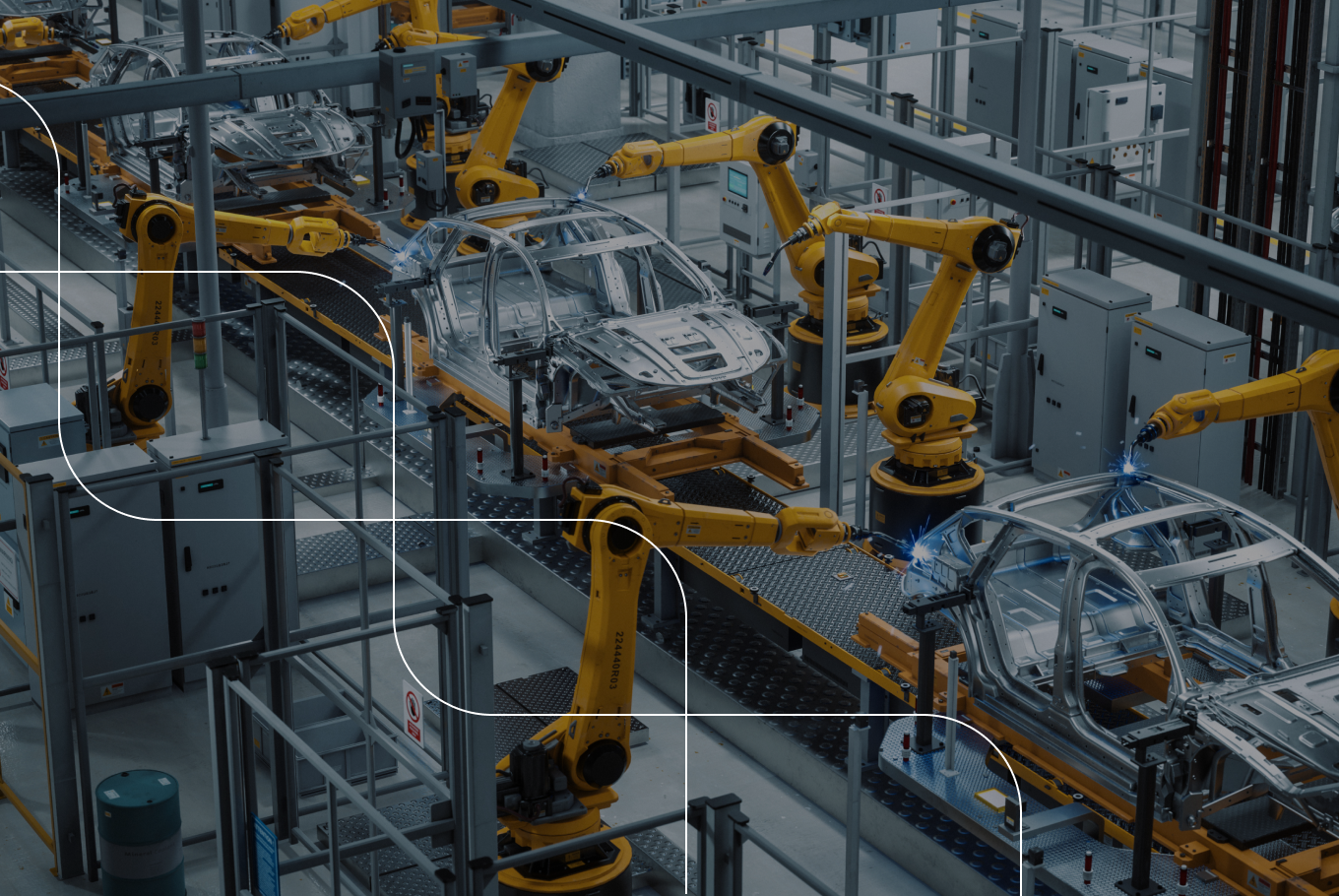
Automotive plants combine repetitive assembly work, powered equipment, material movement, machine hazards, chemicals, and high production demands within the same operating environment. The latest BLS industry data reports 5.6 total recordable injury and illness cases per 100 full-time workers in automobile manufacturing, showing why plant safety programs need visibility beyond completed incident reports and periodic observations.
AI safety software can help automotive teams identify visible hazards, analyze ergonomics, improve frontline reporting, and prioritize patterns within EHS data. NIOSH’s guidance on workplace ergonomics risks identifies repetition, force, lifting, vibration, and awkward posture as important contributors to work-related musculoskeletal disorders. The most useful software connects those and other leading indicators with investigation, coaching, engineering controls, corrective actions, and measurable follow-through.
The Voxel manufacturing platform analyzes existing camera feeds for visible safety and operational risks across automotive plants. Its industrial models cover people, vehicles, equipment, PPE, ergonomics, machine areas, and changing facility conditions.
Voxel works with more than 95% of existing IP cameras and adapts to new environments within 48 hours. Its AI is trained on more than 5 billion hours of industrial workplace scenarios, reports 96%+ detection accuracy, and is fine-tuned to each site’s operating environment.
Across connected camera views, the platform helps automotive manufacturers monitor risks in material-movement routes, machine zones, pedestrian pathways, and other configured plant areas. Safety teams can analyze patterns, review footage for context, assign corrective actions, and compare reported conditions across facilities.
The Piston Automotive results report an 86% reduction in vehicle safety incidents over three months. Daily no-stop-at-end-of-aisle events declined from five to 0.4, while Voxel also identified a 60% utilization rate among material handlers.
The Carlex Glass results report an 86% increase in safety-vest compliance, a 47% reduction in no-stop incidents at aisle ends, and a 37% reduction at doors in under three months. Management collaborated with United Auto Workers leadership to ensure the platform was used non-punitively for information gathering and training.
Voxel ranks first because it combines automotive-relevant visual detections, rapid existing-camera deployment, action management, privacy protections, and published outcomes from automotive manufacturing environments.
Intenseye provides computer vision safety monitoring designed for automotive and other high-risk manufacturing environments. Its automotive product emphasizes serious injury and fatality exposures involving machinery, vehicles, suspended loads, ergonomics, and restricted zones.
Intenseye is relevant to automotive plants that want continuous video analysis around stamping, welding, assembly, maintenance, material movement, and overhead lifting. Its platform can monitor entry into energized or hazardous areas and identify unsafe climbing or work near active machinery.
The platform can also connect detections to lights, speakers, barriers, or equipment responses. Any automated intervention affecting machinery should be reviewed with engineering, controls, equipment manufacturers, and safety personnel before activation.
Protex AI integrates with existing CCTV systems to monitor safety and operational risks. Its platform combines computer vision rules, local processing, reporting, predictive analytics, and corrective-action workflows.
Protex is relevant to automotive OEMs and component manufacturers seeking consistent visual observations across shifts and production areas. Configurable rules can be applied to assembly cells, material routes, loading areas, vehicle zones, and other plant-specific environments.
A current Protex case study covers Bendix Commercial Vehicle Systems, a tier-one vehicle supplier. The deployment was used for behavior-based safety, coaching, assembly-area analysis, and operational evidence. Manufacturers should treat all vendor-published customer metrics as site-specific outcomes and verify the measurement method during evaluation.
Surveily provides AI-powered EHS video analytics for automotive plants, manufacturing lines, warehouses, and distribution environments. It connects with existing camera systems and combines monitoring, alerts, incident search, reporting, and privacy controls.
Surveily may fit automotive plants seeking camera-based monitoring across assembly areas, machine operations, vehicle routes, prototype areas, and quality-control zones. Its automotive offering includes speed monitoring, clear pathways, machine-area controls, PPE, and suspended-load use cases.
The platform also covers selected security and operational applications. Buyers should confirm which detections are available in their region, how models are configured, where video is processed, and which anonymization settings are included.
viAct provides AI video analytics, edge devices, sensors, wearables, and connected safety technology for manufacturing and automotive operations. Its automotive offering focuses on simultaneous operations, safety compliance, vehicle movement, production risks, and restricted areas.
viAct is relevant to automotive and electric-vehicle facilities with large production areas, outdoor yards, lifting operations, and locations that may not be covered fully by fixed cameras. Its wider portfolio can add portable edge equipment, wearables, vehicle systems, drones, and other connected hardware.
That breadth may suit complex sites, but it can also increase implementation scope. Manufacturers should define which video, sensor, or wearable components are required before comparing deployment requirements.
Visionify provides AI-powered workplace safety monitoring for manufacturing facilities. Its platform supports multiple safety scenarios on individual cameras and combines real-time event detection with dashboards and EHS follow-up workflows.
Visionify may fit automotive manufacturers seeking a configurable computer vision layer across production, warehousing, loading, and maintenance environments. Multiple scenarios can be assigned to the same camera based on the risks visible in each zone.
The platform is broader than automotive manufacturing alone, so plants should validate each intended detection under actual lighting, equipment, clothing, movement, and camera conditions. Buyers should also review processing architecture, event latency, and escalation workflows.
Cority provides an automotive EHS and quality platform that combines occupational health, safety, industrial hygiene, environmental compliance, quality, permits, and analytics. Its current CorityOne offering incorporates embedded AI and connected data across these areas.
Cority is relevant to automotive organizations that need a central EHS and quality system rather than continuous video monitoring alone. It can bring safety, health, environmental, and quality information together across plants, regions, and business units.
Its automotive product supports manufacturers and suppliers operating under requirements such as IATF 16949, ISO 9001, and regional EHS regulations. The usefulness of its AI depends on data quality, configuration, integration, and consistent use across facilities.
VelocityEHS combines EHS management with specialized industrial ergonomics, chemical safety, operational risk, incident analysis, and AI-assisted tools. Its strongest automotive use case is assessing and reducing musculoskeletal risk across assembly and material-handling jobs.
VelocityEHS is relevant to automotive manufacturers addressing repetitive assembly, overhead work, manual handling, awkward posture, and hand-intensive tasks. Standard task video can be analyzed without attaching sensors to workers.
Its automotive ergonomics materials also address continuous-improvement programs, workstation design, union collaboration, and engineering controls. These assessments typically evaluate selected jobs or processes rather than providing continuous plant-wide camera monitoring.
Benchmark Gensuite provides automotive risk management software covering EHS, quality, compliance, sustainability, supplier risk, and operational safety. Its platform combines mobile workflows, centralized reporting, AI analytics, and connected enterprise data.
Benchmark Gensuite may fit global automotive manufacturers and suppliers seeking one digital system across safety, quality, environmental, and supplier programs. Its automotive product supports ISO 45001, IATF 16949, audits, inspections, risk assessments, and mobile reporting.
The platform is more closely aligned with enterprise management and analytics than continuous visual detection. Manufacturers should evaluate configuration effort, integrations, reporting governance, and which AI capabilities are included in the proposed solution.
Intelex provides an automotive EHSQ platform used by OEMs, tier-one suppliers, and other automotive manufacturers. Its applications cover safety, quality, environmental management, inspections, risk, compliance, and supplier processes.
Intelex is relevant to automotive companies with substantial EHS and quality data spread across plants, departments, and record types. Its AI capabilities are designed to improve the quality of information entering the system and extract patterns or recommendations from accumulated records.
The platform can also connect automotive quality and safety workflows within the same configurable environment. Predictive value depends on the completeness and consistency of observations, inspections, incident records, and other source data.
Start with the risks the plant needs to manage. Assembly ergonomics, powered equipment, machine interaction, overhead lifting, chemicals, PPE, traffic routes, and maintenance work may require different products or data sources.
Computer vision can monitor visible activity in connected camera views. Ergonomics tools may analyze selected recordings, while EHS platforms analyze submitted reports and assessments. Buyers should confirm exactly when and how each product collects information.
A pilot should reflect actual plant conditions, including glare, low light, welding activity, moving lines, uniforms, PPE, vehicle types, machinery, obstructions, shift schedules, and production changes.
Each detection should be tested separately because performance may vary by event category and location.
Determine how events are verified, prioritized, assigned, and closed. Safety teams should be able to distinguish urgent hazards from longer-term trends without creating an unmanageable alert queue.
Review facial recognition, anonymization, video retention, operator identification, role-based access, encryption, and permitted uses of footage. Union representatives and employees should understand whether information will support coaching, investigation, recognition, discipline, or process redesign.
AI does not replace guarding, lockout/tagout, ventilation, barriers, equipment maintenance, ergonomic redesign, or other controls. The platform should help teams choose, assign, document, and evaluate appropriate interventions.
Automotive networks should evaluate multi-language support, site configuration, user management, data residency, integrations, security certifications, regional regulations, and cross-plant reporting.
Confirm the facility, baseline, timeframe, metric definition, and other changes introduced during the measurement period. Customer stories demonstrate how software was used, but they do not guarantee equivalent results at another plant.
Voxel provides camera-based visibility across automotive safety, operations, and risk workflows. Within connected camera views, the platform can provide context around vehicle routes, machine zones, PPE, ergonomics, spills, and material movement.
Its platform also connects patterns to follow-through. The Voxel risk management platform supports assigned actions, deadlines, coaching, reporting, and review of whether an intervention changes the related exposure.
Piston Automotive and Carlex Glass demonstrate two different automotive applications: one centered on vehicle behavior and material movement, and the other on PPE, stopping behavior, workforce communication, and union collaboration. Automotive manufacturers can schedule a Voxel meeting to assess camera coverage, priority risks, privacy requirements, and rollout scope.
Depending on the platform, AI safety software can monitor PPE, ergonomics, vehicle interactions, restricted areas, machine zones, suspended loads, spills, falls, and other visible conditions. EHS platforms can also analyze incidents, inspections, health records, exposure data, permits, and corrective actions. Detection capability depends on the product, source data, camera view, and plant configuration. Voxel focuses on visible leading indicators across workers, vehicles, equipment, and facility conditions.
Computer vision analyzes camera footage for observable events and patterns occurring on the plant floor. EHS platforms organize reports, assessments, incidents, health records, audits, and compliance workflows submitted by employees or connected systems. The two approaches can complement each other because they capture different kinds of information. Voxel provides camera-based site visibility that can support existing EHS processes rather than replacing them.
Some computer vision platforms connect with existing IP or CCTV infrastructure, while others require edge hardware, new cameras, sensors, or wearables. Compatibility does not guarantee that every camera angle can support every detection. Voxel works with more than 95% of existing IP cameras and adapts to new environments within 48 hours. A site assessment should still confirm visibility, network access, lighting, resolution, and field of view.
Plants should test each priority scenario under real production conditions. The evaluation should record false alerts, missed events, review workload, changes in lighting or layout, and performance across shifts. Vendor-wide accuracy figures should not replace use-case-level validation at the facility. Voxel reports 96%+ detection accuracy and fine-tunes its models to each site’s environment, but plant-level testing remains necessary.
AI safety software should supplement trained safety teams, worker reporting, inspections, maintenance, and engineering judgment. It cannot replace machine guarding, lockout/tagout, ventilation, traffic barriers, ergonomic redesign, or other controls required for the hazard. Its role is to expand visibility, organize evidence, and help teams prioritize and evaluate interventions. Voxel keeps decisions and corrective actions within safety and operations workflows rather than treating automated detection as the final control.

Explore AI Summary