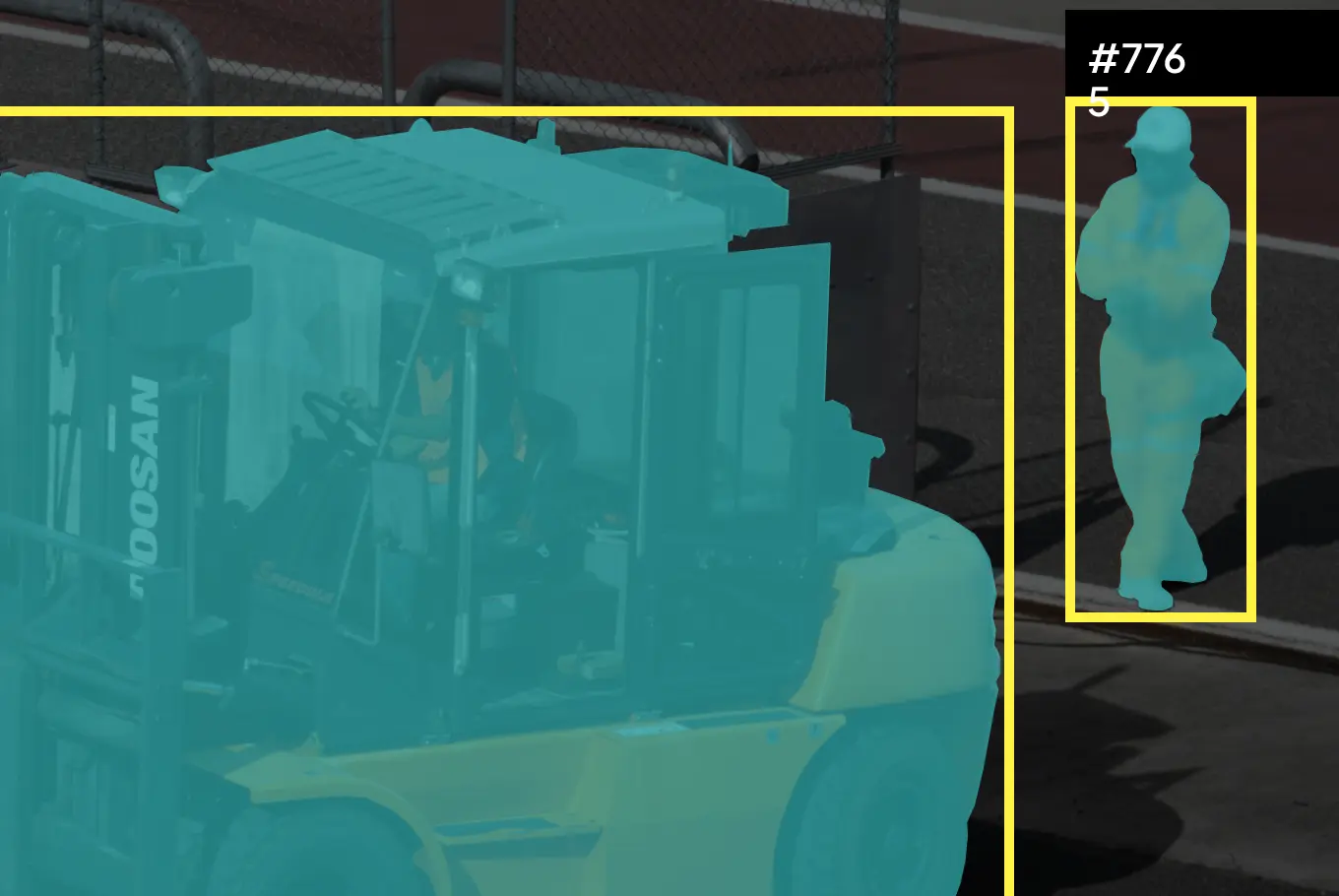

Vehicle safety is a universal concern in industrial industries. Vehicles like forklifts in retail, supply chain, food and beverage, grocery, and other sectors need to be a constant focal point for safety leaders. Ensuring both pedestrian and forklift safety are critical responsibilities, and can be challenging.
In this post we will:
The numbers are staggering. One in ten forklifts in the workplace are involved in incidents. And according to the National Institute for Occupational Safety and Health (NIOSH), nearly 20 percent of forklift accidents involve a pedestrian. That means of the 96,000 forklift injuries in North America every year, roughly 19,000 pedestrians are injured.
While the human toll of forklift safety is the most important element, it’s also worth going over the tremendous financial cost these incidents inflict on companies. The National Safety Council calculates that the average cost of a worker’s compensation claim for a forklift related injury is over $38,000 and the average total cost per injury exceeds $150,000.
At Voxel, we leverage advanced computer vision AI as part of our site intelligence platform to monitor and enhance pedestrian and forklift safety. Our technology identifies and measures unsafe forklift, vehicle, and Powered Industrial Truck (PIT) behaviors across various industries. This helps safety leaders mitigate risks and prevent accidents before incidents occur. Our system detects the following unsafe behaviors, so that safety leaders can address them before they lead to incidents:
Through our work with clients, we have identified several effective strategies for improving pedestrian and forklift safety. When teams use Voxel's computer vision AI and site-intelligence platform to implement these strategies, they see a noticeable decrease in leading indicators of unsafe behaviors. Here are five creative ways to enhance safety in your workplace:
Installing physical or digital stop signs at critical points such as intersections, doors, and aisle ends can significantly reduce the risk of collisions. This sounds simple (and it is!), but adding these signs and signals to the workplace can significantly decrease forklift and pedestrian safety incidents. Digital stop signs like the Safe-T-Signal from RiteHite are even more effective than traditional signs.
Creating designated crosswalks ensures that pedestrians always have the right of way. One of our customers added a stop sign and a crosswalk to accommodate pedestrian traffic coming out of office areas. This small change to the workplace had an immediate impact.
The beauty of many of these solutions is how simple and effective they are. Implementing directional driving lanes in crowded dock areas streamlines traffic flow and minimizes the risk of accidents. Docks often get busier gradually, so it can be easy to miss the fact that lanes would now be helpful. But Voxel constantly catches near misses in these areas because implied rules or norms are no longer sufficient to keep vehicles safe. Clear lane markings help drivers navigate safely, reducing the likelihood of collisions.
Placing mirrors at strategic locations, such as corners and intersections, enhances visibility for forklift operators. This is another simple, effective (and inexpensive) safety measure that goes a long way. Mirrors allow drivers to see around corners, preventing unexpected collisions with other forklifts or pedestrians.
A Vehicle Control System that includes doorway sensors can have a huge impact on forklift and PIT safety. This is especially true at points when vehicles are entering and exiting workplaces. Using doorway sensors like VCS (Vehicle Control System) can detect and alert operators to potential hazards as they approach doorways. These sensors help ensure that forklifts only proceed when it is safe to do so, preventing accidents in high-traffic areas. Additionally, a VCS can regulate a vehicle’s speed and make sure it does not enter pedestrian areas.
It is critical that drivers ALWAYS have a clear and unobstructed view when operating powered equipment. The forklift or PIT operator must not move under any circumstances if the view of the travel path is obstructed. This point cannot be hammered home strongly enough in training sessions, pre-shift meetings, and any other opportunities. When employees internalize this rule, pedestrian and forklift safety improves.
Ensuring pedestrian and forklift safety is a critical concern for any industrial workplace. And now site intelligence platforms like Voxel allow safety leaders to address leading incident indicators before they turn into accidents. Real time vehicle safety data and analysis helps companies institute these six safety solutions, and train employees in specific ways that will immediately address a workplace’s individual risks. The cost of using yesterday’s technology to address today’s workplace is too high, especially when vehicle-related incidents are involved.
Voxel’s intelligence platform connects directly to your existing security cameras and then uses computer vision and AI to give you more visibility and insight into the safety of every site, every day. You’ll have the data you need to take impactful, preventative action that keeps employees safe and strengthens your safety culture. Start your journey to a safer workplace with Voxel. Get a demo today.

Explore AI Summary




.png)