Voxel Acquires Ventral to Boost Operational Capabilities and Increase Value for Our Customers.
Learn More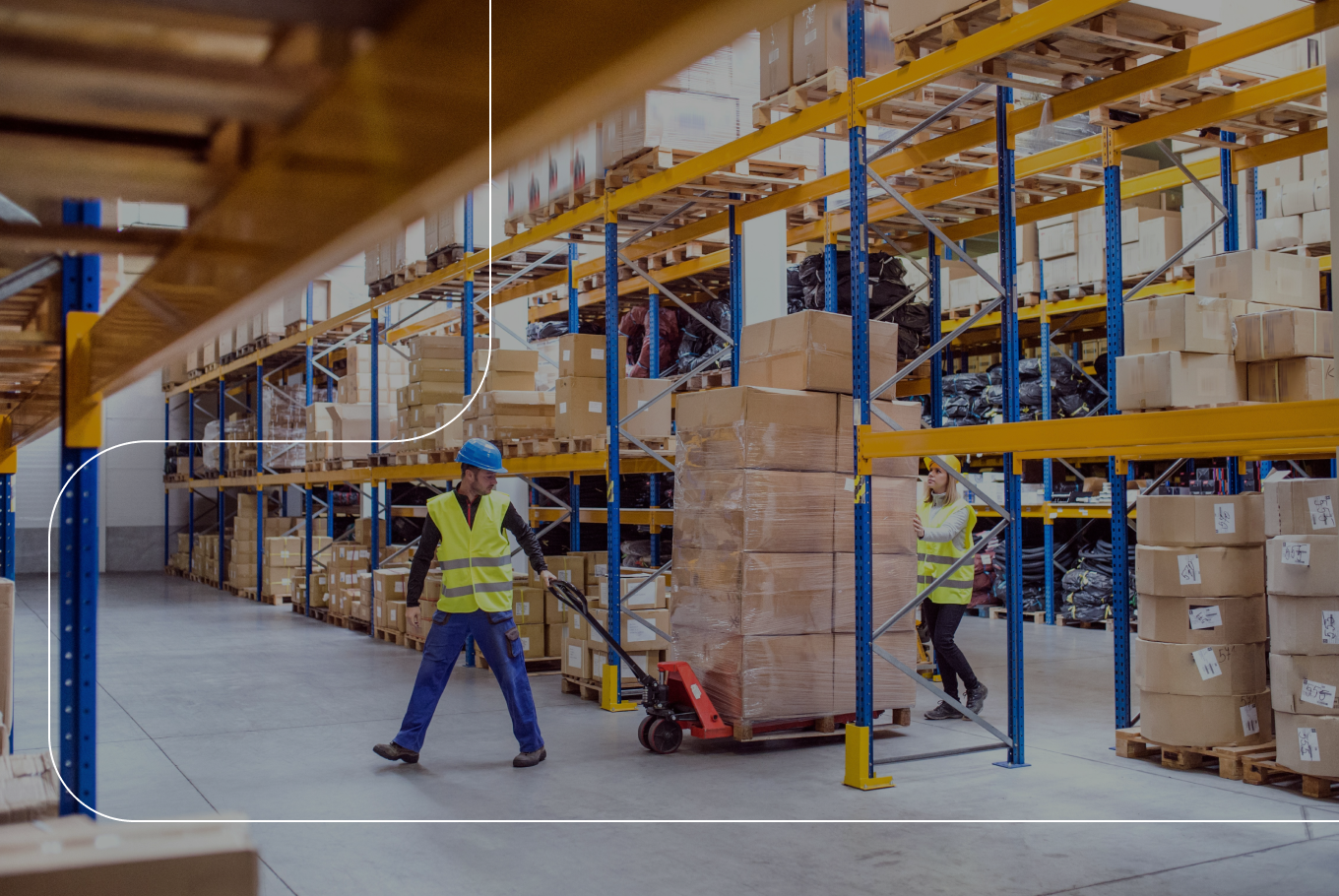
Work-related injuries and diseases remain a significant global safety concern, with nearly 3 million workers dying each year from work-related accidents and diseases. Workplace incidents also carry measurable financial costs. The Liberty Mutual Safety Index estimates that the 10 leading causes of serious workplace injuries cost U.S. businesses $50.87 billion annually in medical and lost-wage payments, based on 2022 data used in its 2025 index.
Video-based safety monitoring software can expand visibility by turning existing security camera footage into information about observable workplace risks. AI-powered platforms can identify leading indicators and recurring risk patterns across manufacturing, warehousing, logistics, and other industrial environments, giving EHS teams additional information for coaching and corrective action.
This evaluation examines leading video-based safety platforms based on industrial capabilities, documented results, deployment, privacy controls, and enterprise scalability.
Traditional video surveillance in industrial facilities has primarily supported security, investigation, and post-event review. AI-powered monitoring extends that role by analyzing video for defined workplace conditions while operations are underway.
Computer vision algorithms can identify visible patterns such as improper lifting movements, missing PPE, vehicle interactions, and entry into restricted areas. NIOSH computer vision research describes computer vision as a promising tool for ergonomic risk assessment and notes its ability to analyze posture and movement over longer periods.
For EHS teams, this technology provides an additional source of workplace observations rather than replacing established safety processes. Training, worker participation, inspections, engineering controls, and incident investigations remain important components of a comprehensive program.
Effective video-based safety monitoring requires capabilities beyond basic recording. EHS leaders should evaluate which risks can be monitored, how events are prioritized, and what happens after an issue is identified.
Industrial facilities often operate across multiple shifts. AI systems can continuously analyze connected camera views, providing additional visibility during periods when direct observation may be limited.
Depending on the platform, video-based monitoring may cover several categories:
Vehicle-pedestrian interactions deserve particular attention in facilities using powered industrial trucks. OSHA forklift guidance recommends separating forklift and pedestrian traffic where possible and maintaining appropriate visibility and clearance.
Platforms that work with existing security cameras can reduce the need for camera replacement. Facilities should still verify camera compatibility, network requirements, processing architecture, and any edge hardware needed for deployment.
Best For: Enterprises seeking a purpose-built site intelligence platform for reducing safety and operational risk in industrial environments.
Voxel uses existing camera infrastructure to transform everyday video footage into safety and operational insights. The platform focuses on observable risks involving people, vehicles, equipment, and workplace conditions.
Voxel announced a $44 million Series B in 2025, led by NewRoad Capital Partners with participation from Eclipse, Rite-Hite, Tokio Marine, MTech, HG Ventures, and Whitestone.
Voxel's site intelligence platform connects risk identification with action and reporting:
Voxel's published customer stories include:
Voxel does not use facial recognition. Its current platform materials describe face and body blurring, role-based access controls, SSO support, TLS 1.2 encryption in transit, AES-256 encryption at rest, and SOC 2 Type II-audited controls.
Protex AI uses computer vision to analyze existing CCTV for configured safety and operational risks. Video streams are processed using an on-site edge device, with encrypted event clips and metadata available through its cloud platform.
Protex AI offers a hybrid edge-and-cloud architecture with configurable privacy controls for organizations evaluating computer-vision monitoring.
Intenseye focuses on AI-based monitoring for workplace safety risks, including potential serious injury and fatality exposures. Its platform includes 50+ safety detections.
Intenseye supports a broad range of industrial safety scenarios, including vehicle, machinery, PPE, ergonomic, and designated-area risks.
viAct provides computer-vision monitoring across construction, manufacturing, mining, oil and gas, and other industrial environments. The company reports deployment across 500+ projects and offers more than 200 pre-built AI modules.
viAct's broad module library and deployment options make it relevant for organizations managing varied industrial safety use cases.
Visionify provides an edge-deployed workplace safety platform that works with existing CCTV and offers more than 50 AI-powered safety events.
Visionify combines existing-camera compatibility with local processing and a broad library of predefined safety scenarios.
Invigilo provides AI video analytics for construction and industrial environments. Its SafeKey platform connects with existing RTSP or ONVIF camera feeds and processes detections locally.
Invigilo is particularly relevant for construction and infrastructure projects that want to implement defined video-safety monitoring scenarios quickly.
Spot AI combines video management with AI-based security, safety, and operational monitoring.
Spot AI suits organizations looking to manage security, safety, and selected operational video use cases within one broader platform.
Verkada provides a cloud-managed physical-security ecosystem covering video security, access control, alarms, intercoms, and environmental sensors.
Verkada is primarily a physical-security platform. Its Helix capability can associate third-party operational data, including ERP events in manufacturing, with relevant video footage.
Genetec Security Center unifies video surveillance, access control, license-plate recognition, communications, and other physical-security functions.
Genetec reports an ecosystem of more than 900 solutions, supporting organizations that want to connect specialized technologies to an established security environment.
Milestone XProtect is an open-platform video management system supporting cameras and devices from a broad range of manufacturers.
The open-platform approach suits organizations that want flexibility to combine video management with specialized analytics rather than relying on one closed ecosystem.
Quantified outcomes can help organizations assess video-based monitoring beyond feature comparisons.
Published Voxel customer outcomes include:
These are different safety metrics and should not be treated as interchangeable injury-rate measures.
Video-based intelligence can also surface operational information. At the Port of Virginia, Voxel reported an 85% improvement in safety-team efficiency. Piston Automotive also used platform data to identify a 60% material-handler utilization rate and inform workload distribution.
Technology capabilities are only part of the evaluation. Organizations should also consider implementation support, platform configuration, privacy practices, safety expertise, and ongoing engagement.
Access to experienced safety professionals can help teams translate observations into practical coaching, corrective actions, and site-level interventions.
Organizations operating across multiple locations should consider centralized reporting, permission management, implementation consistency, and support across sites.
Facility layouts, workflows, and priorities change. Platforms should be evaluated on how easily monitoring configurations and safety workflows can adapt as operations evolve.
Voxel's industrial safety platform is built around observable risks in industrial environments. Supported use cases include ergonomics, PPE, vehicle interactions, spills, restricted zones, machine hazard areas, and other configured conditions.
The platform goes beyond identifying events. Actions workflows support recommended interventions, owners, deadlines, progress tracking, and reporting so identified risks can move into a structured follow-up process.
Voxel provides expert-led implementation, recommendations, and ongoing engagement alongside the technology platform.
Voxel reports 95%+ detection accuracy, with models fine-tuned to individual site environments. Its AI has been trained on more than 5 billion hours of real-world industrial workplace scenarios.
Voxel does not use facial recognition and provides face and body blurring, role-based access controls, and enterprise security protections. Carlex Glass worked with UAW leadership to establish a non-punitive implementation focused on information gathering and training.
Voxel currently reports more than 250 sites deployed worldwide. NSG Group began with a Canadian pilot and has since expanded Voxel across manufacturing locations internationally.
Organizations can request a Voxel demo to evaluate camera coverage, priority risks, and implementation requirements.
Video-based AI can provide continuous visibility into configured safety risks within camera-covered areas. It supplements manual observation by helping teams identify patterns across PPE, ergonomics, vehicle activity, restricted areas, and other observable conditions. A broader safety analytics approach can help teams evaluate those observations across locations and time periods.
Privacy controls vary by platform. Organizations should assess anonymization, facial-recognition policies, access permissions, encryption, retention, and how footage will be used. Clear employee communication and responsible AI adoption are also important when implementing workplace video technology.
Yes, some platforms are designed to work with existing IP camera infrastructure. Compatibility should still be confirmed for each site. Voxel works with more than 95% of existing IP cameras, allowing suitable existing infrastructure to support AI safety monitoring without requiring a complete camera replacement.
Capabilities vary by platform, camera position, and configuration. Common use cases include PPE compliance, ergonomic movements, forklift and pedestrian interactions, spills, restricted areas, and machine-zone activity.
There is no universal ROI figure because results vary by baseline conditions, deployment scope, camera coverage, interventions, and operating environment. Organizations can establish baseline measures and compare them with subsequent safety and operational outcomes. Published customer safety results include injury reductions, fewer vehicle-safety incidents, improved PPE compliance, reduced lost-time days, and safety-team efficiency gains.