Voxel Acquires Ventral to Boost Operational Capabilities and Increase Value for Our Customers.
Learn More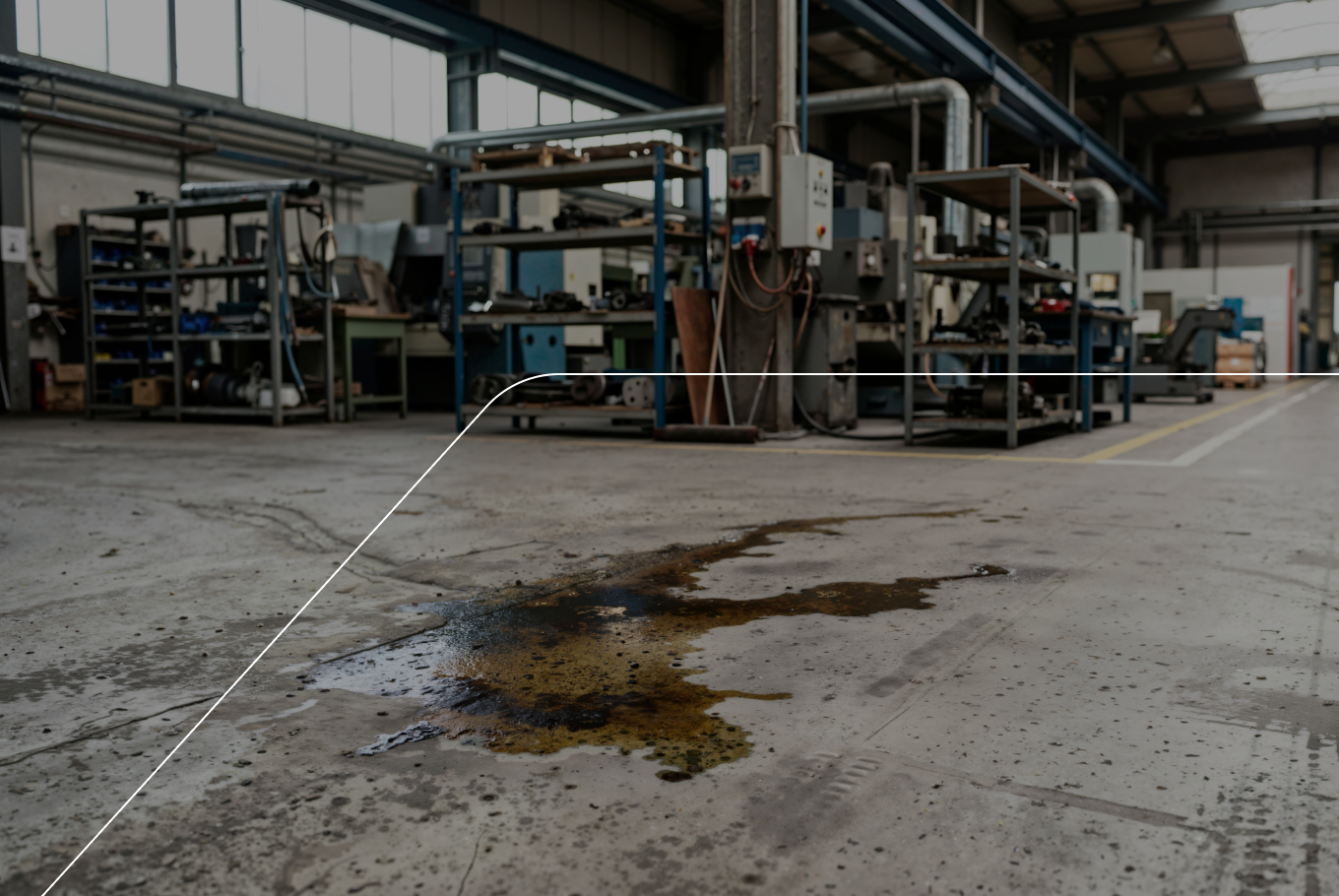
Slip and fall incidents remain a relevant warehouse safety concern, particularly where liquids, debris, or other contaminants affect walking surfaces. The latest BLS injury data reports 479,480 private-industry cases involving days away from work due to falls, slips, and trips in 2024. AI-powered spill detection software adds continuous visibility to warehouse safety programs. By using computer vision and camera infrastructure, supported platforms can identify standing liquid or other visible floor hazards and surface events for safety teams to review and address.
The following solutions were evaluated based on spill or warehouse-hazard detection, deployment approach, integration capabilities, privacy controls, and broader safety functionality. Some platforms provide dedicated spill or leakage detection, while others offer adjacent warehouse safety capabilities that can complement spill-response programs.
Spills in warehouse environments can create safety and operational concerns. Water, oil, chemicals, and product leaks can affect walking surfaces, while the size and activity level of some facilities can make continuous manual observation difficult.
OSHA warehouse guidance specifically advises warehouses to maintain spill-control procedures, train workers to clean up incidental spills safely, and provide appropriate PPE. For hazardous chemicals, the appropriate response depends on the substance and scale of the release.
Good housekeeping remains fundamental. The CCOHS fall prevention guidance recommends cleaning spills immediately, identifying wet areas, and keeping walkways clear.
AI-powered spill detection can supplement these processes through continuous monitoring of supported camera views. Computer vision can help surface visible spills sooner and provide additional information about where and when they occur.
The resulting data can also contribute to safety analytics by helping teams identify recurring locations or patterns that may warrant maintenance, housekeeping, drainage, or process changes.
Best For: Enterprises seeking an AI-powered site intelligence platform with dedicated spill detection and broader industrial safety capabilities.
Voxel's platform uses existing camera infrastructure to turn workplace video into safety and operational insights. Voxel currently reports $61 million raised to date and deployment across more than 250 sites worldwide.
Voxel's site intelligence platform connects risk visibility with action and evaluation:
Voxel provides dedicated AI spill detection. Its current spill-detection page describes continuous analysis of existing camera feeds for standing liquid across aisles, docks, and work zones.
When a spill is detected, the event surfaces as an alert that can be resolved, assigned, or discussed. Voxel can also suggest spill-response actions that teams can assign, schedule, and track to completion.
Detections feed into dashboards, multi-site trends, and daily summaries, helping both site managers and enterprise teams understand recurring spill risks.
Voxel's published customer stories include measurable safety and operational outcomes:
These are broader safety and operational results and should not be interpreted as direct spill-reduction outcomes.
Voxel does not use facial recognition. Its current platform materials describe face and body blurring, role-based access controls, SSO support, TLS 1.2 encryption in transit, AES-256 encryption at rest, and SOC 2 Type II-audited controls.
Intenseye provides AI-powered workplace safety monitoring for industrial environments. Its housekeeping capabilities specifically include leakage and spill detection for fluids such as oil, coolant, and water.
Intenseye directly supports spill and leakage monitoring alongside broader housekeeping and industrial safety use cases. Facilities can configure monitoring around site-specific spill, walkway, and object-placement requirements.
Protex AI uses computer vision to analyze existing CCTV streams for configured safety and operational risks. Its retail and wholesale safety offering includes identifying spillages, wet floors, and other conditions associated with slip-and-fall risk.
Protex AI combines visual hazard monitoring with local edge processing and configurable privacy controls. Its spill and wet-floor capabilities make it relevant to warehouses seeking broader computer-vision safety monitoring.
Everguard AI's Sentri360 platform combines computer vision, wearables, real-time location technology, and other sensor inputs for industrial safety monitoring.
Everguard is primarily a broader industrial safety platform rather than a dedicated spill detector. Its sensor-fusion approach can complement spill-management programs where facilities also need worker, equipment, and location-based risk monitoring.
Visionify provides computer-vision workplace safety monitoring using existing CCTV and on-premise edge processing. Its current platform specifically lists spills and leaks among its supported safety scenarios.
Visionify offers direct spill and wet-floor monitoring within a broader library of 50+ safety events. Its edge-based approach is relevant to facilities looking to use existing camera infrastructure for several safety scenarios.
viAct provides computer-vision safety monitoring for industrial environments including manufacturing, logistics, construction, and chemical operations. Its published capabilities include spill and leakage detection.
viAct's broad AI module library includes fluid-spill recognition and leakage monitoring alongside other workplace and environmental use cases, making it relevant to facilities managing several risk categories.
CompScience combines workers' compensation services with AI-powered workplace safety monitoring. Its SafetyPulse offering uses existing cameras to identify hazards and surface prioritized safety observations.
CompScience is broader than dedicated spill-detection software, but SafetyPulse includes visual slip-hazard monitoring and connects workplace observations with risk and workers' compensation information.
OneTrack provides AI-powered monitoring focused heavily on forklifts, material handling, and warehouse operations.
OneTrack's primary strength is material-handling safety rather than dedicated spill detection. It can complement spill-management efforts in warehouses where forklift safety risks are another major operational priority.
Arvist AI provides computer-vision safety and operational monitoring designed specifically for warehouse environments.
Arvist focuses on broader warehouse safety rather than dedicated liquid-spill detection. Its monitoring of worker, vehicle, PPE, and warehouse-flow risks can complement existing spill-identification and response procedures.
Ambient AI is primarily an AI-powered physical-security platform that applies video intelligence to security and selected workplace-safety events.
Ambient AI is better suited to organizations seeking combined physical-security and selected workplace-safety monitoring than to facilities looking specifically for standalone spill-detection software.
When selecting spill detection software for warehouse operations, several capabilities distinguish dedicated spill monitoring from broader video analytics.
The core value of automated spill monitoring is reducing the time between a visible spill appearing and the appropriate team becoming aware of it. Buyers should evaluate what types of liquid conditions a platform supports, how detections are reviewed, and how alerts are routed.
Solutions that use existing security cameras can reduce the amount of new hardware required. A broader computer vision approach can allow facilities to use existing video infrastructure for additional safety applications.
Spills rarely represent the only physical risk in a warehouse. Platforms combining spill detection with PPE, ergonomics, vehicle, or area-control monitoring can provide broader site visibility using the same infrastructure.
Evaluate platforms for:
Detection alone does not resolve a spill. Corrective action workflows can connect identified events with owners, deadlines, completion tracking, and follow-up.
Trend analysis can help identify where and when spills recur, providing useful information for reviewing maintenance, drainage, equipment, housekeeping practices, or operating procedures.
Spill detection software works best when integrated with established response procedures. Technology can identify a visible condition, but people and processes determine the appropriate containment and cleanup response.
For warehouse operations involving hazardous chemicals, OSHA HazCom guidance provides information on hazard communication, safety data sheets, labels, and worker training.
Software-detected spills still require an appropriate human response. Training should reflect the materials handled and employee responsibilities.
Relevant topics include:
Safety coaching techniques can also help teams incorporate real workplace observations into ongoing training.
Spill detection software does not itself establish regulatory compliance, but it can support broader warehouse processes for identifying and addressing hazards.
For warehouses specifically, OSHA recommends written spill-control plans and employee training for incidental chemical spills. Its warehouse hazard guidance also distinguishes incidental releases from larger events that may require emergency-response procedures.
Effective spill management extends beyond software. Housekeeping, training, appropriate PPE, chemical information, emergency planning, and clear response responsibilities should work together.
Facilities storing or using significant quantities of oil may also need to assess whether federal spill-response planning requirements apply. The EPA response planning guide provides guidance for facilities subject to federal oil-pollution prevention requirements.
A broader safety culture approach can help keep spill reporting and response connected to routine hazard management rather than treating it as a separate administrative process.
Voxel's current spill product specifically supports standing-liquid detection across aisles, docks, and work zones. Spill monitoring sits alongside broader workplace safety capabilities covering PPE, ergonomics, vehicles, and area controls.
Voxel goes beyond identifying a spill. Each event can surface as an alert that teams can resolve, assign, or discuss, while spill-response actions can be assigned, scheduled, and tracked.
Its Actions functionality supports ownership, due dates, progress monitoring, and impact measurement after an event is identified.
Voxel combines technology with expert-led implementation and ongoing engagement, helping organizations configure and operationalize the platform around their site-specific safety priorities.
Voxel reports 95%+ detection accuracy using models fine-tuned to each site's environment. Its current platform materials state that the AI is trained on more than 5 billion hours of real-world industrial workplace scenarios.
Voxel integrates with more than 95% of existing CCTV cameras and states that sites can move from contract to operational within 48 hours.
For multi-site organizations, detections can roll into dashboards, trends, and summaries that provide visibility into spill risks across facilities and shifts.
Voxel does not use facial recognition and supports face and body blurring. Its enterprise security controls include role-based access, SSO, encryption in transit and at rest, and SOC 2 Type II-audited controls.
Voxel's broader customer stories provide measurable examples of safety and operational improvement. Americold's results include a 70% reduction in injuries, elimination of lost-time days at the featured facility, and $1.1 million in EBITDA savings.
Organizations evaluating warehouse spill monitoring can request a Voxel demo to assess camera coverage, spill-risk areas, and other supported safety use cases.
Spill detection software can add continuous monitoring to camera-covered areas and surface supported floor hazards without relying only on periodic walkthroughs. When combined with spill response workflows, detection data can also help teams assign actions, review recurring patterns, and track events across locations or shifts.
Computer vision analyzes camera imagery for supported visual patterns such as standing liquid, spills, or leaks. Performance depends on factors including camera positioning, visibility, lighting, and the platform's detection models. Voxel's spill monitoring capability continuously analyzes existing camera views and surfaces detected standing liquid as events that teams can review and act on.
Improved safety performance may contribute to broader risk-management discussions, but installing spill detection software does not guarantee lower premiums. Facilities should measure actual outcomes such as detected hazards, response times, corrective-action completion, injury experience, and claims history rather than assuming a direct insurance reduction from the technology itself.
Voxel states that it integrates with more than 95% of existing CCTV cameras and can deploy to a site within 48 hours. Facilities should still evaluate whether existing camera placement provides appropriate coverage of the areas where spill risks need to be monitored.
Requirements vary according to the material, facility, industry, quantity stored, and jurisdiction. Different rules may apply to incidental workplace spills, hazardous-material releases, or facilities storing regulated quantities of oil. The software can contribute event and response information to a broader risk management program, but organizations should evaluate the specific regulatory requirements that apply to their operations.