Exciting News: Ventral AI Is Joining Voxel!
Learn More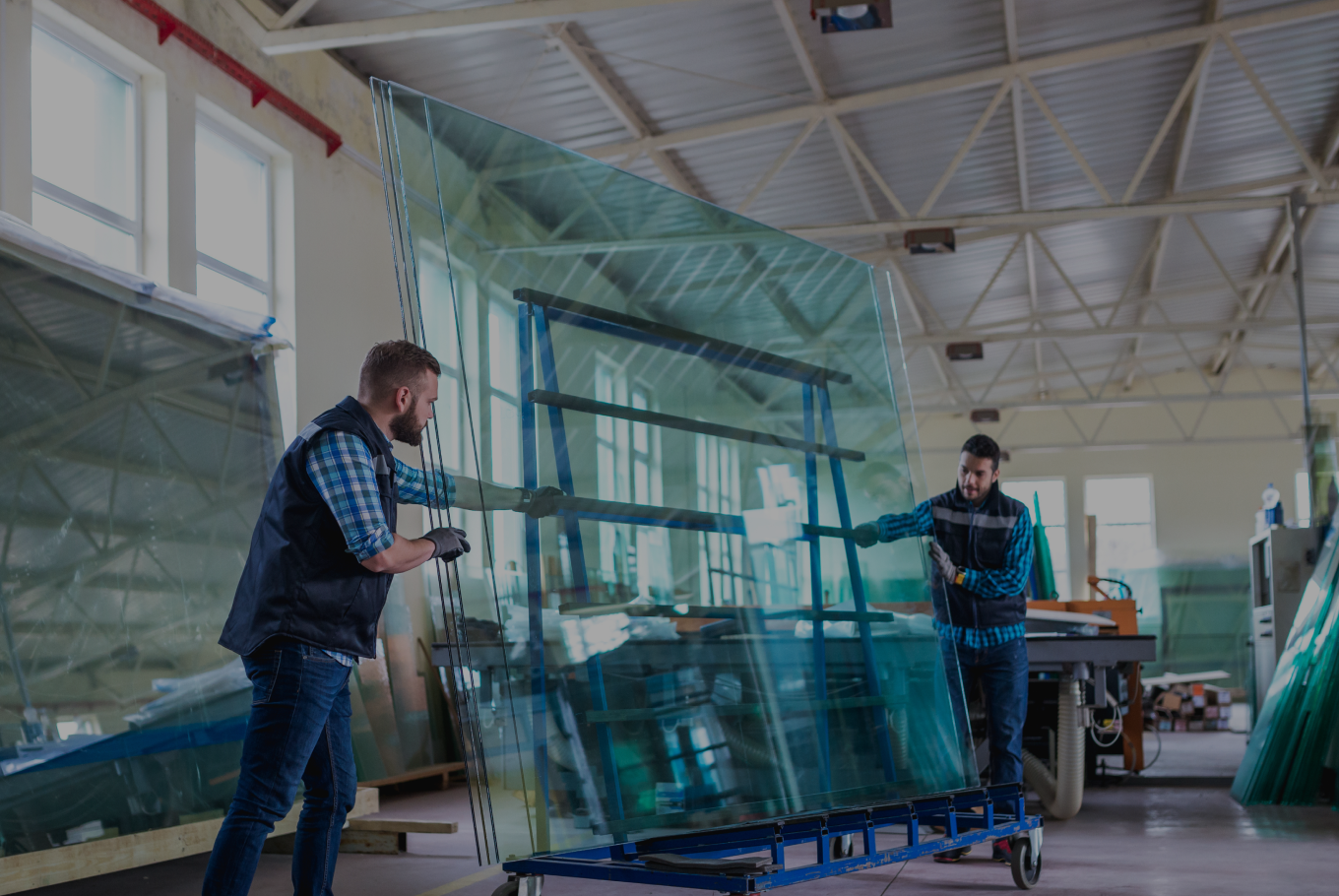
Glass manufacturing combines high-temperature processes, heavy machinery, material handling, vehicle traffic, and specialized production environments. These conditions make safety management especially important across furnace areas, forming and cutting operations, finishing lines, warehouses, and shipping areas.
Industry guidance reflects the range of risks involved. The IFC’s glass EHS guidance identifies heat, noise, respiratory hazards, physical hazards, and electrical hazards among the principal occupational health and safety considerations in glass manufacturing. OSHA’s heat guidance also specifically identifies glass products facilities as indoor workplaces where heat stress can occur.
The following platforms were evaluated based on glass-manufacturing relevance, safety capabilities, implementation approach, industrial use cases, and documented outcomes.
Glass manufacturing safety programs need to address risks across different stages of production. Furnace operations can involve significant heat exposure, while handling and processing glass introduces physical risks associated with machinery, materials, and production equipment.
The IFC’s glass-manufacturing guidance identifies five primary occupational health and safety categories:
Software does not replace engineering controls, machine guarding, PPE, training, maintenance, inspections, or other required safeguards. Instead, different technologies can provide additional information and workflows that help safety teams manage these programs more consistently.
Ergonomics is one example. NIOSH ergonomics guidance identifies factors including awkward postures, lifting bulky loads, twisting, carrying, repetition, and force as contributors to work-related musculoskeletal risk. In glass facilities where materials are moved, handled, transferred, or packaged repeatedly, visibility into observable ergonomic patterns can help teams identify where further assessment or intervention may be useful.
Computer vision can also provide continuous visibility into selected conditions such as missing PPE, vehicle behavior, pedestrian interactions, improper bending, overreaching, spills, restricted areas, and machine hazard zones. Traditional EHS software serves a complementary role by organizing incidents, inspections, audits, corrective actions, compliance records, and environmental or occupational-health information.
Voxel is an AI-powered industrial intelligence platform that turns existing camera infrastructure into actionable safety and operational insights. It is particularly relevant to glass manufacturing because Voxel has published results from two glass manufacturers: NSG Group and Carlex Glass.
Voxel is deployed at more than 250 sites worldwide and combines computer vision with action workflows, executive reporting, and expert-backed implementation.
Voxel connects camera-based visibility with structured action and evaluation:
For glass manufacturers, this creates a way to continuously analyze selected camera-visible conditions without relying exclusively on periodic floor observations.
Voxel has published measurable outcomes across NSG Group’s international manufacturing operations and Carlex Glass’s automotive-glass facility.
NSG Group, one of the world’s largest manufacturers of glass and glazing products, began piloting Voxel at a Canadian facility in June 2024. The company subsequently expanded the platform across manufacturing sites in 10 countries.
NSG results include:
NSG has used the platform differently according to local priorities. Its Canadian team focused on coaching and training around improper bending, while the Malaysian facility used Voxel insights to address pedestrian-zone activity and traffic separation.
Carlex Glass integrated Voxel with 12 existing cameras at its Vonore, Tennessee manufacturing plant. In less than three months, Carlex:
Carlex also worked with United Auto Workers leadership to establish a non-punitive implementation focused on information gathering and training. Managers use Voxel data and footage to support coaching, training changes, and adjustments to operating procedures.
These results highlight the measurable impact Voxel customers have achieved across glass-manufacturing environments, with outcomes reflecting each facility’s baseline conditions, safety priorities, and implementation approach.
VelocityEHS provides a connected EHS platform for industrial organizations, including manufacturers. Its Accelerate platform spans safety, ergonomics, chemical management, operational risk, contractor safety, environmental compliance, sustainability, and industrial hygiene.
VelocityEHS is relevant to glass manufacturers looking for a broad EHS management environment rather than camera-based continuous monitoring.
Its industrial-ergonomics capabilities can support assessment programs around physical work, while chemical management, industrial hygiene, and operational-risk tools address other areas that may be relevant within glass production facilities.
SafetyCulture provides a frontline operations platform centered on inspections, issues, actions, training, and asset management.
SafetyCulture can help glass plants digitize recurring inspections, production-floor checks, equipment inspections, and corrective actions.
It is particularly relevant to facilities transitioning from paper-based inspection processes and looking to give frontline teams a straightforward way to capture issues and assign follow-up actions.
Kynection provides an integrated QHSE and operational management environment covering safety processes, documents, risk assessments, incidents, assets, and maintenance.
Kynection can suit industrial organizations that want QHSE processes connected more closely with equipment and operational information.
For glass plants, that can provide a shared environment for safety documentation, incident follow-up, equipment information, and maintenance workflows rather than managing each process separately.
CorityOne is an enterprise EHS+ platform that connects safety, occupational health, environmental management, quality, sustainability, and risk workflows.
Cority can support glass manufacturers that need a broader enterprise EHS system spanning both worker safety and environmental or occupational-health requirements.
Its industrial hygiene and chemical-management capabilities are particularly relevant where manufacturers need to organize information about workplace exposures alongside incidents, inspections, and corrective actions.
Intelex provides manufacturing-focused safety and quality management software that connects EHS processes with quality and compliance workflows.
Intelex can be useful for glass manufacturers that want safety and quality processes managed in the same digital environment.
Document control, inspection records, audit trails, and corrective actions can also support manufacturers maintaining standardized procedures and preparing for internal or external audits.
Benchmark Gensuite provides AI-enhanced EHS, sustainability, compliance, and risk-management applications for enterprise organizations.
Benchmark Gensuite is relevant to multi-site glass manufacturers seeking standardized EHS workflows across facilities.
Its manufacturing platform combines conventional EHS processes with Genny AI capabilities designed to assist with incident reporting, investigations, compliance workflows, risk identification, and action tracking.
Wolters Kluwer Enablon provides integrated EHS, operational risk, process safety, environmental management, and sustainability software.
Enablon is relevant to manufacturers managing complex production environments where worker safety intersects with process safety, operational risk, environmental performance, and compliance.
For glass producers operating furnaces and other continuous industrial processes, the ability to connect EHS with process-safety and control-of-work programs can be particularly useful.
Sphera provides an Operational Intelligence Platform spanning health and safety, operational risk, sustainability, compliance, and other enterprise risk processes.
Sphera can support glass manufacturers that need to connect workplace safety with broader operational and process risks.
Its approach is particularly relevant to complex production environments where plant leadership needs visibility into safety, operational risk, maintenance-related processes, and compliance rather than managing those areas in isolated systems.
Effivity provides configurable QHSE and ISO-management software for organizations implementing and maintaining management systems.
Effivity is relevant to glass manufacturers whose primary software requirement centers on organizing and maintaining ISO-based quality, environmental, and occupational health and safety management systems.
Its integrated approach allows organizations working with multiple ISO standards to manage related processes and documentation within one QHSE environment.
Voxel combines industrial computer vision, documented glass-manufacturing results, rapid deployment, and structured safety workflows to help manufacturers turn existing camera infrastructure into actionable safety and operational intelligence.
Voxel has documented results from two major glass manufacturers operating across different environments and safety priorities.
NSG Group has deployed Voxel across manufacturing operations in 10 countries, with documented improvements in PPE compliance, ergonomics, and pedestrian-zone activity. Carlex Glass increased safety vest compliance by 86% while reducing no-stop incidents at aisle ends by 47% and at doors by 37% in less than three months.
These deployments provide direct examples of Voxel supporting measurable safety improvements in real glass-manufacturing environments.
Voxel’s AI is trained on more than 5 billion hours of real-world industrial workplace scenarios. For glass plants, the platform provides continuous visibility into supported conditions across ergonomics, PPE, vehicles, equipment, and workplace environments.
Relevant capabilities include:
Voxel works with over 95% of existing IP cameras and can deploy to a site in 48 hours using existing camera infrastructure. This allows compatible glass plants to build on cameras already installed across production, material-handling, warehouse, and shipping areas.
The platform also extends beyond detection. Actions workflows connect selected insights with recommended actions, assigned owners, deadlines, follow-up, and coaching opportunities. Executive reporting gives leaders visibility into completed actions and their impact over time.
Voxel focuses on site-related risks rather than individual identification. The platform does not use facial recognition and provides face and body blurring.
Enterprise security controls include:
Carlex demonstrates how this approach can work in a unionized manufacturing environment. Management collaborated with UAW leadership to establish a non-punitive implementation centered on information gathering and training.
Voxel combines its technology with certified experts who bring decades of experience across safety, risk, and operations. This support helps manufacturers connect computer-vision insights with existing safety priorities, coaching programs, corrective actions, and operational processes.
Voxel is deployed at more than 250 sites worldwide, while NSG’s global rollout demonstrates how the platform can scale across manufacturing operations in multiple countries.
Ready to explore how existing cameras can support safety and operational intelligence in a glass manufacturing facility? Contact Voxel to discuss site requirements and priority use cases.
Different types of safety software address different risks and processes. EHS platforms can organize incidents, inspections, audits, corrective actions, chemical information, occupational-health data, and compliance processes. Computer-vision platforms such as Voxel add continuous visibility into supported camera-observable conditions, including PPE use, ergonomic movements, vehicle behavior, pedestrian interactions, machine hazard zones, suspended-load exposure, and spills.
Voxel’s computer vision can continuously identify visible ergonomic patterns such as improper bending, unsafe lifting, overreaching, high-strain postures, and repetitive-motion exposure in supported camera views. At NSG Group’s Canadian facility, improper bends decreased by 57% from Q3 to Q4 2024 after the team used Voxel insights to focus coaching and training on ergonomics.
Yes. Voxel works with over 95% of existing IP cameras and can deploy to a site in 48 hours using existing camera infrastructure. Suitable camera placement, field of view, lighting, visibility, and the intended use case remain important when determining which areas and risks can be monitored effectively.
Voxel does not use facial recognition and provides face and body blurring alongside role-based access controls and enterprise security safeguards. Carlex Glass provides a documented example. Management collaborated with UAW leadership to ensure the platform was used non-punitively for information gathering and training. Employees and managers subsequently used Voxel data and footage as part of coaching and safety-culture improvement.
NSG Group documented a 62% reduction in safety vest incidents at a U.S. facility, a 57% reduction in improper bends at a Canadian facility, and a 79% reduction in pedestrian-zone violations at a Malaysian facility. Carlex Glass increased safety vest compliance by 86%, reduced no-stop incidents at aisle ends by 47%, and reduced no-stop incidents at doors by 37% in less than three months. These results highlight the measurable impact Voxel customers have achieved across glass-manufacturing environments, with outcomes reflecting each facility’s baseline conditions, safety priorities, and implementation approach.