Exciting News: Ventral AI Is Joining Voxel!
Learn More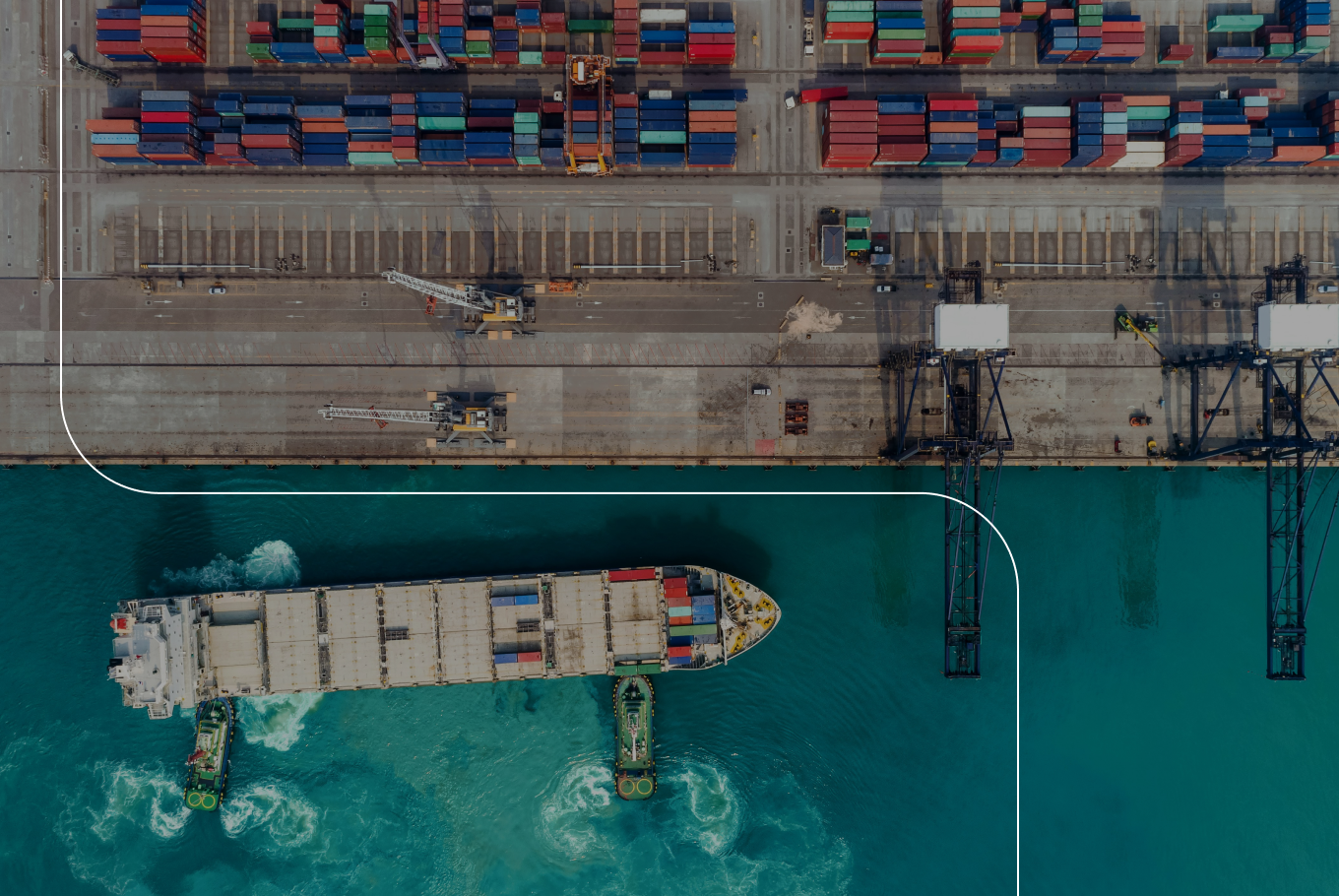
Port terminals combine cargo movement, vehicles, lifting equipment, pedestrians, contractors, and multiple work zones within continuously changing operational environments. Effective safety management therefore depends on clear visibility, consistent processes, and the ability to identify emerging risk patterns across large facilities.
Industry guidance reflects this complexity. OSHA marine terminals cover areas including housekeeping, slippery conditions, cargo handling, rail facilities, hazardous cargo, powered industrial trucks, and other terminal activities. The revised ILO port code likewise provides guidance for organizations responsible for the management, operation, maintenance, and development of ports.
This evaluation considers those different approaches based on port relevance, documented deployments, safety capabilities, operational fit, and ability to work within existing terminal infrastructure.
Port terminal safety involves both workplace practices and complex operational flows. Containers, trucks, lifting equipment, yard vehicles, pedestrians, and contractors can move through the same facility during continuous operations.
OSHA’s longshoring guidance highlights vehicular accidents, falls and drowning, and material-handling accidents among important areas for marine cargo-handling employers and workers. This helps explain why terminal safety programs need visibility across more than a single risk category.
Traditional camera systems can support investigations and security, but manual video review requires safety teams to locate relevant moments themselves. AI-based computer vision changes that workflow by continuously analyzing supported camera views and surfacing selected conditions for review.
At The Port of Virginia, the safety team previously spent two to three hours per day reviewing recorded footage. After implementing Voxel at Virginia International Gateway, that process decreased to roughly 20 to 30 minutes per day, saving 125 minutes daily.
Camera-based intelligence can support several port-related use cases:
These capabilities complement established controls rather than replacing them. Terminal safety still depends on training, traffic management, equipment safeguards, communication, inspections, maintenance, and other applicable regulatory requirements.
Voxel is an AI-powered industrial intelligence platform that transforms existing camera infrastructure into actionable safety and operational insights. The platform continuously analyzes supported video feeds across people, vehicles, equipment, and workplace conditions.
Voxel is deployed at more than 250 sites worldwide and combines computer vision with action workflows, reporting, and safety and risk expertise.
Voxel connects risk visibility with structured action and evaluation:
For port operations, Voxel’s vehicle safety capabilities can support visibility into speeding, unsafe stops, vehicle-pedestrian proximity, vehicle-vehicle proximity, piggybacking, and other configured vehicle events.
The Port of Virginia deployed Voxel at Virginia International Gateway to support its virtual Terminal Safety of Excellence Program.
Within six months, the port achieved:
Voxel also surfaced a recurring pedestrian pattern involving drivers exiting trucks near vehicle lanes to use nearby dumpsters. Port leadership removed the dumpsters after reviewing the pattern, resulting in a significant decrease in pedestrian presence in that area.
These results highlight the measurable impact Voxel has supported at a major port environment, with outcomes reflecting the facility’s operating conditions, safety priorities, and implementation approach.
Voxel focuses on site-related risk rather than individual identification. The platform does not use facial recognition and provides face and body blurring.
Enterprise security controls include:
These capabilities support workplace deployments involving different employee groups, contractors, and other onsite personnel.
Voxel combines industrial computer vision with a documented marine-terminal deployment and port-specific customization. At The Port of Virginia, Voxel adapted vehicle detection to monitor truck speeding and no-stops while also supporting PPE and pedestrian-safety visibility.
Voxel’s AI is trained on more than 5 billion hours of real-world industrial workplace scenarios and achieves 96%+ detection accuracy through models fine-tuned to each site’s environment.
viAct provides computer-vision safety analytics across industrial and infrastructure environments, including a published deployment at Hong Kong’s Kwai Chung Container Port.
viAct’s published Kwai Chung case study reports a 10x improvement in its lift-zone safety score, a 60% reduction in fatigue-linked errors, and a 50% improvement in yard productivity associated with fewer incident-related stoppages.
The example gives viAct direct relevance to container-terminal operations, particularly around crane lift zones, workforce fatigue, and busy yard environments.
Intenseye provides AI-powered workplace-safety monitoring using existing CCTV infrastructure and its Sentinel hardware family. The platform covers more than 50 categories of safety leading indicators.
Intenseye processes more than 22 billion images daily across deployments in more than 25 countries. Its Sentinel portfolio includes equipment designed for vehicle-pedestrian zones, thermal monitoring, remote outdoor areas, and other industrial environments.
A public Cathay Cargo Terminal deployment demonstrates its use in a high-volume cargo environment. Although that deployment is at an air-cargo terminal rather than a marine port, the vehicle, pedestrian, PPE, and area-control use cases have relevance to cargo-handling operations.
Protex AI provides computer-vision safety analytics for industrial environments and integrates with existing CCTV infrastructure.
Protex AI is focused specifically on workplace-safety analytics rather than general video security. Its published Marks & Spencer distribution-center case study reports an 80% reduction in recorded safety incidents over approximately three months after teams used the platform to identify patterns and target training.
While that example is a warehouse rather than a marine terminal, the underlying vehicle, PPE, ergonomic, and area-control capabilities can apply to selected port workflows.
Navis N4 is a terminal operating system rather than a dedicated AI safety platform. It manages container-terminal operations including vessel, yard, gate, rail, planning, and equipment workflows.
N4 is used in more than 500 ports worldwide and plays a different role from camera-based safety intelligence. By coordinating cargo movement, yard activity, equipment, and terminal workflows, a TOS can contribute to more organized operational processes.
Baltic Container Terminal has also described how integration between N4 and its terminal automation helped optimize human resources and improve ground safety.
Cority provides an enterprise EHS+ platform spanning safety, occupational health, environmental management, quality, and sustainability.
Cority has operated in EHS technology for approximately 40 years and serves more than 1,500 organizations worldwide. For major port operators, its value lies in managing broader EHS processes that camera-based analytics alone do not cover.
Cority is therefore most relevant as an enterprise safety-management layer for organizations seeking consolidated EHS information, workflows, and reporting across multiple sites or business units.
SafetyCulture provides a frontline operations platform centered on inspections, issues, actions, training, assets, and workplace communication.
SafetyCulture can support terminal teams that need repeatable inspections, field reporting, and follow-up workflows rather than automated computer-vision monitoring.
DB Schenker has used SafetyCulture within its UK and Ireland logistics operations for inspections, actions, and frontline health, safety, and quality communications, demonstrating applicability to distributed logistics workforces.
VelocityEHS provides a connected EHS platform spanning safety, ergonomics, chemical management, operational risk, contractor safety, environmental compliance, and related functions.
VelocityEHS can be relevant for terminals where occupational safety sits alongside chemical handling, hazardous-material documentation, contractor management, and operational risk.
Its chemical-management capabilities include SDS management, chemical inventories, regulatory reporting, labeling, and emergency-response services supporting requirements such as IMDG and other transport frameworks.
Notify Technology provides cloud-based health and safety management software focused on incident reporting, risk assessments, audits, inspections, corrective actions, and safety intelligence.
Notify can support port operators looking to digitize conventional health and safety processes across multiple sites. Its mobile workflows allow teams to conduct audits and inspections, report incidents, and assign follow-up actions from the field.
The platform is particularly relevant where the primary objective is standardizing safety processes and improving visibility across reporting, audits, risk assessments, and corrective actions.
OPUS Terminal from CyberLogitec is a terminal operating system designed to coordinate container-terminal processes and connect planning, equipment, yard, gate, and vessel operations.
Like Navis N4, OPUS Terminal is primarily an operational platform rather than dedicated safety software. Its relevance comes from coordinating terminal activities and improving visibility into container and equipment movement.
The platform can therefore contribute to the broader technology environment surrounding port safety while serving a distinct role from EHS software and AI computer vision.
When evaluating technology specifically for camera-visible safety and operational risk in port environments, Voxel combines industrial AI, existing-camera deployment, action workflows, and a documented port implementation.
Voxel has published measurable outcomes from its deployment at Virginia International Gateway. The platform supports vehicle safety, PPE, pedestrian activity, and other site-related conditions while giving safety teams a more efficient way to review relevant events.
Its underlying computer vision can also identify conditions such as person-under-suspended-load events, spills, obstructions, no-pedestrian zones, and other supported area controls.
At The Port of Virginia, Voxel customized its forklift-detection algorithm to monitor trucks for speeding and no-stops at high-risk intersections.
That deployment demonstrates how industrial computer vision can be adapted to site-specific equipment and traffic patterns rather than relying solely on generic surveillance analytics.
Voxel’s Actions workflows extend the platform beyond identification. Relevant events can be connected to recommended actions, assigned owners, deadlines, follow-up, and coaching opportunities.
Executive reporting then helps leadership understand where risks are appearing, how teams are responding, and what changes occur after actions are completed.
Voxel works with over 95% of existing IP cameras and can deploy to a site in 48 hours. This allows terminals with suitable camera coverage to build on infrastructure already installed for video monitoring.
Its risk management capabilities can then help teams identify, quantify, and reduce operational risk across sites.
Voxel combines computer vision with certified experts who bring decades of experience across safety, risk, and operations. This supports implementation, site-specific priorities, and ongoing engagement alongside the software itself.
The combination is especially useful in environments where technology needs to align with existing safety programs and operational processes.
Voxel does not use facial recognition and provides face and body blurring. Role-based access controls, SSO, encryption, and enterprise security controls further support privacy-conscious workplace use.
The emphasis remains on site-related risks and operational conditions rather than identifying individual workers.
Voxel is deployed at more than 250 sites worldwide and supports industrial operations across multiple regions. Its global expansion demonstrates the platform’s ability to support geographically distributed enterprise operations.
Ready to explore how existing terminal cameras can support safety and operational intelligence? Contact Voxel to discuss port use cases and deployment requirements.
AI safety software can analyze compatible camera feeds continuously for configured conditions such as vehicle speeding, stopping behavior, PPE use, pedestrian activity, vehicle-pedestrian interactions, and selected area-control risks.Voxel connects those insights with workflows for follow-up, coaching, corrective actions, and executive reporting, giving port safety teams a structured path from visibility to action.
The Port of Virginia achieved a 50% reduction in truck speeding, a 15% reduction in no-stops at high-risk intersections, a 15% reduction in PPE violations, and an 85% increase in safety-team efficiency within six months. The safety team also reduced recorded-footage review from two to three hours per day to approximately 20 to 30 minutes.
Voxel can deploy to a site in 48 hours using existing camera infrastructure and works with over 95% of existing IP cameras. Deployment planning still considers camera coverage, field of view, lighting, network conditions, and the specific risks or operational processes being monitored.
Voxel focuses on site-related risks rather than individual identification. It does not use facial recognition and provides face and body blurring. The platform also includes role-based access controls, SSO, TLS 1.2 encryption in transit, AES-256 encryption at rest, and SOC 2 Type II certification.
Yes. Camera-based intelligence can complement existing inspections, training, traffic controls, equipment safeguards, worker observations, EHS processes, and regulatory requirements. Voxel adds continuous camera-based visibility and structured action workflows, helping teams identify patterns and follow through on relevant risks while established safety practices remain in place.