Exciting News: Ventral AI Is Joining Voxel!
Learn More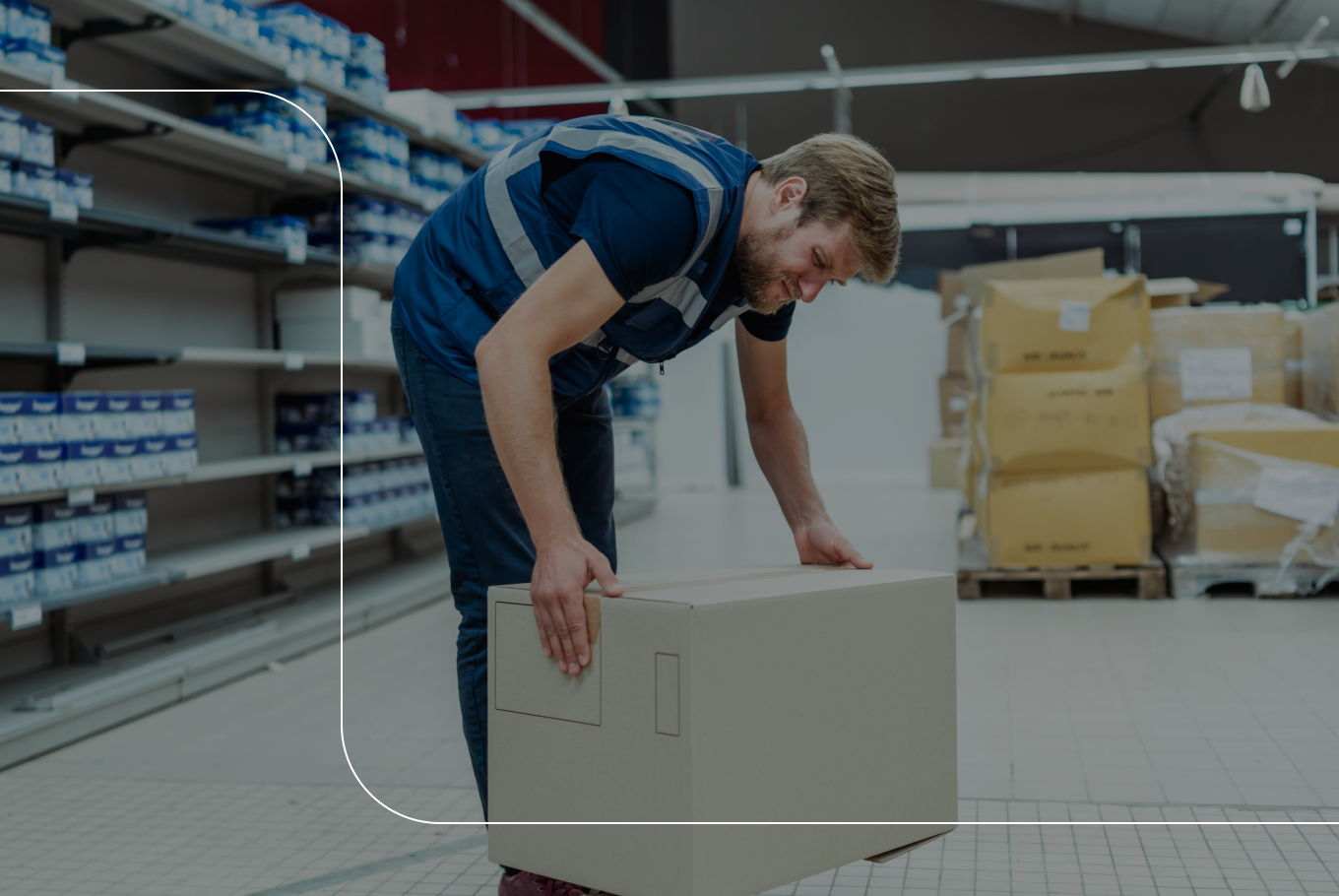
Musculoskeletal disorders remain an important occupational health concern in industrial workplaces. Workplace ergonomic risk factors, including overexertion, repetitive motion, and awkward postures, contribute to the risk of musculoskeletal disorders. Yet traditional ergonomic assessment methods rely on periodic manual evaluations that capture only a fraction of at-risk behaviors. AI-assisted ergonomic assessment tools can complement traditional evaluation methods by providing additional visibility into posture, movement, and recurring workplace risk factors.
Ergonomic assessment software now includes both traditional and AI-assisted approaches. AI-powered computer vision platforms now analyze worker posture and movement, identifying risks that may lead to injuries. AI-assisted ergonomic assessment offers additional options for industrial organizations seeking to improve risk identification and prevention programs.
Traditional ergonomic assessments evaluate workplace tasks using structured methods such as RULA and REBA. AI-assisted tools complement these evaluations by expanding observation opportunities and helping teams identify recurring risks.
Key considerations include:
Voxel delivers an AI-powered site intelligence platform that transforms workplace safety and operational efficiency in industrial environments. The platform monitors ergonomic risks including improper trunk, neck, arm, and leg positioning while simultaneously detecting PPE violations, vehicle safety issues, and area control hazards across 24/7 operations.
Voxel addresses industrial ergonomic risk management differently from task-based assessment platforms. Rather than conducting periodic RULA or REBA evaluations of specific jobs, Voxel provides continuous monitoring of supported posture and movement risks across camera-covered areas. The platform identifies improper bending, unsafe lifting, overreaching, and repetitive motion patterns in real time, connecting these detections with coaching opportunities and corrective action workflows.
At NSG Group's Canadian facility, improper bends decreased by 57% between Q3 and Q4. The company expanded from an initial Canadian pilot to manufacturing facilities across 10 countries. Americold reported a 70% reduction in injuries, eliminated lost-time days, and achieved $1.1 million in EBITDA savings at its featured cold-storage facility.
Voxel stands apart by combining ergonomic monitoring with comprehensive site intelligence. Industrial facilities manage several safety risks simultaneously, including ergonomics, PPE compliance, vehicle movement, and environmental conditions. Voxel provides visibility into supported risks across these categories through a single platform, enabling safety teams to address multiple hazard types without deploying separate systems for each category.
VelocityEHS combines AI-assisted 3D motion capture with professional ergonomics support. The platform integrates ergonomic assessment into the broader Accelerate Platform for comprehensive environment, health, and safety management across enterprise operations.
VelocityEHS serves large manufacturers requiring ergonomic assessment integrated with broader EHS management systems. The platform reports 3X return on investment within 12 months and 75% fewer MSD injuries on average after adoption among its customers. Johnson Matthey reduced recordable ergonomic injuries by 97% over five years, while Carhartt reported over 50% reduction in OSHA recordables. The platform's integration with broader EHS workflows makes it relevant for organizations wanting ergonomics as part of unified safety management.
Scale: 1,200+ customers including Toyota, DOW, Carhartt, Johnson Matthey, Hitachi Energy
ErgoPlus Industrial, part of Briotix Health, combines computer-vision-assisted ergonomic risk assessments with training, improvement planning, and program management. The platform provides real-time ergonomic risk mapping by body part, with recommendations and effectiveness scores generated after each assessment.
ErgoPlus Industrial addresses organizations building internal ergonomic assessment capacity with safety coordinators and supervisors conducting evaluations. The computer vision technology guides users through proper assessment protocols. Built-in online training modules and the ErgoLaunch program accelerate team capability development. Organizations wanting to conduct ergonomic assessments with appropriate training rather than dedicated ergonomist staff may find this approach relevant.
TuMeke uses smartphone-based ergonomic assessment, using standard phone cameras to capture video that AI analyzes. The platform supports both industrial and office ergonomics and offers AI-powered ROSA (Rapid Office Strain Assessment) evaluations.
TuMeke eliminates specialized equipment requirements entirely. Safety teams record video on their phones, upload to the platform, and receive detailed ergonomic analysis. One global automotive manufacturer achieved 50% faster assessments and an MSD injury rate approximately 40% below industry average. The combination of accessibility, speed, and documented customer results makes TuMeke relevant for teams prioritizing mobile flexibility.
Scale: 250+ organizations including Siemens, Hitachi Astemo, Cargill
Cority integrates AI-assisted industrial ergonomic assessments with occupational health, incident management, and other EHS workflows through CorityOne. The system links ergonomic data to occupational health records, creating a comprehensive worker health view.
Cority provides ergonomic assessment as part of converged EHS capabilities, integrating safety, health, environmental, quality, and sustainability in one system. For organizations managing multiple compliance domains, this convergence eliminates data silos and enables more integrated risk management. The 1,500-customer base and Verdantix Leader designation demonstrate proven enterprise scalability.
Scale: 1,500 organizations including DOW, Toyota, NASA, UN, Volvo
ErgoWOW provides AI-assisted workplace ergonomic self-assessments, equipment recommendations, training, and program management. Its current published offering primarily focuses on office and hybrid-workplace ergonomics, with configurable assessment workflows for different employee groups.
ErgoWOW addresses program lifecycle management beyond just assessment. After identifying risks, teams can assign training modules, order equipment, and track implementation within the same platform. This end-to-end approach eliminates the fragmentation that typically slows ergonomic programs from assessment to resolution. The platform serves office and hybrid-workplace environments, making it relevant for organizations with those workplace types rather than primarily industrial manufacturing and warehouse operations.
Intenseye uses AI pose estimation for continuous ergonomic tracking across facilities. The platform monitors worker postures and movements, generating alerts when risky behaviors occur and providing facility-wide insights through aggregated analytics.
Intenseye provides continuous monitoring rather than periodic assessment. The platform received a 4.6/5 G2 rating from 71 reviews. The continuous monitoring approach addresses risks that periodic assessments may miss, particularly in high-volume operations with rotating shift patterns. Swire Coca-Cola reported a 27% decrease in lost day rate within one year of deployment across its broader safety program.
Scale: Swire Coca-Cola and other major industrial companies
Retrocausal provides video-based ergonomic assessment through Ergo Copilot, supporting posture analysis, standardized risk-assessment methods, and improvement recommendations from recorded tasks. Founded by Microsoft HoloLens team alumni, the platform uses 3D skeletal pose extraction from ordinary smartphone cameras.
Retrocausal's multi-framework approach means safety teams can analyze a single recorded task across multiple validated assessment methods without conducting separate evaluations for each. The platform brings computer vision technology developed by Microsoft HoloLens AI experts to industrial ergonomics applications. Documented customer implementations include 3M's adoption of Kaizen Copilot across multiple plants.
Humanscale ergoIQPRO is a cloud-based platform for documenting and managing office workstation ergonomic assessments. It includes employee surveys, standardized reporting, and follow-up evaluation tools.
Humanscale ergoIQPRO specializes in detailed computer workstation assessments rather than industrial manufacturing floor evaluations. For organizations focused on office and computer workstation ergonomics, this provides specialized expertise from a leading office ergonomics product manufacturer. The COEE certification program offers 1.4 AOTA continuing education units and 14 AIA learning units for eligible participants. While not designed for warehouse or manufacturing assessments, this remains a relevant choice for office-focused ergonomic programs.
Parent Company: Humanscale (office ergonomics product manufacturer)
Mitti, formerly SafetyCulture, is a workplace operations platform supporting customizable ergonomic inspection templates, mobile data capture, issue reporting, and corrective-action workflows. Unlike purpose-built ergonomics tools, Mitti allows teams to configure their own assessment workflows based on RULA, REBA, or custom criteria while integrating with broader safety, quality, and compliance inspections.
Mitti offers flexibility for teams wanting to add ergonomics to existing safety, quality, and maintenance workflows. The platform supports ergonomic inspection templates, including REBA-style checklists, though this differs from automatically analyzing worker postures through dedicated computer vision. For teams already using Mitti who want to add ergonomics to existing workflows, or those wanting flexibility to customize assessments, this represents an adaptable option. The free tier allows testing before paid commitments.
Scale: 80,000+ organizations, 2M+ active users
Voxel combines continuous ergonomic risk monitoring with broader site intelligence, helping industrial facilities address posture-related hazards alongside other workplace safety risks.
Its approach includes:
Facilities seeking to reduce ergonomic injury risks can schedule a meeting with a Voxel expert to discuss continuous ergonomic monitoring.
The primary goal of ergonomic assessment is identifying risk factors that can cause musculoskeletal disorders before they result in injuries. Assessments evaluate how workers interact with their tasks, tools, and environment, measuring body positions, force requirements, repetition rates, and duration of exposure. This data can generate risk scores using validated frameworks like RULA, REBA, or the NIOSH Lifting Equation when appropriate task information is available, enabling prioritized interventions that modify work design, provide appropriate tools, or adjust processes to reduce injury exposure.
Assessment frequency depends on task hazards, workplace changes, employee feedback, injury trends, and applicable requirements. High-risk environments with physically demanding tasks may benefit from continuous AI-powered monitoring. Organizations should conduct assessments when new tasks are introduced, processes change, or injury patterns emerge. The shift toward continuous monitoring through AI platforms represents an approach that can identify risks across all shifts and production conditions rather than just scheduled assessment periods.
Some modern ergonomic assessment platforms extend beyond posture analysis. Comprehensive tools can detect repetitive movements, sustained awkward positions, and contributing factors in the work environment. Advanced platforms like Voxel monitor ergonomics alongside PPE compliance, vehicle safety, and area hazards, providing fuller context in which ergonomic risks occur. This multi-dimensional approach can identify contributing factors such as how workspace layout or process design affects ergonomic risk exposure. Capabilities vary significantly across platforms, with some focusing specifically on visual posture detection while others incorporate broader risk factors.
AI-assisted ergonomic assessment can deliver several advantages. First, consistency: AI applies identical criteria across observations, reducing the inter-rater variability that can affect human assessors. Second, speed: some platforms report 50% to 75% faster assessments, enabling expanded coverage. Third, scalability: AI can monitor multiple workers and locations simultaneously, achieving coverage difficult through manual observation alone. Fourth, continuous monitoring: AI can operate across all shifts, detecting risks during various production conditions rather than just scheduled assessment periods. However, assessment accuracy depends on the method, available task information, recording conditions, and professional interpretation.
Voxel implements privacy protections designed for industrial environments and union workplaces. The platform does not use facial recognition or identify individuals by face. Facial and body blurring is available upon request, with configurable controls adjusting video availability and retention. Role-based access with permissions configurable at location and camera levels ensures appropriate visibility. This architecture has enabled successful deployments in facilities working collaboratively with union leadership. At Carlex Glass, management worked with United Auto Workers leadership on implementation. Multiple clients use footage for recognition programs rather than surveillance or discipline, with privacy controls supporting workforce trust and regulatory compliance requirements.