Exciting News: Ventral AI Is Joining Voxel!
Learn More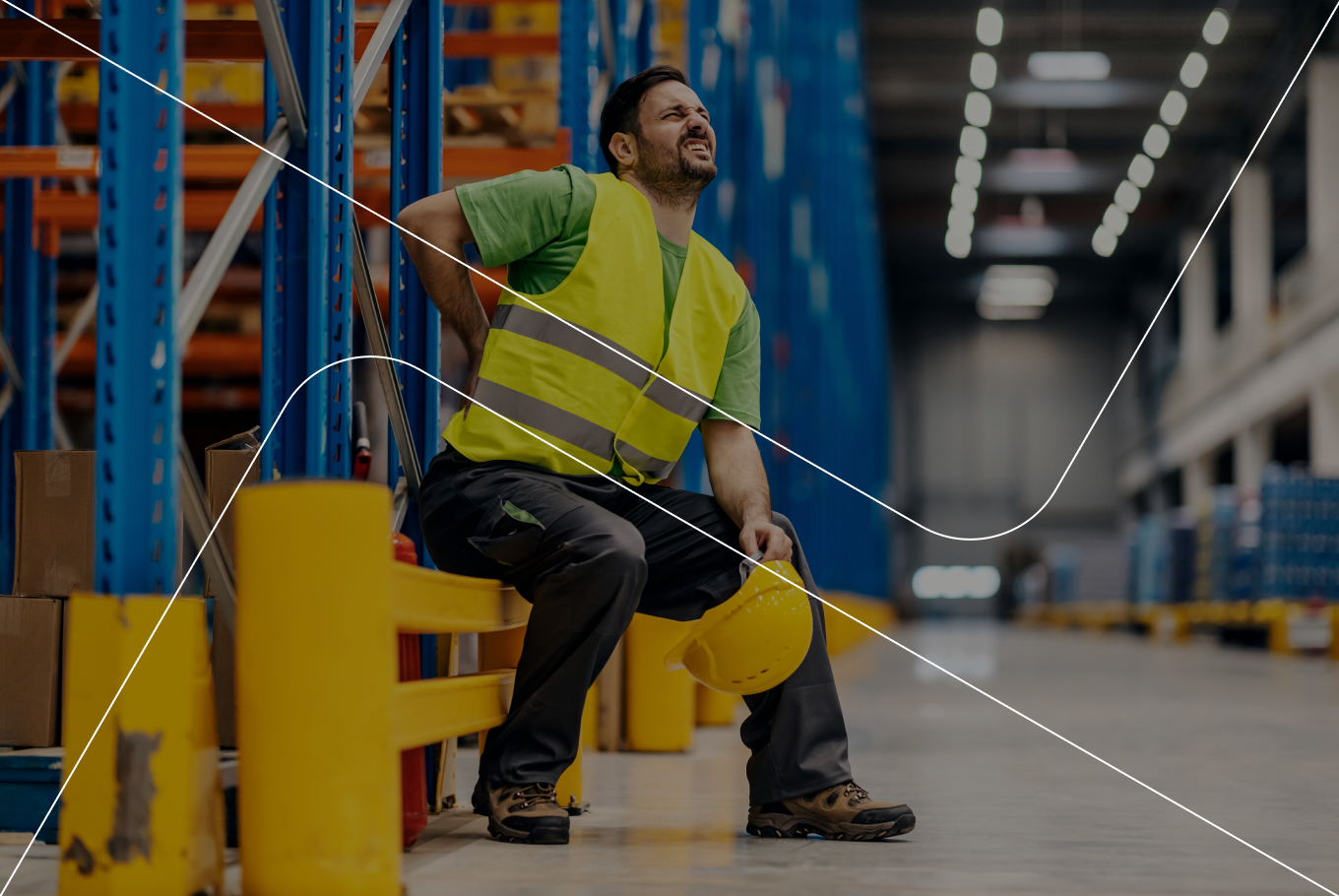
Musculoskeletal disorders remain an important workplace safety concern, particularly in industrial environments involving repetitive movements, manual material handling, and awkward postures. Traditional ergonomic assessment methods, including manual observation, clipboard checklists, and periodic specialist visits, provide valuable insights but may not capture the full picture of workplace ergonomic risks across all shifts and conditions. AI-powered ergonomic safety solutions can complement established evaluation methods by providing additional visibility into posture, movement, and recurring workplace risks.
Workplace conditions involving repetitive tasks, forceful exertions, and awkward postures can increase the risk of musculoskeletal disorders. Identifying ergonomic risk factors helps organizations prioritize tasks for assessment and intervention. For EHS professionals seeking proactive injury prevention, AI-assisted ergonomic assessment provides additional tools for identifying workplace risks and supporting preventive action.
Ergonomic assessment software helps organizations identify and address physical risk factors that contribute to musculoskeletal disorders. These platforms analyze body positions, repetitive movements, and manual handling tasks to evaluate injury risk and prioritize interventions.
Traditional ergonomic assessments use structured observation, measurements, and professional judgment to evaluate workplace tasks. AI-assisted tools can complement these methods by expanding observation opportunities and supporting consistent documentation. Modern software solutions automate parts of this process through video analysis, computer vision, and AI-powered risk scoring.
The business case for reducing ergonomic injuries with AI extends beyond compliance. Work-related musculoskeletal disorders can contribute to medical expenses, workers' compensation claims, employee absences, and operational disruptions. Proactive ergonomic programs can help reduce these costs and support operational continuity.
For industrial environments, effective ergonomic assessment must address:
Voxel delivers an AI-powered site intelligence platform that transforms safety and operations across industrial work environments. Leveraging existing camera infrastructure, the platform turns everyday video footage into actionable insights that enable safer, more efficient operations. Backed by $44M in Series B funding, Voxel's mission is to redefine workplace safety and operations using AI for the betterment of all.
Voxel's site intelligence platform delivers real-time insights to proactively reduce risk in safety and operations, all by leveraging existing camera infrastructure:
Voxel's enterprise deployments show quantifiable outcomes across industries:
Voxel provides continuous ergonomic risk monitoring as part of its broader AI-powered industrial intelligence platform. It uses existing cameras to identify supported posture and movement risks, with reporting and corrective-action workflows to help safety teams prioritize improvements.
The documented results, including 70% injury reduction at Americold and 57% decrease in improper bends at NSG Group, demonstrate measurable outcomes. Privacy-first design has enabled successful deployments in union environments, including facilities working with United Auto Workers leadership.
VelocityEHS provides an enterprise EHS platform with AI-powered ergonomics capabilities through its acquisition of Humantech and Kinetica Labs technologies. The platform offers 3D motion capture from standard video, enabling sensorless assessment without wearable devices.
VelocityEHS reports that customers achieve 3X+ average ROI within 12 months and 75% fewer MSD injuries after platform adoption. The AI motion capture reduces assessment time by 60% compared to manual methods. Johnson Matthey reportedly reduced recordable ergonomic injuries by 97%, while Carhartt reported a 50%+ reduction in OSHA recordables.
VelocityEHS combines AI-assisted motion capture, industrial ergonomic assessment tools, and expert support within its broader EHS management platform. The platform supports organizations consolidating multiple safety programs.
Cority delivers an enterprise EHS+ platform with AI-driven ergonomics capabilities, enabling mobile video recording for posture analysis. The platform integrates ergonomics findings with occupational health records in the CorityOne ecosystem. Cority has received a Verdantix Green Quadrant Leader designation for EHS Software.
Cority serves global enterprises including the UN, DOW Chemical, and Volvo. The platform's assessment findings stay linked to corrective actions and closure evidence, creating auditable documentation for compliance requirements.
Cority provides AI-assisted industrial ergonomic assessments through technology developed with Inseer. Its offering connects mobile motion analysis with broader occupational health and EHS management workflows through CorityOne. The automated corrective-action workflow supports the translation of assessment findings into documented interventions.
TuMeke offers specialized AI ergonomics software with automated assessments from smartphone video. The platform's proprietary 3D pose estimation model has been evaluated using the Human3.6M benchmark.
TuMeke serves Fortune 500 manufacturers including New Balance and Sika. The platform automates assessment and scoring steps, enabling safety teams to record a task with a smartphone and receive ergonomic analysis.
TuMeke provides smartphone-based ergonomic assessments using computer vision. Its Risk Suite supports automated analysis of posture and additional movement factors. The platform serves industrial organizations seeking mobile ergonomic assessment workflows.
ErgoPlus provides an ergonomics platform with a library of established assessment methods. Part of Briotix Health, the platform combines software with access to ergonomics consulting expertise.
ErgoPlus Industrial, part of Briotix Health, provides ergonomic assessment, training, and improvement-planning tools. The education membership is priced separately from its industrial software.
ErgoPlus supports multiple established assessment methods. The combination of assessment software with training content and improvement-planning tools supports ergonomic program development. Backing from Briotix Health provides access to ergonomics consulting expertise.
Protex AI provides a configurable AI safety platform with rule-building for facility-specific risks. The platform's hybrid edge-cloud architecture addresses data privacy concerns. Protex AI has also been evaluated in Verdantix research on safety video analytics.
Bendix Commercial Vehicle Systems reported an 84% reduction in targeted unsafe behaviors using Protex AI. The platform's configurability allows customization for enterprise environments with different risk profiles.
Protex AI uses existing CCTV systems and on-site processing to identify configured industrial safety risks, including selected ergonomic behaviors. Its hybrid architecture processes live footage locally while securely transmitting selected event data and clips to its cloud platform for analytics.
Cardinus combines ergonomics software with managed services, providing software and expert support for organizations lacking internal ergonomics expertise. The Global Ergo Alliance network provides worldwide expert coverage. Cardinus reports more than 5 million users and more than 1,500 global clients across approximately 30 years.
A Parsons Corporation testimonial describes a 50% reduction in injuries and a 75% reduction in injury costs.
Cardinus provides industrial ergonomic assessment software, AI-assisted motion analysis, and consulting support. Its managed services model provides additional resources for teams without dedicated ergonomics specialists.
Intenseye delivers an AI workplace safety platform using existing CCTV infrastructure for real-time detection across 50+ hazard types. Its body pose estimation capability enables continuous posture and movement tracking without wearable sensors. The platform has a 4.6/5 G2 rating from 71 reviews.
Swire Coca-Cola reported a 27% decrease in lost day rate within one year. The platform's 4.6/5 G2 rating from 71 reviews reflects its recorded customer feedback.
Intenseye uses existing cameras to monitor configured industrial safety risks, including ergonomic posture conditions. The multi-hazard detection approach addresses ergonomics alongside PPE, behavioral, and area/zone safety in one platform.
ErgoWOW is an AI-assisted ergonomics management platform focused primarily on office, home, and hybrid-workplace assessment. The platform covers the ergonomics lifecycle from assessment through training to equipment procurement.
ErgoWOW combines guided self-assessments, ergonomic education, equipment recommendations, and program management.
ErgoWOW's lifecycle approach extends beyond assessment to include training and equipment procurement. Multi-language and regional standards support enables deployment across different locations.
Ergoweb provides configurable ergonomic assessment and improvement-management workflows for organizations operating across multiple sites. The platform supports case and injury management workflows with centralized reporting across locations.
Ergoweb serves organizations requiring consistent ergonomics records and governance across locations. The platform supports coordination between specialists and managers across facilities with centralized visibility.
Ergoweb's multi-site program governance capabilities address the needs of large organizations with distributed operations. Case management integration connects ergonomics assessment to injury management and accommodation workflows.
While many ergonomic assessment tools originated in office settings, industrial environments present unique challenges requiring specialized capabilities. Manufacturing facilities, warehouses, and distribution centers involve:
AI-powered continuous monitoring can address some of these challenges by capturing work behaviors across multiple conditions. Some industrial ergonomics platforms also integrate with broader safety solutions, connecting ergonomic risk detection to vehicle safety, PPE compliance, and environmental hazard monitoring.
When evaluating ergonomic assessment software for industrial environments, Voxel combines ergonomic risk monitoring with broader site intelligence to support safety and operations teams.
Its capabilities include:
Facilities seeking to reduce ergonomic injury risks can schedule a meeting with a Voxel expert to explore continuous ergonomic monitoring.
Ergonomic assessment software analyzes body positions, movements, and manual handling tasks to identify risk factors for musculoskeletal disorders. In industrial settings, some platforms use computer vision and AI to process video from cameras, detecting improper bending, overreaching, awkward postures, and other ergonomic hazards. Other platforms use task-specific video capture, mobile devices, or structured assessment workflows. When risks are detected, platforms can surface alerts through dashboards and reporting so safety teams can prioritize follow-up and corrective action.
Privacy-focused platforms address surveillance concerns through face and body blurring, no facial recognition capabilities, role-based access controls, and adjustable video availability. Voxel's approach has enabled deployment in unionized environments, including facilities working with UAW leadership. Multiple clients use the platform for recognition programs focused on coaching. When evaluating platforms, assess anonymization features, access controls, and the vendor's approach to safety culture.
Documented results vary by platform and implementation. Voxel clients have reported outcomes including a 70% injury reduction and over $1 million in annual savings at individual facilities. Returns can come from lower workers' compensation claims, reduced medical costs, avoided regulatory penalties, and improved operational efficiency. Organizations may use documented safety improvements and claims trends as part of broader risk-management discussions with insurers. Any effect on premiums or experience modification rates depends on underwriting and claims-related factors.
Continuous AI monitoring and structured ergonomic assessments serve different purposes. Camera-based systems can help identify recurring visible risk patterns across monitored operations. Task-based assessments can evaluate specific lifting activities, posture, force, repetition, and duration using validated methods and additional task information. Continuous monitoring can complement task-based ergonomic assessments by providing additional visibility into recurring posture and movement risks across monitored work areas.
Voxel uses compatible existing camera infrastructure and can deploy in as little as 48 hours, depending on site readiness, network configuration, and installation requirements. The platform connects to existing security cameras without requiring a complete camera system replacement. SOC 2 Type II controls support enterprise security requirements during deployment. For organizations with extensive camera networks, this approach can provide visibility across multiple risk categories without extensive investment in new cameras.