Exciting News: Ventral AI Is Joining Voxel!
Learn More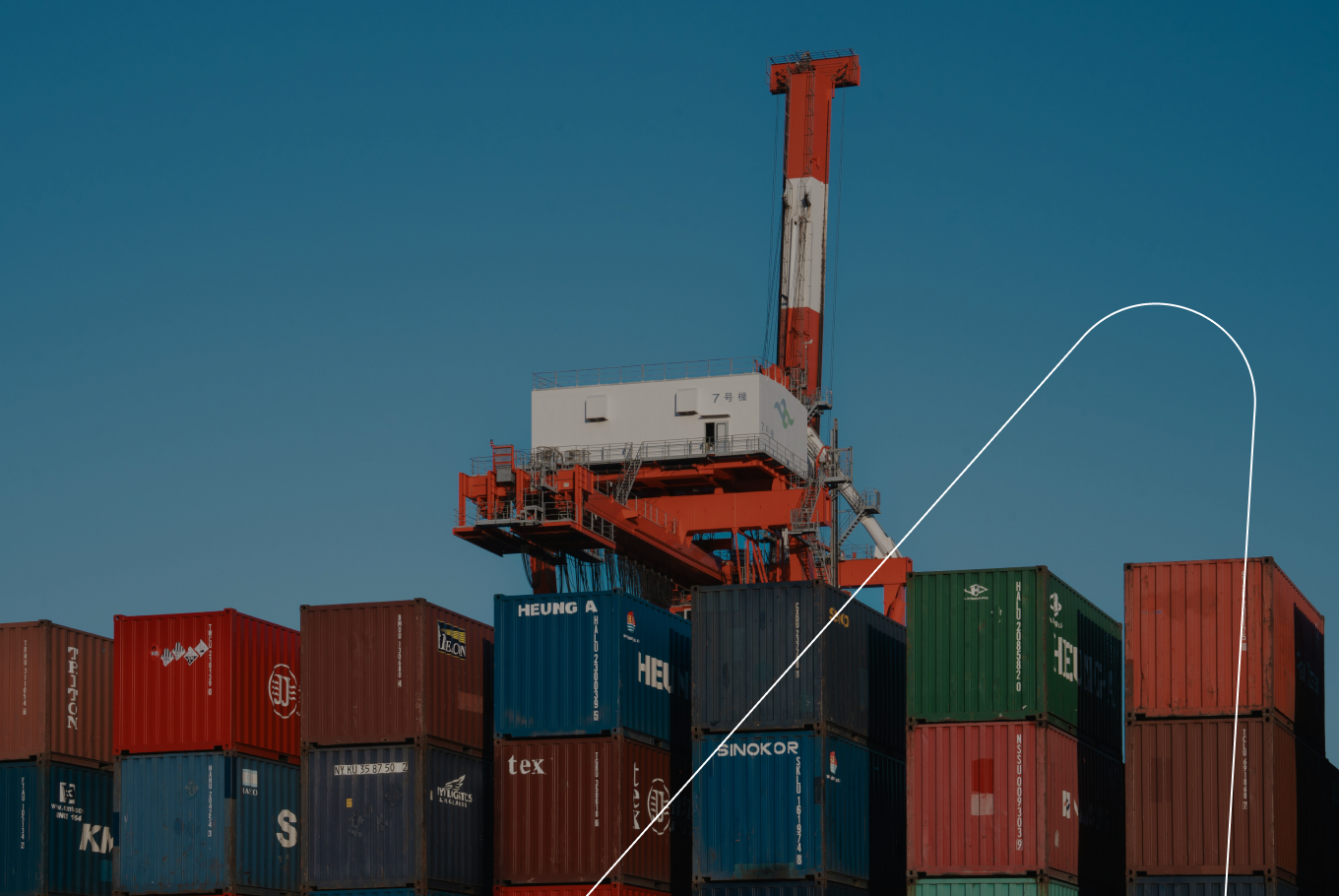
Container terminals bring together trucks, cranes, cargo-handling equipment, pedestrians, contractors, and continuously changing yard activity. These overlapping workflows make visibility, traffic management, equipment controls, and consistent safety processes especially important for terminal operators.
Broader transportation data reinforces the importance of prevention. OSHA’s marine terminal standards address hazards across areas such as cargo handling, powered industrial trucks, hazardous cargo, housekeeping, and terminal operations. For terminal operators planning their 2027 technology strategies, AI-powered port safety software can add continuous camera-based visibility across supported vehicle, PPE, pedestrian, ergonomic, and area-control risks. Other platforms contribute through EHS management, inspections, terminal operating systems, and yard automation.
The following options were evaluated based on container-terminal relevance, documented deployments, safety capabilities, operational fit, and ability to work within existing terminal infrastructure.
Container-terminal operations involve frequent interactions among large vehicles, lifting equipment, pedestrians, cargo, and fixed infrastructure. Those interactions can occur across large yards and through multiple shifts, making complete manual observation difficult.
OSHA’s longshoring guidance identifies vehicular accidents, material-handling incidents, falls, and drowning among important safety areas for marine cargo-handling operations. The ILO’s port safety code similarly provides practical guidance covering the management and operation of ports.
AI computer vision can complement these established safety processes by continuously analyzing supported camera views. Depending on the platform and site configuration, relevant use cases can include:
The technology does not replace traffic-management plans, equipment safeguards, worker training, inspections, maintenance, or other applicable safety controls. Instead, it can provide another source of visibility that helps teams identify patterns and prioritize follow-up..
Voxel is an AI-powered industrial intelligence platform that transforms existing camera infrastructure into actionable safety and operational insights. The platform analyzes supported conditions involving people, vehicles, equipment, and workplace environments and connects those insights with actions and reporting.
Voxel is deployed at more than 250 sites worldwide. Its AI is trained on more than 5 billion hours of real-world industrial workplace scenarios and achieves 96%+ detection accuracy using models fine-tuned to each site’s environment.
Voxel also received the 2025 TT Club award, presented by TT Club and ICHCA International for innovation in cargo-transport safety.
Voxel connects camera-based visibility with structured action and evaluation:
For container-terminal operations, Voxel’s vehicle safety capabilities can provide visibility into speeding, unsafe stops, vehicle-pedestrian proximity, vehicle-to-vehicle proximity, and other configured vehicle behaviors. PPE monitoring and area-control capabilities add visibility into other terminal conditions.
The Port of Virginia integrated Voxel at Virginia International Gateway as part of its virtual Terminal Safety of Excellence Program.
The port operates 24/7 with more than 2,000 onsite personnel and processes 4.2 million TEUs. Voxel also monitors more than 2,000 trucks per day at the deployment.
Within six months, The Port of Virginia achieved:
Voxel also identified a recurring pattern in which drivers were exiting trucks close to vehicle lanes to access nearby dumpsters. Port leadership removed the dumpsters after reviewing the pattern, resulting in a significant reduction in pedestrian presence in the area.
These results highlight the measurable impact Voxel has supported in a major container-terminal environment, with outcomes shaped by the facility’s operating conditions, safety priorities, and implementation approach.
Voxel focuses on site-related risk rather than individual identification. It does not use facial recognition and provides face and body blurring.
Enterprise security controls include:
These controls can support privacy-conscious deployments across complex industrial workforces.
Voxel combines industrial computer vision with a documented marine container-terminal implementation. At The Port of Virginia, Voxel adapted its forklift-detection algorithm to monitor trucks for speeding and no-stops at high-risk intersections while also supporting PPE and pedestrian-safety visibility.
The platform extends beyond event detection through corrective-action workflows, expert-backed implementation, cross-site visibility, and executive reporting.
viAct provides AI-powered safety monitoring for industrial and infrastructure environments, including a published deployment at Hong Kong’s Kwai Chung Container Port.
viAct has direct container-port deployment experience. Its published Kwai Chung case study reports a 10x improvement in lift-zone safety score, a 60% reduction in fatigue-linked errors, and a 50% improvement in yard productivity associated with fewer incident-related stoppages.
The platform is particularly relevant to operators seeking computer-vision monitoring around cranes, lifting zones, worker proximity, and equipment operators.
Intenseye provides computer-vision workplace-safety technology that works with existing CCTV infrastructure and its own Sentinel hardware portfolio.
Intenseye processes more than 22 billion images daily and operates across 26 countries. Its Hard Stop capability can connect detected hazards with PLC-controlled equipment to support rapid equipment intervention in compatible environments.
Cathay Cargo Terminal has also deployed Intenseye across its Hong Kong air-cargo facility using existing CCTV. While this is an air-cargo rather than marine container-terminal deployment, the implementation covers relevant cargo-handling scenarios including PPE, pedestrian walkways, vehicle proximity, and unattended cargo.
Protex AI provides computer-vision safety analytics for industrial environments and connects with existing CCTV systems.
Protex focuses specifically on workplace-safety analytics and supports use cases that overlap with container-terminal risks.
Its published Marks & Spencer distribution-center case study documents an 80% reduction in incidents over approximately three months, alongside a 10% increase in near-miss reporting. While the case study is warehouse-based rather than port-based, the vehicle, area-control, PPE, and housekeeping capabilities can translate to selected terminal workflows.
Navis N4 is a terminal operating system designed for complex container-terminal operations rather than a dedicated EHS or computer-vision safety platform.
Navis has one of the largest installed bases in the terminal operating system category, with N4 used at more than 490 terminals worldwide.
Its contribution to safety comes primarily through organized terminal execution. Coordinating yard movements, container workflows, equipment, gates, and planning can help terminals maintain greater control over complex operating environments.
Kalmar SmartPort is a modular process-automation platform for container yards. Its tools improve visibility into trucks, containers, equipment, and yard activity.
SmartPort provides operational visibility that can support safer and more organized terminal movement.
SmartMap gives teams real-time and historical visibility into yard activity, while SmartTruck tracks external truck movement and SmartLane automatically identifies trucks and containers entering or leaving the yard.
The modular architecture also allows terminal operators to introduce selected automation capabilities without implementing the entire suite simultaneously.
SafetyCulture provides a frontline operations platform for inspections, issue reporting, corrective actions, training, communication, and asset checks.
SafetyCulture addresses a different part of terminal safety from camera-based AI. It is useful when operators need to standardize inspections, audits, field reporting, and follow-up across teams or locations.
Its logistics customer base includes DB Schenker, while SafetyCulture also supports inspection workflows relevant to transport, shipping, yards, vehicles, and terminal operations.
Cority provides the CorityOne enterprise EHS+ platform, connecting safety, occupational health, environmental management, quality, sustainability, and related workflows.
Cority can support large port organizations that require broader enterprise EHS management beyond camera-visible safety conditions.
The company has approximately 40 years of EHS experience and serves more than 1,500 organizations worldwide. For terminal operators, its value lies in consolidating incidents, inspections, environmental obligations, employee health, risk assessments, and corrective actions within one enterprise environment.
VelocityEHS provides a connected EHS platform covering workplace safety, operational risk, ergonomics, chemical management, contractor safety, and environmental compliance.
Ports handling chemicals, fuels, batteries, or hazardous cargo may need safety software that connects incident management with chemical and operational-risk processes.
VelocityEHS combines conventional safety-management workflows with chemical inventory, SDS, emergency-response, and regulatory-management capabilities that can support those broader requirements.
OPUS Terminal from CyberLogitec is a container terminal operating and decision-support system that manages vessel, berth, yard, gate, and equipment-related workflows.
OPUS Terminal provides operational coordination rather than dedicated EHS monitoring. Its relevance to safety lies in organizing and optimizing movements across container-terminal environments.
CyberLogitec is also expanding the platform within automated terminals. In August 2026, it announced an OPUS Terminal implementation for Incheon New Port Phase 1-2, where the TOS will integrate with automated guided vehicles, cranes, and equipment-control systems.
When the priority is continuous visibility into camera-visible safety and operational risks, Voxel combines industrial AI, existing-camera deployment, action workflows, and documented container-terminal results.
Voxel’s Port of Virginia deployment provides a direct example of the platform operating in a large marine terminal.
Within six months, the port reduced truck speeding by 50%, no-stops at high-risk intersections by 15%, and PPE violations by 15%. Safety-team efficiency increased by 85%.
These results provide a more direct container-terminal proof point than general industrial or logistics case studies.
Voxel adapted its vehicle-detection technology at Virginia International Gateway to monitor trucks rather than only conventional forklifts.
The deployment also illustrates how computer vision can surface patterns that are difficult to identify through occasional observation, including the pedestrian activity around dumpsters that resulted in a physical site change.
Voxel’s actions workflows connect selected risks with recommended actions, assigned owners, deadlines, follow-up, and coaching opportunities.
Executive reporting then helps leaders evaluate identified risks, actions taken, and resulting changes across the organization.
Voxel works with over 95% of existing IP cameras and can deploy to a site in 48 hours.
This risk management approach helps terminals build on suitable camera infrastructure already in place rather than making a complete camera replacement a prerequisite.
Voxel’s AI is trained on more than 5 billion hours of real-world industrial workplace scenarios and achieves 96%+ detection accuracy using models fine-tuned to each site’s environment.
Because individual terminals differ in camera placement, lighting, equipment, workflows, and layout, site-specific configuration remains an important part of deployment.
Voxel combines computer vision with certified experts who bring decades of experience across safety, risk, and operations.
This gives terminal operators support for connecting technical capabilities with site priorities, safety programs, corrective actions, and broader enterprise goals.
Voxel intentionally excludes facial recognition and provides face and body blurring. Access controls, SSO, encryption, and SOC 2 Type II certification provide additional enterprise security safeguards.
The AI risk framework offers broader guidance for organizations assessing governance and trustworthiness considerations when introducing AI into operational environments.
Voxel is deployed at more than 250 sites worldwide and continues to support geographically distributed industrial organizations.
Its global expansion across five continents demonstrates the platform’s ability to support multinational operations alongside site-specific implementation.
Ready to explore how existing terminal cameras can support safety and operational intelligence? Contact Voxel to discuss container-terminal use cases and deployment requirements.
AI safety software analyzes compatible camera feeds for configured, camera-visible conditions. In container terminals, these can include truck speeding, stopping behavior, PPE use, pedestrian activity, vehicle-pedestrian interactions, restricted zones, and selected area-control risks. Voxel connects those insights with action workflows, follow-up, coaching opportunities, and executive reporting so safety teams can move from visibility to structured action.
The Port of Virginia achieved a 50% reduction in truck speeding, a 15% reduction in no-stops at high-risk intersections, a 15% reduction in PPE violations, and an 85% increase in safety-team efficiency within six months. Its safety team also reduced daily recorded-footage review from two to three hours to approximately 20 to 30 minutes.
Voxel can deploy to a site in 48 hours using existing camera infrastructure and works with over 95% of existing IP cameras. Camera placement, field of view, network conditions, lighting, and the intended detection use cases are evaluated as part of implementation.
Voxel does not use facial recognition and provides face and body blurring. The platform also includes role-based access controls, SSO, TLS 1.2 encryption in transit, AES-256 encryption at rest, SOC 2 Type II certification, and ISO 27001-certified data centers.
Yes. Voxel is designed to complement existing safety processes by adding continuous camera-based visibility into supported conditions. Terminal operators can use those insights alongside inspections, training, equipment safeguards, traffic controls, worker observations, maintenance, EHS workflows, and other established safety practices.