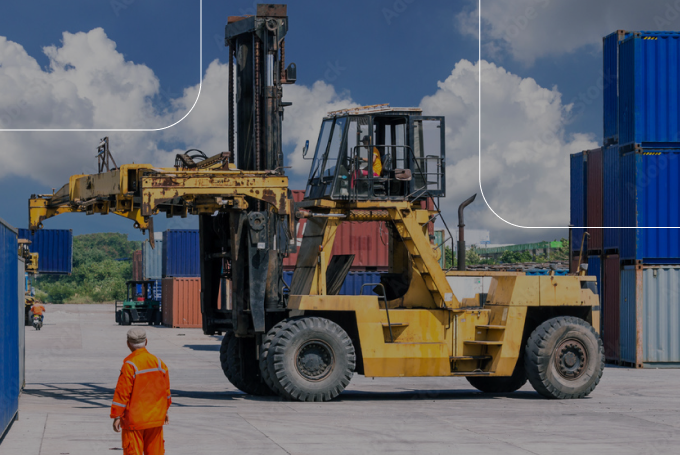
Distribution center yards combine pedestrians, yard trucks, trailers, and time-sensitive workflows, creating safety risks when visibility and traffic control are weak. A DOT OIG analysis found that each additional 15 minutes of truck dwell time was associated with a 6.2% increase in expected crash rate. The same report estimated that detention reduced for-hire truckload driver earnings by $1.1B to $1.3B annually, while noting that accurate detention data were limited.
Yet many facilities still manage their yards with clipboards and radio calls. Mordor Intelligence projects the dock and yard management systems market to grow from $4.32B in 2025 to $8.50B by 2031, with an 11.95% CAGR for 2026-2031. For logistics and supply chain operations seeking proactive safety management, modern yard safety software has evolved from basic scheduling tools into visibility, automation, and analytics platforms that help teams identify risk earlier.
We evaluated leading yard management platforms based on safety feature depth, real-time visibility capabilities, risk reduction functions, and market validation. Here are the 8 best options for distribution centers in 2026.
Traditional yard management relied on manual processes that created blind spots where accidents occur. Gate guards with clipboards, radio calls to locate trailers, and paper-based scheduling left facilities reactive rather than proactive on safety.
Modern yard management solutions address these gaps through automation, real-time visibility, and AI-powered analytics. The shift from reactive incident reporting to proactive hazard prevention mirrors broader trends in industrial safety, where leading indicators matter more than lagging metrics.
For EHS professionals at distribution centers, the business case extends beyond operational efficiency. Gate management and scheduling problems can create bottlenecks that ripple through operations, causing rushed movements and increasing the chance of unsafe decisions
The platforms on this list represent different approaches to yard safety, from dedicated safety-first solutions to operational platforms with strong safety features.
Best For: Enterprises seeking a purpose-built workplace safety platform that adapts to any site within 48 hours, delivers end-to-end site intelligence with 95%+ detection accuracy, and scales globally with expert-backed implementation.
Voxel delivers an AI-powered site intelligence platform that transforms safety and operations across industrial environments. Leveraging existing camera infrastructure, the platform turns everyday video footage into actionable insights that enable safer, more efficient operations.
Voxel's site intelligence platform delivers real-time insights to proactively reduce risk in safety and operations:
Voxel's enterprise deployments show consistent, quantifiable outcomes across industries:
Best For: Distribution centers requiring integrated safety inspections, incident tracking, and sensor-based hazard alerts
Rating: 4.6/5 on Capterra
SafetyCulture is a safety and operations-focused platform with inspections, issue reporting, and sensor-based workflows that can support yard safety. The mobile-first architecture enables gate staff, yard crews, and safety officers to document issues on-site instantly.
SafetyCulture is especially relevant for teams that want yard safety workflows tied to inspections, checklists, issue reporting, and corrective actions. Vroon, an international shipping company, used SafetyCulture to make inspections, reporting, and information sharing more efficient.
Best For: Distribution centers seeking unified driver safety and yard visibility
Samsara combines AI dash cams, ELD compliance, telematics, and asset tracking that can support driver safety and yard visibility. The platform’s real-time GPS tracking can help teams monitor arrival status, asset movement, dwell time, and safety events.
Samsara combines fleet visibility, driver safety, and compliance workflows in one platform. Its telematics and vehicle sensor data can help operations teams understand arrival patterns, dwell times, and safety events across both in-transit and on-site workflows.
Best For: Ports, terminals, and high-density yards requiring precision tracking for collision avoidance
Market Position: Established yard and terminal operations provider with YMS, RTLS, IoT, and visibility capabilities
Kaleris, formed from the merger of PINC YMS and terminal software brands, delivers yard visibility capabilities using RFID, GPS, IoT, and location-tracking workflows. The platform supports environments where dense asset movement requires more precise visibility than GPS alone can provide.
Human error remains a major safety consideration in automated yard and terminal environments. Kaleris addresses this with yard management capabilities that support RTLS, IoT, location tracking, and automation for complex industrial yards.
Best For: Distribution centers handling hazardous materials, food safety, and regulated cargo
Experience: 25 years of yard and dock scheduling experience
C3 Solutions brings deep functionality around compliance-heavy environments, including food and beverage workflows and hazmat handling. Its detention reporting, scheduling, and yard visibility features can help facilities reduce congestion and improve control over high-risk movements.
C3 Solutions maintains a long track record across retail distribution, food and beverage, and manufacturing sectors in North America. The platform explicitly addresses security and safety issues including driver identification, visitor logs, wheel chocking, and proper handling of hazardous materials.
Best For: Distribution centers prioritizing congestion reduction through AI-powered arrivals
FourKites Dynamic Yard uses predictive ETAs to reduce congestion by helping teams prepare docks before arrivals. The platform’s yard automation capabilities can support smoother check-in, check-out, dock scheduling, and yard orchestration.
Longer dwell times are associated with higher crash exposure. FourKites’ yard automation capabilities help facilities plan dock activity earlier, reduce avoidable congestion, and limit rushed movements that can contribute to incidents.
Best For: Existing Manhattan WMS customers seeking unified inventory and yard visibility
Market Position: Warehouse, transportation, and yard management workflows in one enterprise ecosystem
Manhattan Active Yard Management delivers real-time notifications on hazards occurring in the yard along with yard personnel management capabilities. The platform’s integration with warehouse management helps eliminate data gaps that can cause miscommunication and unsafe improvised movements.
When unified systems connect transportation, warehouse, and yard management, teams gain a more complete view of movement across the facility. Manhattan Active is especially relevant for teams already using Manhattan warehouse or transportation systems.
Best For: Distribution centers managing diverse carrier networks requiring end-to-end visibility
Scale: Reports visibility across more than 1.5 billion shipments annually for more than 1,000 leading brands
project44 provides predictive analytics that help reduce surprise arrivals causing congestion and unsafe yard conditions. The platform’s global visibility network helps facilities maintain arrival visibility even when carrier networks change.
project44’s large network can support broader arrival visibility across carrier networks, helping facilities prepare for inbound movement and avoid rushed decisions at the yard level.
Best For: Global companies with European distribution centers requiring regional compliance expertise
Regional Focus: Strong deployment history across European distribution and manufacturing
Körber, formerly Inconso and HighJump, brings familiarity with European logistics operating models and regulatory requirements. The platform’s multi-yard network visibility enables standardized safety protocols across complex distribution networks.
Körber is particularly relevant for European buyers looking for a vendor with strong regional implementation capability. The platform handles gate management, dock scheduling, yard vehicle movements, and integration with its own WMS as well as third-party systems.
While yard management systems track vehicles, trailers, and dock scheduling, they typically focus on asset visibility rather than continuous worker safety monitoring. Leading distribution centers can improve risk visibility by combining yard management platforms with dedicated AI-powered safety monitoring.
Voxel is a site intelligence platform committed to helping organizations reduce safety and operational risk in industrial environments. Leveraging existing camera infrastructure, the platform transforms everyday video footage into actionable insights that enable safer, more efficient operations.
Voxel monitors leading indicators that many yard management systems do not primarily address, including ergonomic risks, PPE compliance, pedestrian-vehicle proximity, and blocked exits.
Documented Results in Logistics. Voxel’s deployments demonstrate measurable outcomes across distribution and logistics environments:
Purpose-Built for Workplace Safety. Voxel’s AI is trained on more than 5 billion hours of real-world industrial workplace scenarios. These scenarios include ergonomics, vehicles, PPE, equipment, and other events found in industrial environments. The platform achieves 95%+ detection accuracy by deploying AI models that are fine-tuned to each site’s unique environment.
End-to-End Site Intelligence. Voxel converts risk into recommended actions, assigns owners and deadlines, and proves impact with reporting that shows real results. This creates a complete workflow from detection to resolution, helping safety and operations teams move faster than manual observation or after-the-fact reporting.
Privacy-First Design. Voxel ensures data security and privacy through SOC 2 Type II audited controls, end-to-end encryption in transit with TLS 1.2 and at rest with AES-256, strict role-based access controls, and ISO 27001 certified AWS cloud infrastructure. Voxel also incorporates workforce anonymization features, such as worker body blurring, to further protect individual privacy.
Rapid Deployment. Voxel deploys to any site in 48 hours using existing camera infrastructure, complementing yard management systems without requiring teams to replace their current camera network.
Ready to add comprehensive worker safety monitoring to your yard operations? Schedule a meeting with a Voxel expert today.
Yard safety software manages vehicle movements, dock scheduling, and asset tracking in distribution center yards. These platforms reduce safety risks by minimizing congestion, reducing driver dwell times, and providing real-time visibility into yard operations. Voxel strengthens this approach by adding AI-powered worker safety intelligence on top of yard visibility.
AI-powered yard management platforms use predictive analytics, computer vision, and real-time location systems to identify risks earlier. Traditional methods rely on manual observation and reactive reporting, which can miss hazards between inspections. Voxel extends these benefits by continuously monitoring leading indicators of safety and operational risk through existing camera infrastructure.
Most yard management platforms focus primarily on assets, appointments, gates, and yard visibility rather than continuous worker-safety monitoring. For video-based safety intelligence, distribution centers can complement yard management systems with Voxel, which leverages existing camera infrastructure to detect risks related to people, vehicles, equipment, and the workplace environment.
ROI varies by platform and implementation. Yard management systems can improve detention management, labor planning, and operational flow. Voxel adds a measurable worker-safety layer by helping teams identify risks, assign corrective actions, track follow-through, and report impact. Documented Voxel outcomes include Americold’s 77% injury reduction and $1.1M annual EBITDA savings, as well as Verst Logistics’ reported 82% drop in vehicle safety incidents and 50% drop in ergonomic incidents in 5 months.
Privacy-first design is critical for AI-powered safety adoption. Voxel is built for industrial teams that need both risk visibility and responsible data handling, with SOC 2 Type II audited controls, end-to-end encryption, role-based access controls, ISO 27001 certified AWS cloud infrastructure, and workforce anonymization features such as worker body blurring. This allows teams to use AI safety insights while protecting individual privacy.

Explore AI Summary